Business Reporter
FOLLOWING its reconstitution, all eyes are on the revamped Mining Affairs Board to see what interventions it will deploy to slash operating costs, expedite decision-making and drive greater value addition across the sector.
Zimbabwe’s mining industry is still operating below its true potential due to several challenges, including power shortages, lagging deep-earth exploration, foreign currency retention disputes and persistent mineral smuggling.
Despite holding over 60 mineral occurrences, of which less than 10 percent are commercially exploited, structural bottlenecks severely limit overall output and profitability.
Appointed mid this month, the board is expected to play a central role in administering mineral rights and mining-related matters as the Government intensifies efforts to extract greater economic value from Zimbabwe’s mineral wealth.
By reconstituting the board, the Government sought to move it away from a ministry-dominated structure to incorporate diverse industry voices like small-scale miners, professional bodies and gender/regional balance.
The Government sought to intensify mineral exploration to accurately determine resource quantities and boost export revenues.
The reforms will support broader legal updates under the sweeping national efforts to reform the country’s outdated mining framework. Zimbabwe’s mining sector drives the national economy.
It generates roughly 75 percent of total exports and contributes about 14,5 percent to the gross domestic product.
In 2025, mining generated approximately US$4,6 billion from gold exports alone, while other major minerals marketed through the Minerals Marketing Corporation of Zimbabwe accounted for an additional US$3,4 billion, bringing total recorded mineral export revenues past US$8 billion.
As Zimbabwe moves beyond exporting largely unprocessed minerals towards a stronger domestic processing and manufacturing base to boost export earnings, the new Mining Affairs Board has its work cut out.
The 12-member board, which is chaired by Ministry of Mines and Mining Development Permanent Secretary Dr Thomas Utete Wushe, will be key in driving optimal performance of Zimbabwe’s mining sector.
Its restructuring aligns with provisions of the proposed Mines and Minerals Bill, 2025, which seeks to strengthen corporate governance, accountability and transparency in mineral rights administration, replacing the outdated legislation.
The long-awaited Bill is now before Parliament as the National Assembly reviews the Parliamentary Legal Committee report, with the ministry aiming for final sign-off by the end of 2026.
Mines and Mining Development Minister Dr Polite Kambamura recently met with the new Mining Affairs Board, tasking them with advancing national interests to boost the sector’s socio-economic impact.
The minister said the board was mandated to promote value addition and beneficiation of the country’s mineral resources.
“This will further attest to the fact that, as Government, we also take into consideration the need to preserve the interests of the nation at a time when the mining sector is also expected to unlock more revenues and has the potential to play a vital role in the overall socio-economic development agenda,” he
said.
“So, I have mandated this board to further look into the needs of the nation, particularly the value addition and beneficiation strategy.”
Zimbabwe has significant deposits of platinum, lithium, gold, chrome, nickel and other minerals, a strong resource base from which to build a strong industrial economy.
Experts contend that potential economic benefits from mining depend not only on the volume of minerals extracted, but also on efficiency in keeping a lid on production costs and domestic value addition.
Mining expert Engineer Takudzwa Muzangwa said the board’s effectiveness should ultimately be judged by whether it helps make the sector more competitive.
“The effectiveness of the Mining Affairs Board will ultimately be measured by whether it can make mining in Zimbabwe more efficient and competitive,” he said.
“We need a regulatory system that reduces unnecessary delays and costs while giving investors and miners certainty when they are making long-term decisions.”
The board must address existing administrative bottlenecks that drive the cost of doing business in the sector.
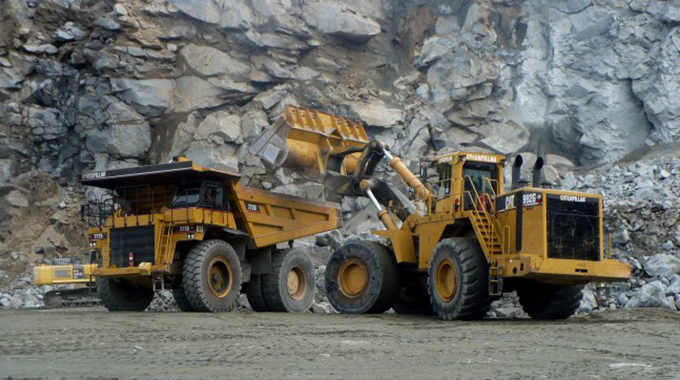
As a capital-intensive business, producers incur significant costs related to electricity, fuel, equipment, labour, exploration, logistics, environmental compliance and mineral processing.
For smaller operators, particularly artisanal and small-scale miners, these costs can have an even greater impact on viability.
The Government has previously acknowledged the burden created by multiple licences, permits, levies and fees across the mining sector and has moved towards reviewing these charges.
The Mining Affairs Board could become an important vehicle for translating such reforms into practical improvements for miners.Eng Muzangwa said the country’s beneficiation drive needs to be approached from a commercial perspective rather than simply through regulation.
“Beneficiation should not be viewed simply as a requirement for miners to process minerals locally. It has to make economic sense,” he said.
“The country needs to create conditions where investment in processing plants is commercially viable, with reliable power, appropriate technology, infrastructure and predictable regulation.”
This is particularly important because beneficiation requires substantial upfront investment.
A mining company may be willing to establish a processing facility, but the investment case can quickly weaken if electricity is unreliable, equipment is expensive, infrastructure is inadequate or regulatory approvals take too long.
The board’s role could, therefore, extend beyond mineral rights administration to helping identify regulatory constraints that are discouraging investment in downstream processing.
Eng Muzangwa said Zimbabwe has an opportunity to use its mineral wealth as a foundation for broader industrialisation.
“Zimbabwe has a mineral resource base capable of supporting much greater industrial development, but we have to move beyond extracting and exporting minerals,” he said.
“The real opportunity is to develop processing and manufacturing industries around our mineral resources, create jobs and retain a larger share of the value chain locally.”
That ambition will require more than a regulatory directive.
It will require investment in energy, rail and road infrastructure, technical skills, research and development and appropriate processing technologies.
Metallurgist Dr Esnath Pindiriri said beneficiation should be implemented across the entire mineral value chain.
“Beneficiation requires a complete value-chain approach. It is not enough to say that a mineral must be processed locally; we must ask whether the required technology, energy, infrastructure, skills and markets are available to make that processing competitive,” she said.
Different minerals require different processing technologies, meaning Zimbabwe cannot adopt a uniform approach to beneficiation.
The treatment of lithium, platinum, gold and chrome, for example, requires different technical processes, capital requirements and infrastructure.
Dr Pindiriri said technical expertise would, therefore, be critical to the board’s work.
“The metallurgical characteristics of each mineral deposit are different and that means there cannot be a one-size-fits-all approach to beneficiation,” she said.
“The board needs access to strong technical expertise so that decisions on processing are informed by the nature of the ore, recovery rates, available technologies and the economics of the proposed operation.”
Dr Pindiriri said reducing the cost of moving minerals from extraction to processing should, therefore, be central to the beneficiation agenda.
“If Zimbabwe wants to capture more value from its mineral resources, we must reduce the cost of moving from extraction to processing. High energy costs, infrastructure constraints, imported equipment and regulatory delays can make local beneficiation uncompetitive,” she said.
Addressing these issues should be central to the work of the Mining Affairs Board, she said.
The board can become more than an administrative institution.
Its decisions could influence how quickly new mines are developed, how efficiently existing operations function and whether investors see Zimbabwe as an attractive destination for processing and downstream mineral projects.
The Mining Affairs Board is expected to bridge that gap by protecting national interests while making the sector more predictable, efficient and attractive for investment.