Moses Magadza in JOHANNESBURG, South Africa
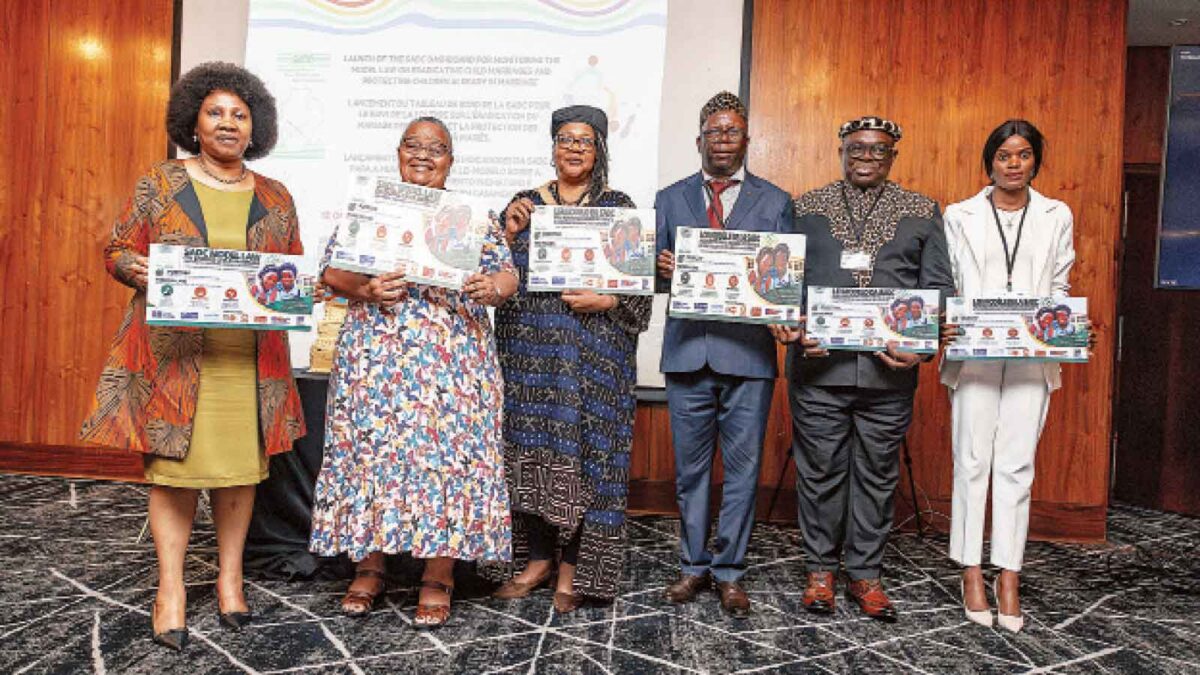
A NEW regional dashboard tracking the implementation of the SADC Model Law on Eradicating Child Marriage and Protecting Children Already in Marriage was launched here on Monday, raising hopes that legislative commitments will be matched by closer scrutiny.
Officially launching the tool, SADC Parliamentary Forum (SADC PF) Vice President Hon. Sylvia Lucas-Izaks described it as a milestone in strengthening evidence-based action and accountability across the region.
“The Dashboard is a milestone in our collective effort to strengthen evidence-based action and accountability, so that every girl is counted, every commitment is tracked, and every gap is seen,” she said.
Hon. Lucas-Izaks urged stakeholders to access and share the platform to monitor progress, identify bottlenecks, and inform policy decisions, calling on them to turn commitments into results.
The tracking tool is designed to help parliaments and line ministries assess how far the Model Law has been integrated into national statutes. By organizing information on regional progress, it aims to guide targeted recommendations and strengthen parliamentary oversight.
SADC PF Secretary General Her Excellency Boemo Sekgoma commended the multi-stakeholder partnership that developed the tool. The initiative brought together parliamentarians, traditional leaders, civil society organizations, youth, and technical experts through a working group comprising UNFPA, UNICEF, Plan International, Girls Not Brides, Hivos, CARE International, and Equality Now.
“Our partners did not simply lend their names to the process. They helped drive it,” H.E. Sekgoma said.
The collaboration also produced a Monitoring, Evaluation, Research and Learning (MERL) framework, a Theory of Change, and minimum programme standards to help guide national responses.
“I never lost sleep over whether the work would be done. I knew that colleagues and partners had taken responsibility and would see it through,” the Secretary General noted.
Calling the dashboard “a game changer for parliamentary oversight and accountability,” H.E. Sekgoma urged member parliaments to populate and update it regularly for law reform, budgeting, and public scrutiny.
Partners welcomed the innovation as a practical accountability mechanism. Speaking on behalf of civil society, Hivos Zambia Country Manager Ms Limpo Chinika said the platform must serve as an active driver of action rather than a mere repository of data.
“Evidence must inform decisions. Decisions must shape budgets. Budgets must support implementation. And implementation must improve lives,” she said.
UNFPA Deputy Regional Director for Eastern and Southern Africa Ms Young Hong added that the dashboard would help bridge the gap between regional declarations and tangible outcomes for girls.
“Almost one in three girls marries before the age of 18,” Ms Hong noted, urging lawmakers to use their legislative and budgetary powers to fund effective programmes.
Representing the youth, Ms Aneth Michael of Plan International Tanzania challenged decision-makers to demonstrate political will.
“A dashboard cannot end child marriage unless the people with the power to act are willing to act,” she said. “Do not simply speak about us. Listen to us.”
Meanwhile, the East African Community (EAC) expressed intent to adopt similar reporting frameworks for its own member states. Dr Lawrence Godiah, Partnerships and Resource Mobilization Officer in the Office of the EAC Secretary General, noted that while the EAC has had a Child Policy since 2016, it lacks a centralized platform for indicator reporting.
“We have failed them as a secretariat, I guess, to set up a framework like this where they are able to report these indicators that they have selected,” Dr Godiah admitted, expressing hope for deeper peer exchange between the EAC and SADC.
The launch drew SADC PF parliamentarians, UN representatives, development partners, and prominent traditional leaders, including Chief Madzimawe, SADC Convener of the Coalition of Traditional Leaders in Africa (COTLA); Chief Chamuka of Zambia; and Malawian child-rights advocate Fumukazi Zilanie.
The dashboard builds on a regional campaign that began with the SADC PF’s call to action in 2014, followed by the development of the Model Law in 2016 and its accompanying user guide in 2018.
H.E. Sekgoma concluded that eradicating the practice requires more than statutory declarations.
“It calls for sustained leadership, resources, vigilance and action in every community,” she said.
- -Moses Magadza is the Media and Communications Manager at the SADC Parliamentary Forum.