Online Reporter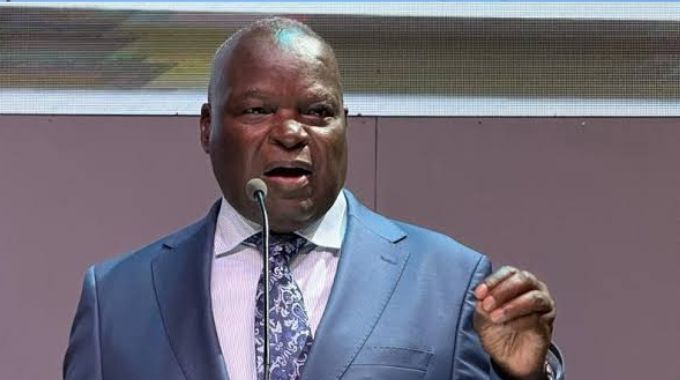
Ivan Zhakata
ZIMBABWE is currently exploring advanced nuclear technologies, particularly Small Modular Reactors (SMRs), which are nuclear fission reactors that typically produce less that 300 megawatts (MW), to secure a stable and sustainable energy supply needed for the country’s industrialisation drive.
Speaking at the 70th Regular General Conference of the International Atomic Energy Agency (IAEA) in Vienna, Austria, early this week, Energy and Power Development Minister July Moyo said nuclear science and technology have become an important component of Zimbabwe’s development agenda.
“Nuclear science and technology are a critical pillar of Zimbabwe’s national development agenda,” he said.
“As we accelerate efforts to achieve our national Vision 2030, which aims to transform Zimbabwe into an upper middle-income society, we are increasingly relying on these technologies to solve our most pressing challenges and to champion our development objectives.”
Zimbabwe, he said, was considering nuclear power as part of its long-term strategy to ensure energy security and support industrialisation.
“In line with our national energy development strategy, Zimbabwe is actively pursuing the development of the necessary national infrastructure and capabilities for the safe, secure and peaceful use of nuclear energy,” he said.
“This includes the consideration of nuclear power as part of our long-term strategy to ensure a stable and sustainable energy supply to underpin our rapid industrialisation goals.”
Minister Moyo said Zimbabwe was closely following developments in advanced nuclear technologies, particularly SMRs, while building the institutional, human resource, regulatory and technical foundations needed to support a future nuclear power programme.
“We are therefore closely following developments in advanced nuclear technologies, particularly Small Modular Reactors (SMRs), while actively building the institutional, human resource, regulatory and technical foundations required to support a future nuclear power programme,” Minister Moyo said.
He said the Centre for Education, Innovation, Research and Development (CEIRD) has signed a business agreement with Korea Hydro & Nuclear Power (KHNP) to conduct a preliminary feasibility study on deploying the Innovative Small Modular Reactor (i-SMR).
“In this regard, we are pleased to announce that our Centre for Education, Innovation, Research and Development (CEIRD) has signed a business agreement with Korea Hydro & Nuclear Power (KHNP) to conduct a preliminary feasibility study on the deployment of the Innovative Small Modular Reactor (i-SMR),” he said.
The initiative, he added, will help Zimbabwe build expertise and institutional capacity in nuclear technology.
“This initiative will not only enhance our understanding of advanced reactor technologies but will also contribute to the development of national nuclear expertise, technological advancement and institutional capacity, thereby supporting evidence-based policy development and decision-making,” he said.
Beyond energy, Minister Moyo said Zimbabwe was also applying nuclear technology in healthcare and agriculture.
He said the theme of this year’s Scientific Forum, “Rays of Hope: Cancer Care for All”, resonated with Zimbabwe’s priorities given the growing cancer burden.
“The growing cancer burden in Africa, and in Zimbabwe in particular, demands urgent and sustained intervention,” he said.
Minister Moyo said the recent resuscitation of radiotherapy services in public hospitals was a tangible step forward, with Zimbabwe expecting further progress through the IAEA’s Rays of Hope initiative.
“The recent resuscitation of radiotherapy services in our public hospitals is a tangible step forward, and we anticipate further progress through the Rays of Hope initiative to increase access to modern and effective cancer treatment across the country,” he said.
He also said nuclear techniques were helping Zimbabwe improve agricultural productivity and build resilience to food-security challenges amid unpredictable climatic conditions.
On nuclear safety, Minister Moyo said Zimbabwe was making progress toward the sustainable management of disused radioactive sources and expected to commission a centralised Disused Radioactive Sources Management Facility soon.
“This facility represents a decisive step forward in our capacity to safely and securely manage radioactive materials, meeting our national and international obligations while protecting our people and the environment,” he said.
Zimbabwe is also participating in the IAEA’s Radium Recycling Initiative, which seeks to repurpose disused radium sources to produce Actinium-225 for targeted cancer treatment.
“By participating in this important initiative, we contribute to repurposing these disused sources to produce the highly sought-after radioisotope Actinium-225 for targeted cancer treatment, thereby giving a second life to valuable materials and advancing global healthcare goals,” Minister Moyo said.
He reaffirmed Zimbabwe’s commitment to the peaceful use of nuclear technology and global nuclear safety and security standards.
“As Zimbabwe takes up its seat as a non-permanent member of the United Nations Security Council (UNSC) for the 2027-2028 term, we pledge to use this position to advance the principles of the UN Charter and work tirelessly to de-escalate global conflicts and promote peaceful dialogue,” he said.
“We also reaffirm our unwavering commitment to the founding principle of ‘Atoms for Peace’, and will continue to advocate for the peaceful use of nuclear technology and applications while strengthening the global nuclear non-proliferation regime.”