Daniel Chigunwe
Herald Correspondent
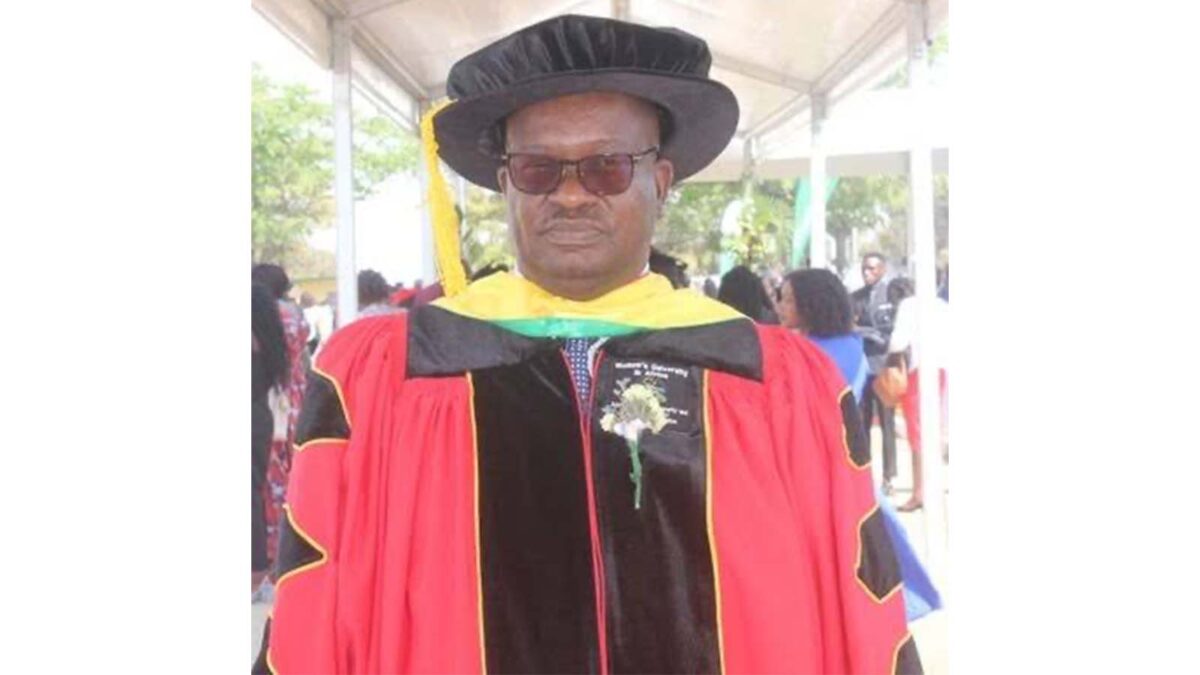
The Government must build on gains in the national economy and ensure they translate into tangible improvements for ordinary Zimbabweans, particularly those in rural communities, Mazowe Central legislator Dr Maxmore Njanji has said.
Contributing to debate on President Mnangagwa’s State of the Nation Address in Parliament on Wednesday, Dr Njanji welcomed the progress outlined by the President, saying the SONA provided a framework for accelerating development and improving livelihoods.
He said national development should be measured not only through macroeconomic indicators, but also by improvements in livelihoods, public services and economic opportunities.
The Second Republic’s philosophy of “leaving no one and no place behind” should ensure progress reaches every ward, village and household.
“The real strength of a State of the Nation Address is not only in outlining what Government has achieved at national level, but also in providing a clear framework to ensure that progress is felt by the ordinary citizen in the rural community,” Dr Njanji said.
His remarks come as Zimbabwe pursues Vision 2030 through interventions in agriculture, infrastructure, energy, healthcare, education, social protection and industrial development.
Dr Njanji said the reported 27,9 percent growth in agriculture, which contributed 2,2 percentage points to the country’s 8,3 percent GDP growth, provided a strong foundation for rural transformation. He called for farmers to gain better access to markets, finance, storage and processing facilities.
“The rural farmer does not measure agricultural success only by the number of tonnes harvested,” he said.
“The farmer asks: Where is the market? What is the price? Can I access finance? Can I store my produce? Can I process it locally? Can my children benefit from the income generated from the farm?”
He urged greater investment in irrigation, water harvesting, climate-smart agriculture, livestock development, extension services and rural infrastructure to promote value addition and make agriculture an engine of rural industrialisation rather than a source of raw commodities.
On infrastructure, Dr Njanji said the development agenda should focus on the “last mile”, citing bridges, schools, clinics, water systems and electricity as projects with major community impact.
He called for stronger coordination among the Constituency Development Fund, Government ministries, local authorities and development partners.
He said rural schools needed electricity, digital connectivity, learning materials and practical facilities, while health institutions required equipment, technology, connectivity, research capacity and professional development. He also welcomed proposed water-sector reforms and efforts to accelerate rural electrification, saying reliable water and electricity were essential to rural economic transformation.
On youth development, Dr Njanji said tackling drug and substance abuse required more than enforcement and should include skills development, sport, entrepreneurship, vocational training and employment.
“We must therefore approach drug abuse not only as a policing issue, but also as a development issue,” he said.
Dr Njanji said Mazowe Central demonstrated how national policy could be translated into local development through cooperation among Government, CDF, communities, development partners, churches and the private sector. He said MPs should take the SONA framework to their constituencies and ensure national priorities produce measurable local outcomes.
“For Mazowe Central, our priorities remain clear: quality rural education, accessible healthcare, reliable water and electricity, better roads and bridges, agricultural productivity, youth empowerment, digital inclusion and local economic development,” he said.
He said the next phase required urgency, accountability and implementation to make the country’s development agenda a lived reality.
“We therefore welcome the President’s call to scale up transformational results at all levels of society,” he said.