Online Reporter
Theseus Shambare in MANHIZE
Plans are now at an advanced stage to establish a Pan-African science university and modern smart city in Manhize, Midlands province, anchored by the US$1,5 billion Dinson Iron and Steel Company (Disco) plant.
The massive steel project, commissioned by President Mnangagwa, is reshaping the country’s industrial landscape while laying the foundation for a modern community that will integrate industry, housing, education and digital infrastructure into one ecosystem.
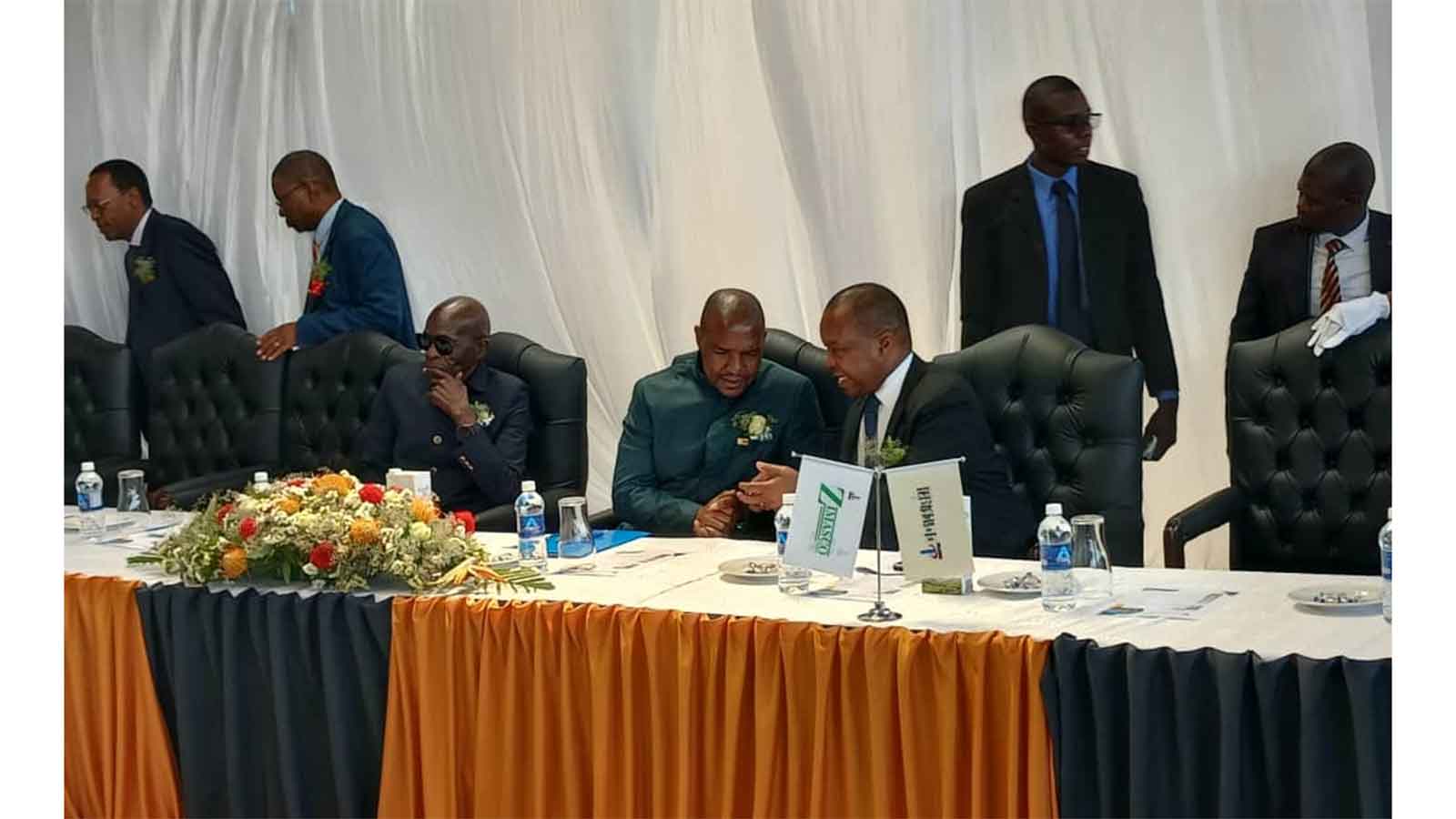
Information, Publicity and Broadcasting Services Minister Dr Jenfan Muswere on Friday toured the facility, where the latest developments were revealed.
Dr Muswere said the Manhize development illustrated the economic transformation being driven by the Second Republic.
“This tour reflects the new development thrust and investment climate created under the leadership of His Excellency, President Mnangagwa,” said Dr Muswere.
“For years, Zimbabwe has been spending hundreds of millions, even over a billion dollars, on steel imports.
“With local production now firmly in place, we are plugging that gap, saving foreign currency and redirecting resources into other sectors of the economy, as well as building new modern smart cities, in line with Vision 2030.”
Dr Muswere said the Manhize project symbolised Zimbabwe’s industrial revival and future growth.
“Beyond its role as a steel producer, this development carries the vision of building communities where innovation, modern infrastructure, jobs and education converge. It represents the essence of our transformation agenda,” he said.
Disco has since been granted special economic zone (SEZ) status.
Dr Muswere said such designation, granted through the Zimbabwe Investment and Development Agency (Zida), will accelerate investment inflows, drive industrialisation and create jobs.
“The special economic zone status granted by the Government through Zida is in line with the Zimbabwe is open for business philosophy in order to generate as much foreign direct investment as possible in the country,” he said.
Dr Muswere said Disco is a product of the Second Republic’s engagement and re-engagement drive, which has opened the door for large-scale foreign direct investment in strategic sectors.
“This steel giant is part of the success stories under the leadership of President Mnangagwa and already we have seen various steel products being produced here for the local and export markets in a development that will result in the lowering of the steel export bill, which was running into a billion (US) dollars annually,” he said.
As a result of the SEZ designation, Disco acts as zone owner, developer and operator, attracting investors across the iron and steel value chain. The park is projected to create up to 25 000 direct jobs and generate 150 000 indirect jobs at full capacity.
Dr Muswere said Disco has already met its first-year target of producing 600 000 tonnes of steel products, including pig iron, billets and bars, with 80 percent destined for export.
He said the plant’s integrated operations, sourcing raw materials locally from Mashonaland East (iron ore), Redcliff (limestone) and Hwange (coke), reflect the Second Republic’s emphasis on beneficiation and value addition.
“At the same time, this reflects in terms of our industrialisation, in terms of our sovereignty. For many decades, we have been importing steel products worth billions of dollars, but with the coming on board of Disco, this will be a thing of the past. All this is because of the magnetic investment environment that has been created by the New Dispensation, where the rallying call has been Zimbabwe is open for business,” said Dr Muswere.
Disco project director Mr Wilfred Motsi revealed that at the heart of the transformation in Manhize was the construction of the new smart city and university.
“Just before you cross the river, there is land reserved for a modern town that will host the Pan-African Science University,” he said.
“This will be a unique development that fuses industry, education, housing, and information and communication technologies into one ecosystem. It will be the first of its kind in Zimbabwe, a purpose-built city that reflects the future.”
Mr Motsi said Disco had already invested heavily in supporting infrastructure, including roads, bridges and housing, with priority given to uplifting nearby communities.
“Ninety-five percent of our workforce are Zimbabweans and 90 percent are from the local area. We want Manhize people to be the first beneficiaries of this historic development,” he said.
He further said the project was not only about production, but building a sustainable community.
“We are ploughing back through corporate social responsibility; building schools, clinics, modern houses and ensuring skills transfer.
“The smart city and university will position Manhize as an African hub for science, innovation and modern living,” he said.
Disco chief executive officer Mr Ben Xu, also known locally as Tanaka Shumba, said the company’s operations were already making an impact on the country’s economy.
“Since January, we have saved Zimbabwe about US$100 million in imports while earning up to US$200 million from regional exports,” he said.
“Our ambition is to reach five million tonnes of steel production annually at full capacity, which will generate at least US$5 billion for the economy.”
The chief executive officer also reflected on the cultural journey that laid the groundwork for the plant.
“Before construction, we honoured traditional customs with ceremonies that lasted months. Only after the ancestors gave their blessing did we begin work,” he said.
He stressed that Vision 2030 is achievable if all stakeholders pull together.
“We are here for the long term and our dream is to make Manhize a model for Zimbabwe and Africa. The steel, the smart city, the university; together, they represent a future of shared prosperity.”