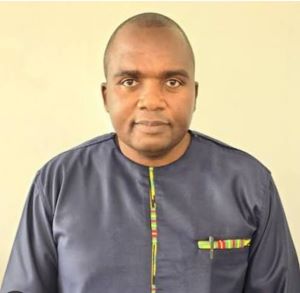
Limukani Ncube, Intake Editor
Divine Kingdom Baptist Ministries General Overseer Pastor Dr Ian Ndlovu has challenged church leaders who place personal celebrity and material display ahead of their spiritual calling, saying the church must prioritise preaching the gospel, serving communities and equipping people with practical skills.
Speaking on Bulawayo’s Finest podcast recently, Pastor Ndlovu, whose church is headquartered in Bulawayo with various branches in the country and abroad, said the growing flamboyance among some contemporary church leaders was largely driven by economic and demographic factors, as well as the influence of international religious movements that associate spirituality with material prosperity.
He argued that while there was nothing inherently wrong with pastors becoming wealthy, resources acquired through ministry should primarily advance the work of God rather than finance luxurious lifestyles.
“I don’t think we can find meaningful spiritual reasons behind the flamboyance,” Pastor Ndlovu said, observing that the trend was particularly visible among youthful ministers in new African independent churches.
He said some of these churches appeared to be adopting practices from the United States, West Africa and other parts of the world where religious influence was increasingly associated with material success.
Pastor Ndlovu, who is also an academic, said the growing prominence of expensive vehicles, designer clothing and elaborate public profiles among some church leaders had raised legitimate questions about the purpose of Christian ministry.
Pastor Ndlovu, however, cautioned against equating wealth with spiritual failure, noting that the Bible addressed both spiritual and material prosperity. He said churches needed substantial resources to spread the gospel, conduct crusades and sustain their operations, particularly when seeking to reach audiences beyond their immediate communities.
“For us to preach the gospel at a global level, we need a lot of resources to do that, to do crusades. But I don’t believe that God will give a pastor or a church leader a lot of resources in order to ensure that they live in luxury. I don’t believe God reasons like that.”
He said pastors could enjoy some of the comforts of life while remaining faithful stewards of the resources entrusted to them, but emphasised that the ultimate purpose of such resources should be to advance the church’s mission.
“It might be that as human beings, with our proclivities, we may develop a taste for the finer things in life out of what God has given us, but it’s a personal choice which each and every church leader will give an account of at the end of the day,” he said.
He added that criticism of pastors whose flamboyant lifestyles appeared to overshadow their ministries was justified, arguing that church leaders should never become more important than the message they are called to deliver.
He likened a pastor to a teacher or journalist, saying the central responsibility of both professions was to communicate information or a message rather than draw attention to themselves.
“My belief is that a pastor or prophet is a messenger from God. When one is a messenger, they are not more important than the message. What is important is the message and who sent them,” he said.
He acknowledged that church leaders sometimes faced criticism over their lifestyles and public profiles, adding that such scrutiny could be justified when personal prominence threatened to displace the central purpose of ministry.
The comments come amid wider public debate about the relationship between religious leadership, wealth, accountability and the growing influence of personality-driven ministries.
The pastor also questioned the practice of charging people for access to prophets or for prayers, challenging church leaders to examine the biblical basis for such arrangements.
He said some ministers relied on Old Testament teachings about not appearing before a prophet empty-handed to justify receiving money from people seeking spiritual assistance.
However, he argued that Old Testament prophets operated in a different context from prophets in the New Testament and that the two should not automatically be treated as occupying identical roles.
Drawing on Ephesians 4:11, Pastor Ndlovu said prophets were listed alongside apostles, evangelists, pastors and teachers as part of the five-fold ministry.
He questioned why people should be required to pay to access a prophet when similar requirements were not routinely applied to the other ministries mentioned in the passage.
“If people don’t pay in order to see a pastor, my question is why would they pay in order to see a prophet or an evangelist or a teacher?” he said.
Pastor Ndlovu argued that where a prophet serves within a congregation, the church community should provide a sustainable basis for supporting the church minister.
His argument was not that church leaders should be denied financial support, but that such support should be distinguished from making access to spiritual services dependent on individual payments.
Beyond questions of wealth and spiritual authority, Pastor Ndlovu called on churches to broaden their contribution to society by investing in education, vocational training, entrepreneurship and initiatives that address unemployment.
He said the gospel should minister to the whole person rather than focus exclusively on spiritual and intellectual development while overlooking the material conditions affecting people’s lives.
“As an academic, I believe the gospel must minister to the total man,” he said.
He argued that people needed food, clothing and transport to participate in church activities, illustrating the close relationship between spiritual life and economic circumstances.
“For the gospel to be effective, it must have a dimension of sustenance or subsistence,” he said.
He emphasised that churches should complement Government efforts, particularly in education and skills development, by establishing institutions that prepare young people for employment creation and responsible participation in society.
“At a certain point, I believe it’s also my calling to actually initiate schools where we can raise a youthful population or the next generation which is deep in Christian ethos, but in principles of diligence, hard work, focus and determination, and servant leadership,” he said.