Richard Muponde
Zimpapers Politics Hub
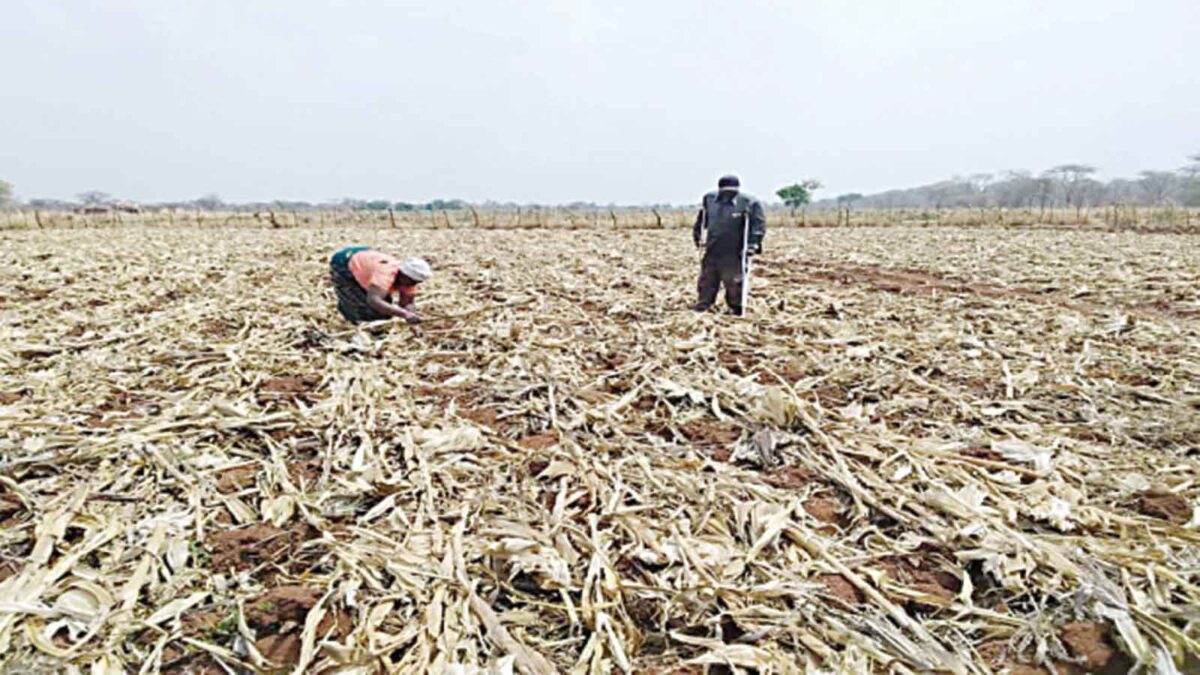
THE Second Republic, under the stewardship of President Mnangagwa, is accelerating the distribution of agricultural inputs under the Presidential Pfumvudza/Intwasa Programme as Zimbabwe prepares for the 2026/27 summer cropping season amid warnings of an El Niño that might result in a drought.
With forecasts pointing to reduced rainfall, prolonged dry spells and high temperatures, Government is pursuing a strategy that combines early input distribution, conservation agriculture, crop diversification, irrigation development and strategic grain reserves.
The objective is to protect household food production and ensure that climatic uncertainty does not become a national hunger crisis.
The scale of the mobilisation is significant.
Government is targeting 16 million Pfumvudza/Intwasa plots, equivalent to approximately one million hectares under climate-smart management. By the latest reporting period, farmers had prepared 9 477 090 plots, representing 59 percent of the target, with 3 725 369 farmers participating.
The figures reflect a nationwide effort. Early preparation enables farmers to plant promptly when effective rains begin.
President Mnangagwa’s no-one-will-starve pledge
President Mnangagwa has repeatedly assured Zimbabweans that Government will protect them from hunger, placing food security within the State’s responsibility to safeguard citizens.
A clearly documented reaffirmation came on September 26, 2024, at the handover of vehicles to traditional leaders in Harare.
Addressing the effects of the El Niño-induced drought, he said: “As you are aware, the nation is going through one of the worst droughts ever experienced in our recent history, due to the vagaries of climate change. Be that as it may, my Government has already put in place measures to ensure that no one stares.”
President Mnangagwa added: “In this regard, the Zunde RaMambo/Isiphala SeNkosi Programme has gained traction as we grapple with the El-Nino-induced drought which requires our traditional leaders to distribute food aid to the needy people in rural communities.
“My Government shall remain steadfast in distributing food to ensure that no one starves and Chiefs play a pivotal role in food distribution through the Zunde RaMambo/Isiphala SeNkosi programme.”
The pledge extends beyond production to organised food assistance and community institutions. Traditional leaders have an important role in ensuring that assistance reaches vulnerable households fairly.
Pfumvudza on the frontline against climate change
Pfumvudza/Intwasa is central to the current response because it promotes minimum soil disturbance, mulching, precise spacing and water harvesting. These practices help conserve soil moisture and make more efficient use of limited rainfall.
By concentrating labour and inputs on manageable plots, households can improve their prospects of harvesting even when the season is difficult.
Pfumvudza /Intwasa is not a guarantee against drought: success depends on timely inputs, recommended practices and sound extension advice. It nevertheless reduces exposure to erratic rainfall while improving soil health.
Inputs delivery turns commitment into production
Government has delivered 3 198 tonnes of maize seed against a target of 3 000 tonnes, reaching 107 percent. The achievement must translate into timely delivery to beneficiaries.
Fertiliser deliveries show why continued attention is necessary. Top-dressing fertiliser deliveries stood at 30 194 tonnes against a target of 60 000 tonnes, while Compound D deliveries reached 13 264 tonnes, or 22 percent of the target.
Sunflower seed deliveries were 944 tonnes against 1 700 tonnes, while sorghum seed deliveries were approximately 1 270 tonnes against a target of 6 600 tonnes.
The gap between depot stocks and receipt by farmers must be managed: late inputs lose value.
Coordination among suppliers, contractors, Grain Marketing Board depots and extension officers is crucial.
Duty-free fertiliser imports and greater use of compost and manure could ease supply and soil fertility constraints.
The provincial picture also shows the breadth of the exercise. Mashonaland Central had received 842 tonnes of maize seed against a target of 452 tonnes, while Mashonaland West had received 1 055 tonnes against 707 tonnes. Manicaland and the Midlands had also exceeded their maize seed delivery targets. Such variations make continued coordination important so that areas with shortfalls are not disadvantaged and available stocks move efficiently to farmers before planting begins nationwide.
Crop diversification strengthens resilience
The drought threat also reinforces the need to reduce excessive dependence on maize. Sorghum, pearl millet and finger millet are better suited to moisture-stressed conditions and can provide households with alternatives when rainfall is inadequate.
Farmers in Manicaland have been encouraged to allocate at least one Pfumvudza/Intwasa plot to sorghum, while also considering millet, cowpeas, groundnuts and sunflower.
Authorities advise farmers in drier areas to match crops to local conditions, avoid planting after isolated showers and consult Agritex officers.
Maize should be prioritised where moisture or irrigation makes it viable. Climate-smart agriculture requires informed decisions, not simply more cultivated land.
Strategic reserves and the duty to protect citizens
Government is seeking to build the Strategic Grain Reserve to at least 600 000 tonnes, providing a buffer if harvests are affected. The reserve requires adequate financing, transparent management and replenishment. Zunde RaMambo/Isiphala SeNkosi can complement national stocks.
Presidential inputs must be protected from diversion and resale.
Fair beneficiary selection, monitoring and consequences for malpractice are essential.
Irrigation and water security beyond the rainy season
More than 14 000 hectares of irrigated maize had been planted nationally. In Buhera, Marovanyati, Nerutanga and Ruti dams offer opportunities for irrigation, horticulture and fish farming.
The proposed 400-hectare Mwerahari-Nyashanu Irrigation Scheme could boost production and employment.
The test is whether interventions reach deserving households, particularly in drought-prone areas.
The 2023/24 El Niño drought exposed Zimbabwe’s vulnerability to rainfall dependence and the importance of timely food assistance.
Targets alone do not constitute food security. Success will be measured by completed deliveries, productive plots, harvests, adequate reserves and transparent support.
The pledge that no one will starve must remain the test of implementation.
Under President Mnangagwa’s stewardship, the strategy is to prepare early rather than wait for drought to become a disaster.
Protecting food supplies is not only an agricultural task; it is a matter of national sovereignty, economic stability and human dignity. No community should be abandoned to hunger, and no one should be left behind.