Online Reporter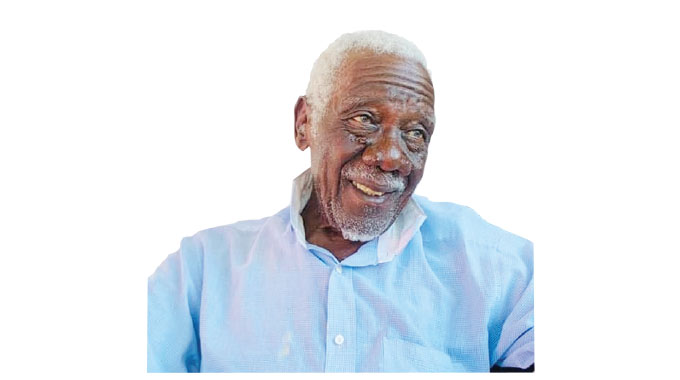
Gibson Mhaka
Zimpapers Politics Hub
AS Zimbabwe prepares to commemorate the 2026 Heroes and Defence Forces holidays, the conferment of National Hero status on several liberation stalwarts after their deaths marks more than another chapter in the country’s annual commemorations.
It represents a deliberate effort by the Second Republic to strengthen the nation’s liberation heritage by ensuring that deserving sons and daughters of Zimbabwe are accorded recognition regardless of when they passed on.
The decision by President Mnangagwa to confer National Hero status posthumously on veteran historian, journalist and nationalist Cde Saul Gwakuba Ndlovu, alongside Brigadier-General Kachana, Cde Hebert Zaba Sambo and Prof Sheunesu Mpepereki, underscores a principle that has increasingly defined the Second Republic’s approach to national memory — that the nation’s gratitude to those who fought for independence has no expiry date.
For many years, Heroes Day has been associated with honouring those whose contributions were recognised immediately after their passing.
However, the current move signals that the process of recognising liberation icons remains dynamic and responsive to history itself.
It acknowledges that some cadres, despite making immense sacrifices during the liberation struggle, may not have received the country’s highest honour when they died, yet their contributions remain no less significant.
The reinterment of these liberation stalwarts at the National Heroes Acre therefore becomes an important exercise in restoring historical completeness, ensuring that Zimbabwe’s liberation narrative continues to reflect the sacrifices of all those who played defining roles in securing independence.
Correcting historical omissions
History is often written over many years, and sometimes the full significance of an individual’s contribution only becomes more widely appreciated with the passage of time.
By giving national hero status to liberation fighters posthumously, the Second Republic is reinforcing the principle that recognition should be determined by service to the nation rather than by the timing of one’s death.
The case of Cde Saul Gwakuba Ndlovu illustrates this philosophy.
Although widely remembered as one of Zimbabwe’s most distinguished journalists and historians, his contribution to the liberation struggle extended far beyond the newsroom.
During the armed struggle, he served as director of Publicity and Information for Zapu between 1964 and 1978, becoming one of the movement’s principal voices on the international stage.
His responsibilities took him across Africa and Europe as Zapu’s diplomatic representative based in Algeria, with oversight of Tunisia, Morocco, Mauritania, Niger and Mali, while also engaging governments and solidarity movements in countries such as France, Belgium, Portugal, Spain, the Netherlands and the then Federal Republic of Germany.
He represented the liberation movement at Organisation of African Unity summits, United Nations anti-colonial forums and Afro-Asian People’s Solidarity Organisation conferences, ensuring that Zimbabwe’s struggle against colonial rule remained firmly on the international agenda.
Such responsibilities demanded diplomatic skill, political clarity and unwavering commitment to the liberation cause.
Following Independence, Cde Gwakuba Ndlovu continued serving the nation through journalism, joining The Chronicle before rising to become Features and Supplements Editor for both The Chronicle and The Sunday News.
His writings helped preserve Zimbabwe’s liberation history for future generations.
The decision to accord him national hero status therefore recognises not merely his achievements as a journalist, but his broader contribution as a liberation diplomat, political communicator and custodian of national history.
His reburial at the National Heroes Acre symbolically reunites his life’s work with the ideals he spent decades defending.
Liberation was won through many forms of service
The four liberation stalwarts whose remains are being reburied this year reflect the broad coalition of men and women whose different talents collectively delivered Zimbabwe’s independence.
Brigadier-General Kachana represents the military dimension of the liberation struggle, where commanders organised, trained and led combatants against the Rhodesian regime.
Military leadership remained indispensable to sustaining armed resistance throughout the protracted liberation war.
Cde Herbert Zaba Sambo symbolises the countless political cadres and grassroots organisers whose mobilisation work connected the liberation movement with ordinary Zimbabweans.
Their contribution often occurred away from battlefields but remained equally essential in sustaining the revolution.
Professor Sheunesu Mpepereki represents another equally important pillar of national development.
As an academic and nationalist, his life’s work demonstrated that nation-building extends beyond political liberation into education, research and the production of knowledge capable of transforming society.
Meanwhile, Cde Gwakuba Ndlovu’s life reminds Zimbabweans that journalism, diplomacy and political communication were themselves powerful weapons in the liberation struggle.
International opinion had to be won.
Diplomatic alliances had to be forged.
The colonial narrative had to be challenged before global audiences.
Taken together, these four distinguished Zimbabweans demonstrate that the liberation of the country was not achieved solely through military engagements.
It was won through diplomats, intellectuals, political organisers, communicators, academics and ordinary citizens who committed themselves to a common national objective.
The diversity of those being honoured reinforces the inclusive character of Zimbabwe’s liberation history.
Preserving national memory
Every reburial at the National Heroes Acre serves not only as a solemn farewell, but also as a lesson for future generations.
For young Zimbabweans born long after Independence, these ceremonies provide tangible connections to the country’s liberation history.
They transform names found in history books into real people whose sacrifices shaped modern Zimbabwe.
The physical relocation of remains from family cemeteries to the National Heroes Acre carries profound symbolism.
It marks the point at which personal family history becomes part of national history.
While families understandably experience both sorrow and pride during exhumations, the nation simultaneously assumes collective responsibility for preserving the legacy of its liberation heroes.
The National Heroes Acre therefore functions as more than a cemetery.
It is a national classroom.
Each grave tells the story of sacrifice, patriotism and resilience.
Every reburial provides another opportunity for schools, universities and communities to revisit Zimbabwe’s liberation history and reflect on the values that underpinned the struggle for self-determination.
The presence of young people during such ceremonies also strengthens inter-generational dialogue, ensuring that the ideals of patriotism, unity and national sovereignty continue to be transmitted to future generations.
In this regard, posthumous recognition serves an educational purpose as much as a commemorative one.
The Second Republic’s philosophy of remembrance
Since assuming office, President Mnangagwa has consistently emphasised the importance of preserving Zimbabwe’s liberation heritage as a cornerstone of nation-building.
His administration has repeatedly stressed that national development should proceed alongside the preservation of historical memory.
The conferment of National Hero status on liberation stalwarts years after their passing reflects this broader philosophy.
Rather than viewing liberation history as a completed chapter, the Second Republic has demonstrated willingness to revisit deserving cases where historical contributions warrant renewed national recognition.
This approach aligns with the broader national vision of leaving no place and no one behind.
In practical terms, it ensures that recognition is not confined to any single generation or moment in history but remains an evolving process guided by service to the nation.
The inclusion of liberation fighters from different provinces and professional backgrounds also strengthens national cohesion by demonstrating that Zimbabwe’s independence was secured through collective sacrifice across geographical, political and professional boundaries.
In doing so, the Government reinforces Heroes Day as more than an annual ceremony.
It becomes an enduring national conversation about patriotism, unity, sacrifice and shared responsibility for safeguarding the country’s sovereignty.
Remembering liberation fighters therefore serves not merely to honour the past but to inspire future generations to contribute to national development with the same spirit of selflessness displayed by those who fought for freedom.
A living national story
The exhumations taking place across the country this week may appear, on the surface, to involve the physical movement of remains from one burial place to another.
Their deeper significance, however, lies in restoring distinguished liberation figures to the centre of Zimbabwe’s national story.
By honouring Cde Gwakuba Ndlovu, Brigadier-General Kachana, Cde Sambo and Prof Mpepereki, the Second Republic is reaffirming that the nation’s liberation history remains a living heritage rather than a closed chapter.
The posthumous conferment of National Hero status sends a powerful message that Zimbabwe does not measure gratitude by time, but by sacrifice.
As the nation gathers to commemorate Heroes Day, these reburials will stand not only as ceremonies of remembrance, but also as enduring affirmations that those who dedicated their lives to securing Zimbabwe’s independence will continue to occupy their rightful place in the country’s collective memory.
In honouring yesterday’s heroes today, Zimbabwe strengthens the foundation upon which future generations will build tomorrow.