Mthabisi Tshuma [email protected]
ZIMBABWE has challenged developed nations to stop making empty promises and urgently avail the US$30 billion per year pledged for global biodiversity protection, warning that failure to do so will leave developing countries to shoulder the heavy cost of conservation alone.
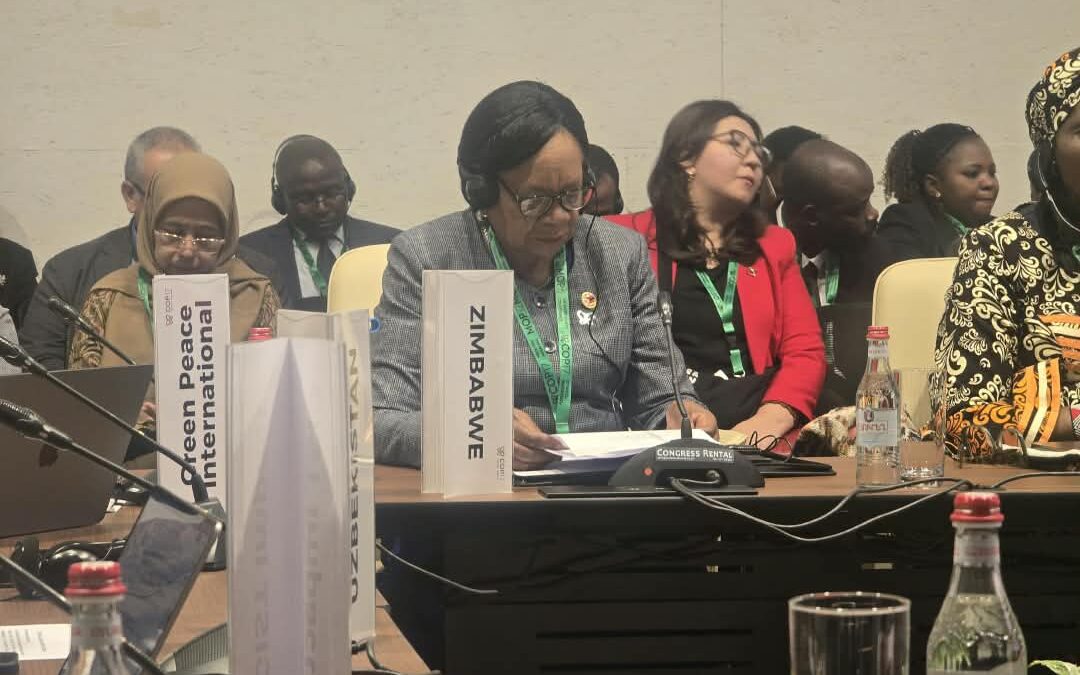
The call was made by President Mnangagwa, at the Leaders’ Summit of COP17 of the Convention on Biological Diversity (CBD) held in Armenia on Friday.
President Mnangagwa could not physically attend the summit and was represented by Minister of Environment, Climate and Wildlife Minister, Dr Evelyn Ndlovu.
In his keynote address, President Mnangagwa reaffirmed Zimbabwe’s unwavering commitment to the Kunming-Montreal Global Biodiversity Framework, but insisted that conservation cannot come at the expense of development.
“I wish to reaffirm Zimbabwe’s commitment to the implementation of the Kunming-Montreal Global Biodiversity Framework based on the firm belief that biodiversity conservation and economic development are not competing objectives, but mutually reinforcing imperatives.
“Zimbabwe firmly believes that our collective ambitionson biodiversity must be matched by the means of implementation for the delivery of tangible results. We remain concerned that the commitment deficit by developed countries has resulted in a corresponding and widening financing gap. We call for predictable and accessible financing, including simplified access procedures. It is our responsibility to ensure that the commitment on USD30 billion a year by 2030 does not remain a pious dream,” said President Mnangagwa.
President Mnangagwa said the Convention on Biological Diversity recognises that conversation must complement development with Zimbabwe adopting a number of frameworks to accelerate implementation, strengthen accountability and close existing gaps.
“The CBD affirms the sovereign rights of States over their natural resources and recognises that economic and social development, and the eradication of poverty, are the overarching priorities of developing State Parties. Conservation, must therefore, be pursued in tandem with development objectives.
“Zimbabwe adopted its third National Biodiversity Strategy and Action Plan for 2026 to 2030, anchored on conservation and restoration; the sustainable use of biodiversity in support of national development; and the fair and equitable sharing of benefits with local communities. We have regularly met our reporting obligations under the Convention on Biological Diversity (CBD), the Nagoya Protocol on Access and Benefit-Sharing, and the Cartagena Protocol on Biosafety. We, therefore,welcome the global review of collective progress as an opportunity to accelerate implementation, strengthen accountability and address existing gaps,” said President Mnangagwa.
President Mnangagwa said drawing from its own experience, Zimbabwe’s sustainable utilisation is underpinned by science, strong regulation and fair benefit-sharing as a proven tool for protecting biodiversity.
“Zimbabwe’s conservation experience demonstrates that sustainable utilisation, guided by science, effective regulation and equitable benefit-sharing, remains an important instrument for biodiversity conservation. It is essential to create space for the role of indigenous peoples and local communities in sustainable conservation. This ensures effective management of human-wildlife conflict and the considerable costs associated with managing growing wildlife populations.
“Zimbabwe brings this conviction to its Presidency of the COP15 to the Ramsar Convention on Wetlands. The fifth Ramsar Strategic Plan is closely aligned with the Kunming-Montreal Global Biodiversity Framework, enhancing implementation across the two agendas. Our Presidency will continue to deepen synergies between the Ramsar and Rio Conventions, to advance the conservation and restoration of wetlands, recognizing their vital contribution to biodiversity, water security, climate resilience and sustainable livelihoods,” said President Mnangagwa.
President Mnangagwa concluded with a call for decisive action.
“Let us harness this opportunity by matching our commitments with requisite finance, technology, capacity and cooperation.
“We should emerge from Yerevan with renewed political resolve to advance the biodiversity agenda,” said President Mnangagwa.
Zimbabwe’s position has been hailed by conservation experts as a bold defence of the Global South, demanding equity, justice and practical support in the global fight to protect nature.
Follow on X :@mthabisi_mthire