Online Reporter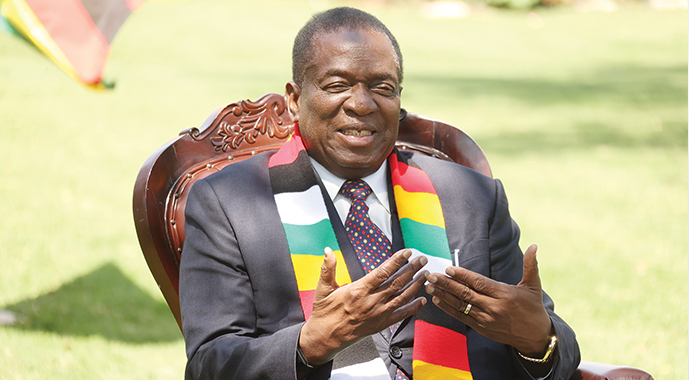
Fungi Kwaramba, Zimpapers Writer
ZIMBABWE should take stock of its progress, correct mistakes where there is need, as it journeys towards Vision 2030 to become an upper-middle-income economy riding on vibrant innovations, especially from the youth, President Mnangagwa has said.
Speaking in Harare on Monday, the President reflected on progress that Zimbabwe has made on many fronts, including infrastructure development, improvements in the health sector and his belief in the country’s development trajectory anchored by an energetic youth who share the same vision with him.
“If you are a President, you need a country that is moving forward, always innovating, which is critically important. I think it’s very important to say this year we are here, next year we are there and so on,” he said.
“You make some progress; it’s even necessary that you continuously move and by so doing then you don’t always do the same thing, you make mistakes, you correct yourself, but things must continue going on”.
During a walkabout on the State House grounds before he sat down for an interview with ZBCtv on Zimbabwe’s assumption of the chairmanship of COMESA in October, President Mnangagwa said he was happy as a leader to see young people participate in the economic development of the country.
“Any leader who sees the younger generation participate in the development of their country should be happy. We are lucky in Zimbabwe; we have a very vibrant young generation which is eager to identify itself with the development of the country and the party (Zanu-PF),” he said.
“I am happy with that. It would be a disappointment if, as a country and you are the leader and the youth are going elsewhere, but fortunately in Zimbabwe we are moving in the same direction”.
The Second Republic continues to record major milestones across infrastructure, agriculture, mining and youth development, as the Government accelerates its drive towards an upper-middle-income economy by 2030.
“I am happy that our people are very innovative, creating new structures that are very modern and attractive,” President Mnangagwa said in response to a question on infrastructure development.
On the infrastructure front, thousands of high-impact projects have been completed nationwide, including major highway upgrades, strategic dam construction and the expansion of Hwange Power Station Units 7 and 8, which have tremendously bolstered the national energy grid.
In agriculture, food security has been strengthened through climate-proofed initiatives such as the Pfumvudza/Intwasa programme, complemented by increased irrigation schemes and farm mechanisation, insulating rural communities from weather shocks while boosting productivity.
That aside, the mining sector has transformed, with a renewed focus on local beneficiation of minerals, particularly lithium and iron ore.
This value-addition drive ensures that Zimbabwe retains greater economic returns from its natural resources while stimulating downstream industrial growth.
Central to the Second Republic’s vision is the empowerment of the nation’s youth and through the Heritage-Based Education 5.0 model, the learning system has shifted from producing job-seekers to nurturing graduates capable of creating goods, services and industrial solutions.
Innovation hubs at universities are accelerating this shift, providing young researchers with platforms to commercialise their ideas.
Financial empowerment programmes, including the Presidential Youth Empowerment Scheme, are providing revolving funds, tractors and mining equipment to young entrepreneurs.
Concurrently, digital skills training initiatives are equipping millions of young Zimbabweans with expertise in coding, software engineering and data science, positioning them to thrive in the global digital economy.
These interventions collectively underline the Government’s unwavering commitment to inclusive growth, leaving no place and no one behind as the nation marches towards Vision 2030.
Asked about the progress, President Mnangagwa said he is a reflection of the people and aspirations of Zimbabweans.
“At the end of the day, it’s not the President, it’s the people, the President reflects the people, not the people reflecting the President, because it’s from the people that the President comes from, so the President is a reflection of the people,” he said.