Curtworth Masango Zimpapers Sports Hub
FOR a group of young footballers still learning each other’s movements, habits and ambitions, the next assignment carries considerable weight.
Mali await, a place in the next round of the Under-23 Africa Cup of Nations qualifiers is at stake, and Zimbabwe’s hopes will again rest on players whose careers are only beginning to take shape.

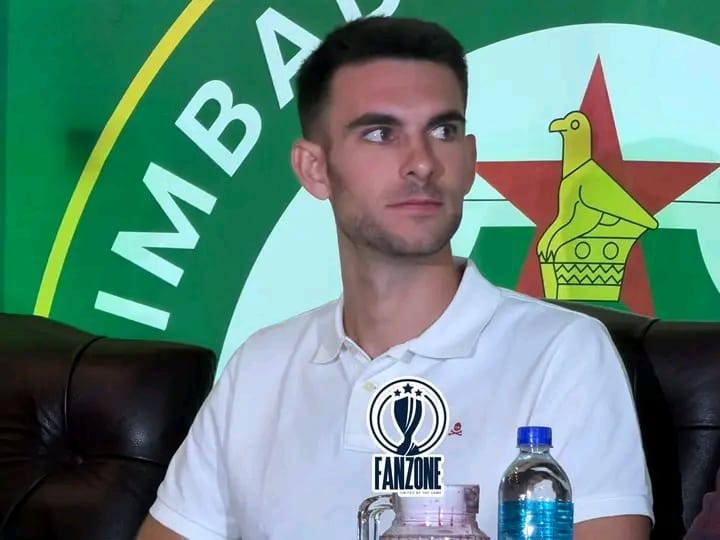
But Young Warriors coach Marc Sanchez has a different way of describing the burden of the national shirt.
“Pressure is a privilege.”
It is the message he delivered before Zimbabwe began their campaign against Mauritius, and one that captures his approach as the players prepare to report for camp on November 8 and 9.
“I told my players before the first match against Mauritius that pressure is a privilege for us,” Sanchez said.
“It means that we are playing for something good.”
The Young Warriors earned this opportunity with a commanding 6-1 aggregate victory over Mauritius. A 2-0 win at the National Sports Stadium was followed by a 4-1 away success, with Portsmouth youngster Elisha Pfupa scoring a hat-trick and David Chigwada adding the other goal in the return leg.
Those results provided an encouraging introduction to Sanchez’s project. Yet, when he assesses his team, the conversation quickly moves beyond the scoreboard.
For him, the first camp was also about introductions, players meeting, absorbing a shared approach and discovering whether individual talent could become a collective identity.
“I see the team progressing very well,” he said.
“First of all, the idea was to have them meet each other, start working with our ideas and see how they could follow them.
“They have shown that they are very talented and able to understand our ideas. This is the way we want to work because we think it is the best way for them to develop.”
The provisional squad reflects the geographical reach of that ambition.
Players from Zimbabwean clubs feature alongside youngsters attached to academies and teams in England, Australia, Finland and South Africa. Among them are Pfupa, Brentford’s
Chigwada, Norwich’s Miles Bracking, Fulham’s Seth Chingwaro and Birmingham’s Menzi Mazwi.
Locally based players, including Highlanders’ Prince Ndlovu, Golden Eagles’ Elshadai Sadomba and Ngezi Platinum’s Nisbert Muzenda, are part of the same selection pool.
Different football environments feed into one dressing room. Sanchez’s task is to give them a common language on the pitch.
He approaches that responsibility through the people behind the club names.
“They have the same fears, the same aims and the same objectives,” he said.
“We try to bring with us the best players we can, the players we think are best for each position and those who have the best chances of reaching the senior team in the short term.
“When we are in the same camp, we are the same team. We represent the same country and we work the same way with all of them.”
The Mauritius trip offered an early examination of that unity.
Sanchez believes the away performance revealed maturity as well as attacking promise. He was unhappy with what he described as aggression from the opposition and called for greater protection for players from referees.
His strongest impression, however, was of a team that maintained its football under difficult circumstances.
“My players showed that even under those conditions, they were able to win 4-1,” he said.
“They were able to play a very good match and show our football, our identity, even in the tough moments.”
Mali now provide the next examination of how firmly that identity has taken root.
Zimbabwe’s assignment is part of the route to the 2027 Under-23 Afcon in Egypt. The winners of the second-round ties advance to a final qualifying round, where seven places alongside the hosts will be decided.
Sanchez wants his players to carry their progress into the new challenge.
“The biggest challenge will be trying to achieve the same level of football we showed in the last match,” he said.
“Of course, it is not easy to do that in every match against different teams. But we also want to take it to another level.
“It was our first camp together. We would like to keep improving, and the challenge is not just for Mali. It is for every camp we have together, to keep improving and developing the players.”
With arrivals expected on November 8 and 9, the next gathering will give the technical team another opportunity to turn those intentions into training-ground work.
“We have been in touch with the players during these weeks,” Sanchez said.
“We will start preparing with them when all of them are here with us.”
For all the importance of the Mali tie, Sanchez measures his assignment over a longer stretch of time.
The senior Warriors are central to his thinking. Every camp should help bring a player closer to the demands of senior international football, whether through better decisions, greater confidence or a clearer understanding of his role.
“The first aim is to develop the players for the senior team in the future. It is the most important objective,” he said.
“Then the second one is the competitive objective, to try to win and progress.
“Our focus is still to give the players opportunities and the environment to keep developing, to be ready for the senior team in the coming years.”
That ambition also reaches into their club careers.
Sanchez believes the group contains players capable of reaching the world’s leading leagues, and says the technical team intends to maintain contact beyond national duty.
“One thing we will also do is go to England to meet them, follow them and be able to help them there,” he said.
“We want to be part of their journey as they develop their careers and reach professional football.
“They are very young, but they have shown their potential. I trust my players a lot. I think most of them can reach the best leagues in Europe and the world in the future.”
He also wants stronger foundations for those developing at home.
While praising Zifa’s support for the national team, Sanchez identified pitches and youth competitions as areas requiring improvement.
“I am very happy with Zifa. I feel supported,” he said.
“But there are things in Zimbabwean football that can improve to give players more chances to develop.
“Pitches and youth competitions can help create a good environment for young players.
That will help all the players and also me as head coach, because they will be better prepared.”
Qualification would give this emerging group something particularly valuable: more time together, with meaningful matches to accelerate their education.
“It means more competitive experience for this young group, to live together and develop themselves for the next steps,” Sanchez said.
“But our first objective is to help the players develop, and we can help them whether we progress or not.
“We will still be working together, preparing matches and training sessions.
“It would be amazing to qualify because the competitive environment always helps. But it is not an ultimatum. It is not a life-or-death situation.”
When the players assemble, they will bring different experiences and different routes into the national shirt.
Sanchez wants them to leave camp closer to one another, closer to his football and closer to the senior team.
First, they have Mali, and the privilege of something worth playing for.