Obey Musiwa-Herald Reporter
ESTABLISHED mining companies have offered to partner Government in improving safety, technical skills and working conditions in the artisanal and small-scale mining sector, which accounts for approximately 70 percent of Zimbabwe’s gold output.
Industry players say the sector requires more than financial support, noting that technical assistance, regular inspections and training are equally critical in reducing mining accidents, improving productivity and curbing environmental degradation.
The offer comes as Government moves to revive the Mining Loan Fund, an initiative aimed at helping small-scale miners acquire equipment and formalise their operations.
Private-sector players say they are ready to complement the scheme with specialised technical expertise.
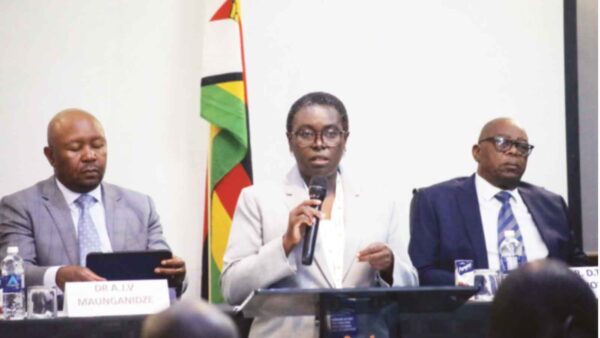
Speaking at the Planet Gold Zimbabwe Annual Stakeholder Conference 2026 in Harare recently, T&A Drilling and Blasting managing director Mr Kundai Chidamba said established mining firms could assist small-scale miners with technical services ranging from exploration and drilling to blasting and mine development.
He said such interventions would improve mining practices and reduce accidents, particularly where operators lack the technical knowledge required to run mines safely.
Mr Chidamba said financial support programmes should be accompanied by follow-up mechanisms to ensure beneficiaries adhere to safety standards, including proper explosives storage, safe shaft construction and formal training.
“We are 100 percent available and at the disposal of Government in support of Vision 2030,” he said.
He cited a recent explosives magazine blast in Kadoma, which claimed lives and destroyed property, as an example of an accident that could have been prevented through closer collaboration between Government and the private sector.
“This can be prevented if we work together, with Government and the private sector playing complementary roles to enhance safety,” he said.
Mr Chidamba also called for information on available loan facilities and decisions reached at industry forums to be disseminated to miners in remote areas, adding that access to information was essential for improving mining operations.
He further advocated training in gravity concentration methods to help miners recover more gold while reducing reliance on mercury.
“The help does not necessarily have to come from the ministry itself. The ministry should partner with us, the industry technocrats,” he said.
G-Zone Mining and Milling Company production manager Mr Lovemore Matsena said his firm, which operates at the former Elvington Mine in Chegutu, had already embraced formalisation and was working with artisanal miners to promote mercury-free gold processing.
The company buys ore from small-scale miners and processes it without extracting the free gold, before selling the resulting concentrate to Magaya CIP for further processing.
Mr Matsena said this approach avoided the use of mercury during the initial processing stages, although the company still relied on the chemical where alternative technology was unavailable.
He added that the company was working closely with regulatory authorities responsible for environmental and mining oversight to monitor compliance.
“I can say I’m ready because I’m already involved. We are working with them, and they are the ones monitoring our environmental protection efforts,” he said.
Environmental Management Agency Shamva district officer Mr Trevor Chikumbu said the conference brought together Government authorities, local leaders and the Ministry of Health and Child Care to address safety and health challenges in artisanal mining.
He said EMA had undertaken awareness campaigns and developed an environmental management plan for small-scale miners to guide operators towards responsible practices and formalisation.
“We have engaged artisanal and small-scale miners on an individual basis in an effort to regularise their operations and bring them closer to compliance requirements, particularly regarding safety,” he said.
Mr Chikumbu said the forum was helping to build cooperation towards eliminating mercury use, describing it as “unlocking the willingness of various players in the sector to work together in achieving a mercury-free environment”.
AFRIGRIC national co-ordinator Mr Gibson Guzha said discussions highlighted the dangers of mercury, which extend beyond miners to pregnant women and local communities.
“Mercury is one of the most dangerous chemicals used by artisanal and small-scale miners, and its dangers are often underestimated,” he said.
He said the forum also examined the illegal mercury trade, including the procurement, sale and disposal of the chemical, adding that greater awareness among stakeholders was needed to address the problem.
“I hope this message will reach all stakeholders involved in the sector,” he said.