Online Reporter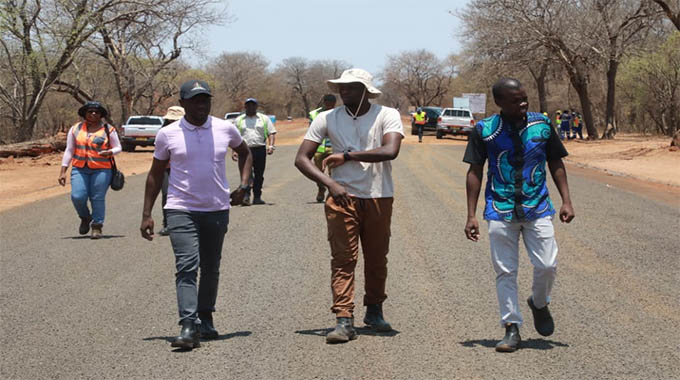
Raymond Jaravaza, [email protected]
CONTRACTORS working on the rehabilitation of the Bulawayo–Victoria Falls Road are expected to start opening completed sections of the highway to traffic as the massive infrastructure project gains momentum.
The road, a critical trade and tourism artery linking Zimbabwe with Zambia, Namibia and Botswana, is being upgraded under the Government’s ongoing national road rehabilitation and modernisation programme.
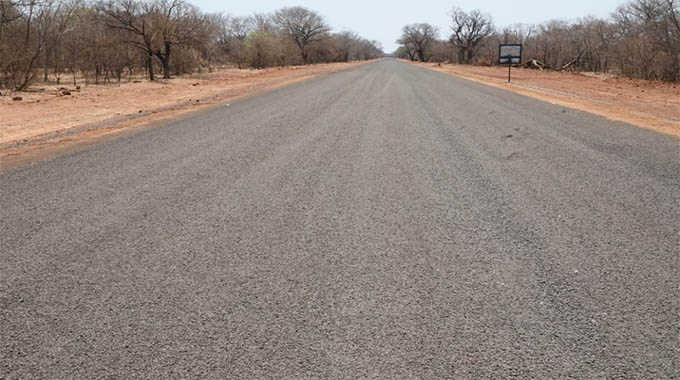
Initially, five contractors — Fossil Contracting, Masimba Construction, Syvern Investment, Bitumen Resources and Tensor Systems — were awarded contracts to rehabilitate sections of the 440-kilometre stretch. However, the Government recently added three more contractors for Lots 6, 7 and 8, covering the final approaches to Victoria Falls, to fast-track completion. Yesterday, a newly rehabilitated 5km section in Insuza, Umguza District, was opened to traffic. The section was reconstructed by Syvern Construction. The Bulawayo–Victoria Falls Road serves as a key route for regional trade and tourism, connecting southern Zimbabwe to the Kazungula Bridge and the wider SADC transport network.
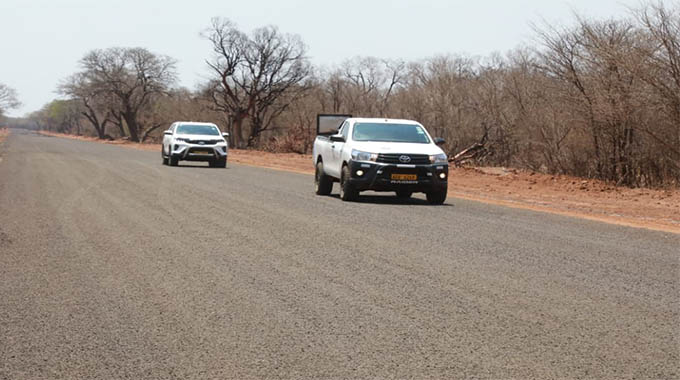
For years, motorists, truckers and tourists travelling to Victoria Falls — a Unesco World Heritage Site and one of the world’s premier destinations — have endured long, difficult journeys due to pothole-riddled and narrow stretches of the highway. The rehabilitation work, expected to take about 10 months, aims to restore the route to world-class standards that support the free flow of goods, tourism traffic and regional economic integration.
Matabeleland North Provincial Roads Engineer Xolani Ncube said all eight contractors are still within their 10-month project timeline and have made visible progress.
“Initially, five contractors had been awarded contracts, and the Government later added another three. Three of the contractors are currently doing stabilisation work on their respective five-kilometre stretches, and in the next two weeks, we also expect them to open sections of the road to traffic,” he said.
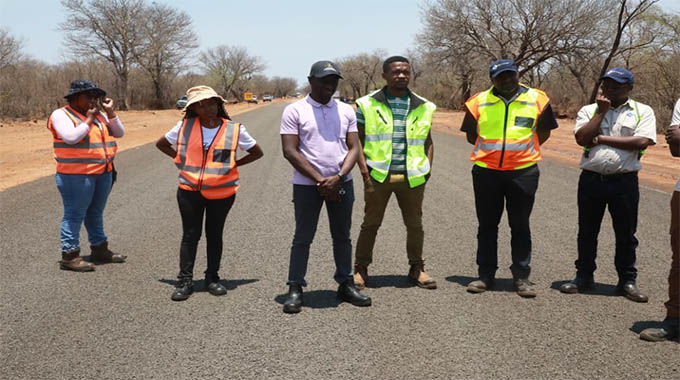
Eng Ncube explained that the Government has adopted a “kilometre-by-kilometre” approach, meaning contractors progressively open completed sections to motorists while continuing work further along the route.
“Opening completed stretches also helps harden the surface before final road markings and allows the easier movement of goods and passengers,” he said.
Permanent Secretary in the Ministry of Transport and Infrastructure Development, Engineer Joy Makumbe, said the approaching rainy season would not significantly disrupt the project.
“The approaching rainy season is a key consideration in our national infrastructure planning. While weather conditions can pose challenges, contractors are prepared to continue with critical works where it is safe and technically feasible,” she said.
Eng Makumbe added that modern construction techniques and flexible contracts allow for work to continue even during heavy rains.
“During heavy rains, focus may temporarily shift to activities less affected by weather — such as drainage works, culvert installations, material procurement and site preparation,” she said.
“Our overarching priority remains the safety of both the workforce and the travelling public, as well as the long-term integrity of the road.”
Eng Makumbe described the Bulawayo–Victoria Falls Road as a flagship project under the Second Republic’s infrastructure drive, a key enabler of Vision 2030 for an upper-middle-income economy.
“While there is still significant work ahead to complete the project, the current pace and quality of work are in line with our expectations. We are committed to transforming this vital artery into a world-class road that enhances safety and boosts economic activity for the entire region,” she said.
Truck driver Mr Enoch Hove, who frequently travels the route, said visible progress was encouraging.
“It would be good for motorists if contractors opened at least 25 kilometres of good road every month. In six months, a lot of ground would have been covered,” he said.
The Bulawayo–Victoria Falls Road rehabilitation is part of the Emergency Road Rehabilitation Programme (ERRP II), launched by the Government to modernise national transport infrastructure. The programme has seen major works on highways such as Harare–Beitbridge, Harare–Chirundu, Mutare–Harare, and key feeder roads in all provinces.
The project aligns with the Second Republic’s policy of devolution and inclusive development, ensuring that strategic economic corridors in all regions receive attention to unlock industrial growth, facilitate tourism and enhance cross-border trade.
Once complete, the highway is expected to improve road safety, reduce travel time between Bulawayo and Victoria Falls and strengthen Zimbabwe’s position as a regional logistics and tourism hub.
Ends