Online Reporter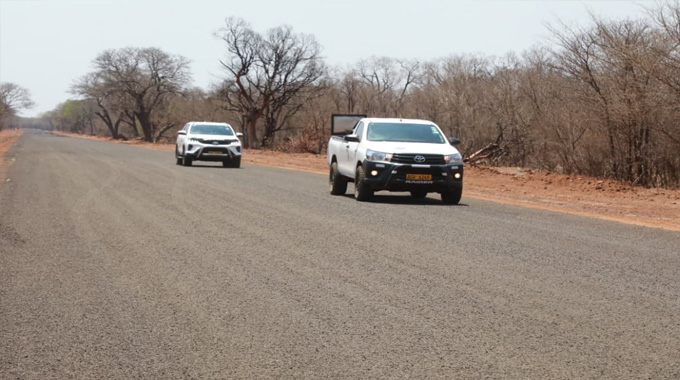
Fairness Moyana in Hwange
THE sun beats down on the shimmering tarmac of the Bulawayo–Victoria Falls Highway, a lifeline for tourism and trade in Zimbabwe’s north-west.
But beyond the hum of machinery and the promise of progress, a storm is brewing — a debate that pits infrastructure against ecology, development against preservation.
At the centre of the controversy is Lot 6, a section of the highway rehabilitation project that cuts through the buffer zone of Hwange National Park, one of Africa’s most iconic wildlife sanctuaries.
Conservationists and tourism operators have sounded the alarm, warning that a proposed 45-kilometre detour could funnel heavy traffic through fragile habitats, threatening elephants, painted dogs, and the very soul of Hwange’s wilderness.
Government engineers, however, insist the plan is not reckless but calculated — a compromise between safety, sustainability, and environmental care.
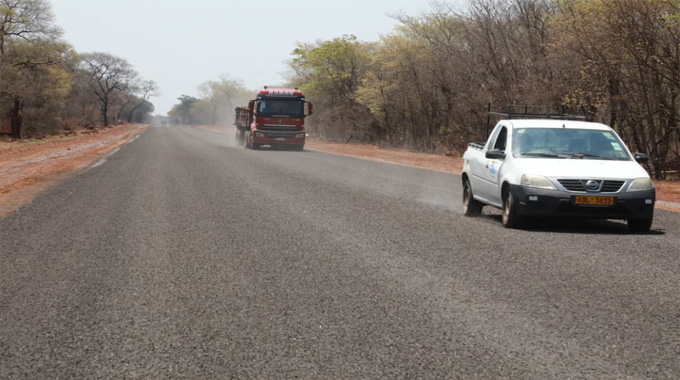
“We have had concerns, especially around some of the traffic diversion routes — like the one from Cross Dete through Main Camp 10 North to Mabale,” said Engineer Peace Takudzwa Harare, speaking on the sidelines of the commissioning of a newly rehabilitated 3.6-kilometre stretch of the highway.
“If vehicles move on a surfaced road, we reduce visibility problems caused by dust. Hwange’s high temperatures mean that even with dust suppression, water evaporates quickly, creating unsafe driving conditions.
It’s safer and more environmentally sound to keep traffic on a tarred surface rather than opening new detours through sensitive habitats.”
Harare said that the ministry, working with contractors and local authorities, opted for existing surfaced routes to avoid carving fresh scars into the landscape.
Every kilometre, he said, is being laid under strict directives: complete each section in one phase, minimise delays, and limit ecological disruption.
“The contractor has been instructed to commit 100 percent of resources — men and machinery — to complete the Cross Mabale to Cross Dete stretch in one go.
“We want to ensure that we minimise the impact on both wildlife and human communities. Even vibrations from machinery can affect animal behaviour. So, we are prioritising efficiency and environmental care,” he said.
The ministry is also working closely with ZimParks, rural district councils, and environmental agencies to ensure responsible execution.
“We are in touch with the community and environmental custodians. Where possible, we are using already existing routes and park ranger tracks instead of opening new ones. This way, we minimise cutting trees and disturbing the natural ecosystem,” Harare said.
But conservation groups remain unconvinced. Organisations such as Painted Dog Conservation (PDC), Amalinda Safari Collection, and the Association for Tourism Hwange (ATH) have warned that the detour could undo years of conservation work, increase vehicle-animal collisions, and disrupt tourism — a vital economic pillar for the region.
In letters to Government and contractors, PDC executive director Peter Blinston called the plan a “grave ecological misstep”, while ATH coordinator Shamah Mawoko urged authorities to adopt a “practical and sustainable alternative” that safeguards Hwange’s wildlife and tourism assets.
Harare’s response was firm but conciliatory.
“We are conscious of sustainability. For instance, our contractors are re-using materials from the old road to reduce deforestation and quarrying. We want to leave a positive legacy — safe roads, thriving tourism, and protected ecosystems.”
The debate comes as the Government accelerates its Emergency Road Rehabilitation Programme (ERRP), aiming to upgrade the entire 440-kilometre Bulawayo–Victoria Falls Highway within ten months.
The project, led by Bitumen World, is part of President Mnangagwa’s development mantra of “leaving no one and no place behind.”
λ Full story on www.chronicle.co.zw
Traditional leaders and local authorities have hailed the progress, saying it is restoring vital economic lifelines for Hwange communities. Yet, as bulldozers roll and tar is laid, the question lingers: Can Zimbabwe modernise without sacrificing its natural heritage?
For now, Government engineers insist the answer is yes — that every decision, every detour, every kilometre will strike a delicate balance between progress and preservation. Time, and the wildlife of Hwange, will be the ultimate judges.