Nqobile Bhebhe
Zimpapers Business Hub
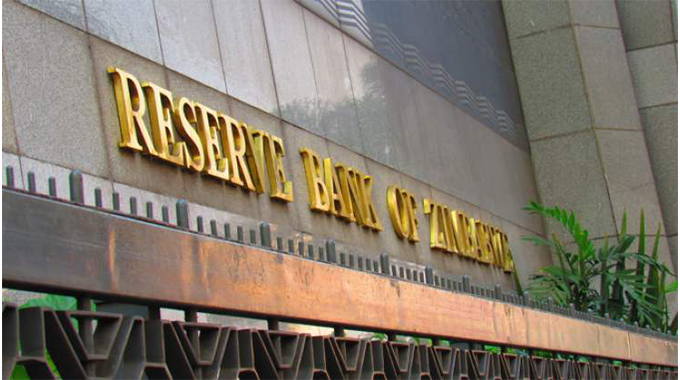
THE Reserve Bank of Zimbabwe will introduce a fully automated foreign currency trading system in November to enhance transparency in exchange rate determination and eliminate perceptions of human intervention in matching transactions.
The platform, which has received a clean bill of health from the World Bank, is undergoing final user acceptance testing involving banks trading in a controlled environment, with the process expected to be completed by the end of this month.
Zimbabwe uses a Willing Buyer Willing Seller (WBBS) interbank market system for official foreign currency trading.
The RBZ is transitioning from the manual/semi-structured willing-buyer, willing-seller (WBWS) currency trading to an automated, World Bank-assisted digital foreign exchange trading platform to modernise market operations and fix structural flaws.
The new automated system aims to allow genuine, market-driven supply and demand dynamics to determine the exchange rate of ZiG.
It targets market fragmentation practices used by authorised dealer banks and removes the perception of the market’s heavy reliance on the RBZ as the primary facilitator of every single interbank foreign exchange trade.
RBZ Governor Dr John Mushayavanhu announced the development during an online media briefing on the sidelines of the 2026 IMF/World Bank Annual Meetings in Bangkok, Thailand, on Wednesday.
He said the system had been developed over the past year to address perceptions that the central bank directly determines the exchange rate, adding that the new platform would allow buyers and sellers to submit their preferred prices and have transactions matched electronically.
“Having realised that misconception, where people think that the central bank has got a hand in the determination of the exchange rate, which is not true, we then decided to build a system which would be fully automated, where trades will be okay anonymously,” he said.
Under the proposed arrangement, foreign currency buyers and sellers will independently enter their desired exchange rates into the platform, with transactions executed when compatible offers are found.
Participants will not immediately know the identity of their trading counterparties. The system will only reveal this information at the end of the trading cycle.
“You go into the system; you want to sell at a rate you want to sell, the buyer goes into the same system; they want to buy at a rate they want to buy.
“If there is a match, you will only be told at the end of the trading cycle that you have been matched and you have been matched to so-and-so.
“So you only know the counterpart you have traded with at the end of the trading cycle,” he noted.
The automated matching process is designed to strengthen price discovery by allowing the exchange rate to emerge from offers submitted by market participants, rather than through direct human involvement in matching trades.
Companies requiring foreign currency to import raw materials, machinery and other productive inputs, as well as exporters converting their earnings, have an interest in a trading mechanism that clearly reflects market demand and supply.
Dr Mushayavanhu said the central bank had invited the World Bank to examine the system before its deployment, with the assessment completed last month.
“Now having built that system which we did over the past year, we invited the World Bank to come and thoroughly interrogate this system, which they did last month and they gave it a clean bill of health, to say it is fit for purpose and it is ready for deployment.”
Despite the assessment, the platform must first complete user acceptance testing to establish its operational readiness before it goes live.
Banks are currently conducting transactions in a controlled environment as part of the final testing phase, which is expected to conclude at the end of this month, the governor said.
“But, again, before we deploy it, we have to do what is called user acceptance testing, which is a process that is currently happening where banks are trading, but in a controlled environment.
“Once that user acceptance testing is completed, which will be at the end of this month, we should be able to launch that system in November.”
The platform comes as Zimbabwe seeks to strengthen confidence in its foreign exchange market by improving transparency around the process through which exchange rates are established.
The system is intended to make the trading process more visible and demonstrate how prices emerge from transactions between willing buyers and sellers. Its introduction, however, does not necessarily mean that the exchange rate will immediately move in a particular direction.
Dr Mushayavanhu cautioned against expectations of significant changes in exchange-rate outcomes, emphasising that the primary objective was to demonstrate that the rate is determined through market transactions rather than direct central bank intervention in the matching process.
“What does that system do? It then makes sure that there is price discovery without human intervention.
“Everything is going to be happening electronically and you will be seeing that system running with effect from next month.”
He added: “But what I can assure you is that nothing much is going to change. We have just done this so that you can see for yourself that the Central Bank does not have a hand in the determination of the exchange rate.”
The November launch is expected to mark a shift in the mechanism used to match foreign currency buyers and sellers, with the platform’s impact ultimately depending on market participation, the availability of foreign currency and the prices participants are willing to accept.