

 Online Reporter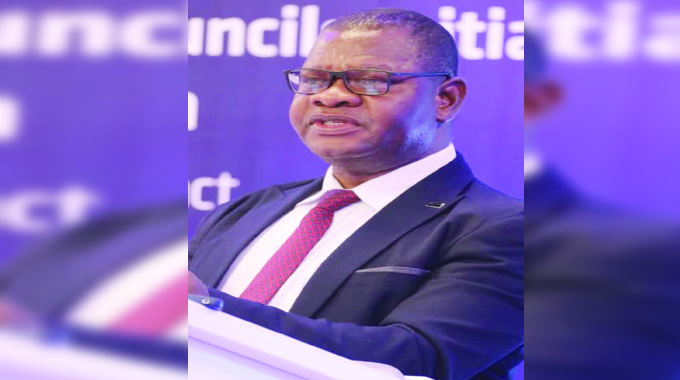
Peter Matika, [email protected]
AFRICA’s research landscape must entrench equity, sustainability, and community impact as key fundamentals to effectively address the pressing challenges, create opportunities and propel the continent to greater heights.
Permanent Secretary in the Ministry of Lands, Agriculture, Fisheries, Water, and Rural Development, Professor Obert Jiri, made the remarks at the ongoing 13th edition of the Global Research Council Sub-Saharan Africa Regional Symposium in Bulawayo.
He charged Africa to move beyond traditional academic frameworks and ensure that research outcomes are translated into practical solutions that improve livelihoods, drive innovation, and strengthen resilience in communities.
“Research must not only reside in laboratories and research documents. It must find tangible expression in the fields, factories, and daily lives of our people.
“For Africa to progress, our research must respond directly to our realities for food security, climate change, water management, and sustainable development,” said Prof Jiri.
The symposium, which has drawn participants from 24 countries across the country and beyond, is being held under the theme: “Reimagining Inclusive Open Science for Equity, Justice, and Sustainability and Research for Sustainable Communities.”
It provides a platform for scientists, policymakers, and funding bodies to discuss how research collaboration can accelerate Africa’s development goals.
Prof Jiri highlighted that impartial access to research funding and infrastructure remains a critical issue, urging regional and international partners to support inclusive frameworks that empower African institutions and young researchers.
“These are not merely topics for discussion; they are the urgent, guiding imperatives for our time,” he said.
“They represent a collective call to action but a challenge to fundamentally rethink how we create, share, and use knowledge for the betterment of our continent and its people.”
The symposium, being hosted in Zimbabwe, in Bulawayo for the first time, continues and concludes on November 14, with sessions focused on innovation in agriculture, renewable energy, digital transformation, and policy integration for sustainable growth.
Prof Jiri highlighted the interconnected crises confronting Africa, including climate-induced droughts, water scarcity, and the pressing need to transform rural economies.
“These are not soloed problems. They are complex and deeply rooted in our communities. To address them, we cannot rely on business-as-usual.
“We need a new paradigm for research and innovation, one that is inherently inclusive, deliberately equitable, and unwaveringly focused on sustainable outcomes,” he said.
“For too long, the gates of scientific knowledge have been locked for many of our communities and even for our own early-career researchers.”
Prof Jiri outlined three key pillars for truly inclusive science, saying democratising access will ensure that information and data are freely available, from farmers in rural Masvingo to professors in urban universities.
“Building local capacity will empower a new generation of African scientists and innovators through open science principles,” he said.
“The ultimate measure of our research is not its publication in a high-impact journal, but its impact on the ground, in the resilience of a community, the health of its children, productivity of its soils, and the sustainability of its resources.”
Prof Jiri also called for a participatory approach to research, where communities are not passive recipients but active collaborators.
“Research must be co-created. We must move beyond the model of external experts arriving with pre-packaged solutions. Instead, researchers, policymakers, and communities must sit at the same table from the very beginning,” he said.
Examples such as engaging smallholder farmers in drought-resistant crop research and integrating local knowledge into water management studies come to the fore.
“This is the bridge we must build. A two-way street where policy priorities inform research agendas, and research evidence, in turn, shapes robust, effective policies,” said Prof Jiri.
“Prioritise impact by supporting projects that deliver measurable community and policy benefits. Mandate openness by making open access to research and data a condition for public funding. Foster collaboration through funding for cross-border, multi-institutional, and transdisciplinary research.”
Prof Jiri also underscored the importance of curiosity-driven research, describing it as the foundation of discovery.
“We must create space for the blue-sky thinking, the creative exploration that may not have an immediate application. It is from this well of curiosity that the transformative innovations of tomorrow will emerge,” said Prof Jiri.
He went on to call on delegates to transform the symposium’s deliberations into concrete action.
“We stand at a pivotal moment. We have the opportunity to co-create a new African scientific renaissance — one that is equitable, sustainable, and deeply rooted in the needs of our people.
“Let us not leave here with recommendations alone, but with a renewed commitment to act,” he said.


