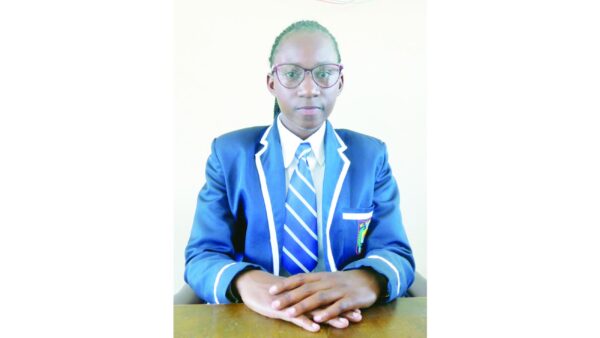
Latwell Nyangu
Youth Interactive Writer
Every year, students at colleges and universities spend months, sometimes years, conducting research.
Eventually, the work is bound, submitted to a department, assessed by a supervisor and, in some cases, presented before an academic panel.
This is the moment the student breathes a sigh of relief.
Another academic mountain has been climbed, but what happens next?
I believe research should not end when a dissertation is submitted.
In many ways, that should be the beginning of a much bigger journey.
This week, my interest is in raising these questions, which are rooted in my commitment to empowering young people, particularly students in colleges and universities.
My wish is to take young people beyond the books and classroom walls.
Through this column, I have consistently explored ideas that encourage students to look beyond academic qualifications and consider how their knowledge, skills and experiences can contribute to society.
The launch of the Campus Reflections show has also provided another platform through which these conversations can reach young people.
My message is simple and clear, education should not only prepare us to pass examinations but it should prepare us to confront the realities of the world around us.
One of the challenges we must confront is the tendency to treat research as a hurdle to be crossed before graduation.
For some students, the dissertation becomes the final obstacle between them and the qualification they have worked so hard to obtain.
Once it is submitted, the research files are closed, the recommendations remain on paper, and the findings rarely travel beyond the institution that examined them.
Yet, research is meant to do more than demonstrate a student’s ability to understand academic theories and methodologies.
Honestly, it can identify gaps, challenge assumptions, expose social problems and propose practical interventions.
The dissertation may reveal that some graduates struggle not because they lack qualifications, but because they have limited access to professional networks, practical experience, finance, or opportunities to turn their ideas into businesses.
I have always believed that students must learn to see themselves as more than candidates pursuing qualifications.
They are potential innovators, entrepreneurs, researchers, communicators, policymakers and community problem-solvers.
This does not mean abandoning academic work in favour of chasing immediate results.
Neither does it mean that every dissertation must become a successful business or a national policy.
Rather, it means recognising that knowledge has a life beyond the assessment process.
Passing an examination is important, graduating is important and obtaining a qualification is important.
But we must also ask ourselves what we can do with the knowledge we have acquired.
The world beyond the classroom is not waiting for us to know everything.
It needs people who can identify problems, ask relevant questions, investigate them critically, and contribute to possible solutions.
For students who may be worried about unemployment or uncertain about what comes after graduation, research can also offer a different way of looking at opportunities.
Sometimes, young people complain that there are no opportunities, and their frustrations are understandable.
From my experience, a dissertation can reveal an unmet need, an overlooked market, an inefficient process, or a community challenge that requires attention.
These findings may inspire a social enterprise, a consultancy idea, a community project, a publication or further research.
Through Campus Reflections, my intention has been to encourage students to reflect on their experiences, question limiting assumptions and prepare for life beyond the lecture room.
We should encourage students to revisit their dissertations after graduation, identify opportunities to publish their findings, share accessible summaries with communities, engage relevant organisations and explore whether their recommendations can be tested in practice.
Supervisors can help students identify suitable journals, conferences and professional networks.
Departments can organise research exhibitions where students present their findings to audiences beyond academic panels.
Institutions can also create opportunities for promising research projects to receive mentorship, partnerships or support for further development.
Students, meanwhile, can begin with manageable steps.
As someone interested in writing and public communication, I see an important connection here.
Research produces knowledge, but communication helps that knowledge travel.
A well-conducted study that nobody can access or understand may struggle to influence the people it was intended to benefit.
We must therefore learn not only how to conduct research, but also how to communicate its findings responsibly, clearly and meaningfully.
Research is not about proving that we were right from the beginning.
It is about being willing to learn, even after spending months developing an argument.
The challenge is to avoid treating the dissertation as a finished answer to every question.
In reality, good research often produces new questions.
It reveals what we know, what we do not know, and what deserves further investigation.
This is why the submission of a dissertation should not mark the end of intellectual curiosity.
If anything, it should equip a student to ask better questions, investigate new possibilities and contribute more meaningfully to public conversations.
Perhaps the most important lesson is that graduation should not be the point at which we stop asking questions.
It should be the point at which we begin applying our knowledge with greater independence, confidence and responsibility.
To every student currently working on a dissertation, and to every graduate who has already submitted one, I encourage you to revisit your research.
Read your recommendations again.
Ask whether they can be shared, developed, tested, or improved. Identify the people who might benefit from your findings.
Look for opportunities to collaborate, publish or continue investigating the problem you studied.
Do not allow your dissertation to become a document that gathers dust while the problems it examined remain unresolved.
Your research may not change the world overnight.
It may not immediately secure you a job or generate an income.
But it can become the foundation for a conversation, an initiative, a new idea or a more informed decision.
Until we meet for a toast.
Feedback: [email protected]