With children in mind
Every three seconds, a girl is married before reaching adulthood. For Armelle in Benin, that reality became her life at just 14 years old. Forced into marriage because of financial hardships, she soon became a mother. Two years later, her husband died, leaving her once again with no one to provide for her and no income. Unfortunately, her story is far from unique.
Today, an estimated 650 million women and girls worldwide were married as children, and more than 12 million girls are still married each year, according to UNICEF’s 2026 estimates.
The highest prevalence is found in Sub-Saharan Africa, particularly in West and Central Africa, where about 41 percent of girls marry before the age of 18, so child marriage continues to deny millions of girls the opportunity to shape their own futures.
This year’s International Day of the Girl Child, celebrated under the theme “End Child Marriage and Invest in Girls’ Rights,” calls for urgent action to change that reality. In West and Central Africa, ending child marriage is not only a matter of protecting girls’ rights. It is also essential for the region’s economic future.
In West and Central Africa, where populations are young and rapidly growing, the region’s demographic dividend, the economic growth potential created by a large working-age population, can only be realised if investments in human capital are made at sufficient scale, including ensuring that girls are healthy, educated, protected, and actively participate in economic life.
A girl who is married at 14 is far less likely to complete school, secure decent employment, or contribute fully to economic growth.
The consequences often extend far beyond her childhood and her individual life.
The regional Strengthening Access to Justice for Women and Girls study highlights how GBV, child marriage, FGM, and other harmful practices interrupt education, reinforce economic dependency, and limit future employment opportunities.
This is where the Sub-Saharan Africa Women’s Empowerment and Demographic Dividend Plus (SWEDD+) project offers a compelling response.
SWEDD+ combines efforts to strengthen laws and access to justice with investments in girls’ education, health, empowerment, and economic opportunities.
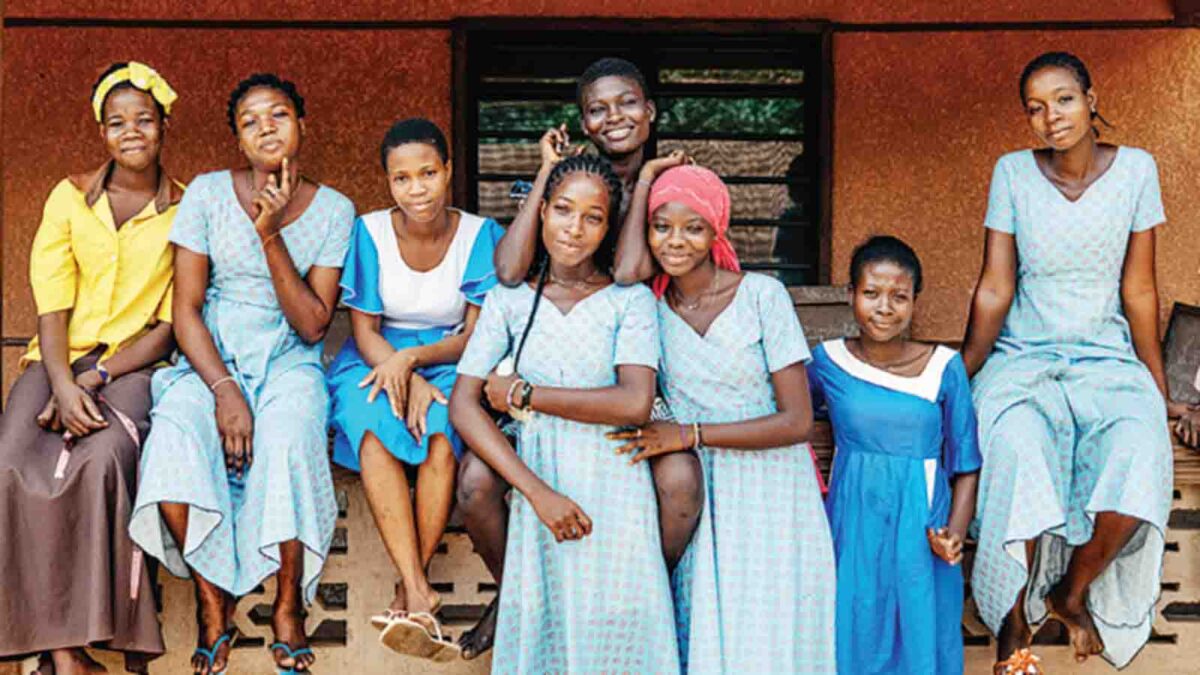
The impact of these interventions is visible in the lives of girls across the region.
For Armelle, life became more difficult when her husband died. She was 16 and the mother of a baby.
Under SWEDD, the project that preceded SWEDD+, Armelle received vocational training and support to launch her own business. “Since I started snail farming, we got some money and things are going better for us”, she recounts.
Building on a decade of investment that has reached 3 million women and girls, SWEDD+ is now turning to a new frontier: ensuring that stronger legal systems turn into actual protection for women and girls.
Across West and Central Africa, governments have strengthened laws to combat GBV, criminalise harmful practices, and expand protections for women and girls.
Yet evidence from the SWEDD/SWEDD+ regional legal work and the 2026 Women, Business and the Law (WBL) report shows that legal reforms alone are not enough.
Gaps in enforcement, service delivery, and institutional capacity still leave millions of women and adolescent girls without effective protection.
SWEDD+ is also working to ensure that girls can exercise their rights and seek protection when those rights are violated.
The initiative supports governments, regional institutions, legal professionals, and civil society organisations to strengthen legal frameworks, improve enforcement, expand legal aid services, and make justice systems more accessible to women and girls.
Another important part of SWEDD+ work is the extensive and sustained social and behavior change communication, including the engagement of men and boys and religious and traditional leaders, which is fundamental to bringing about sustained protection for adolescent girls. — Word Bank Group.