Yaeesh Collins
Correspondent
A film that earns its place
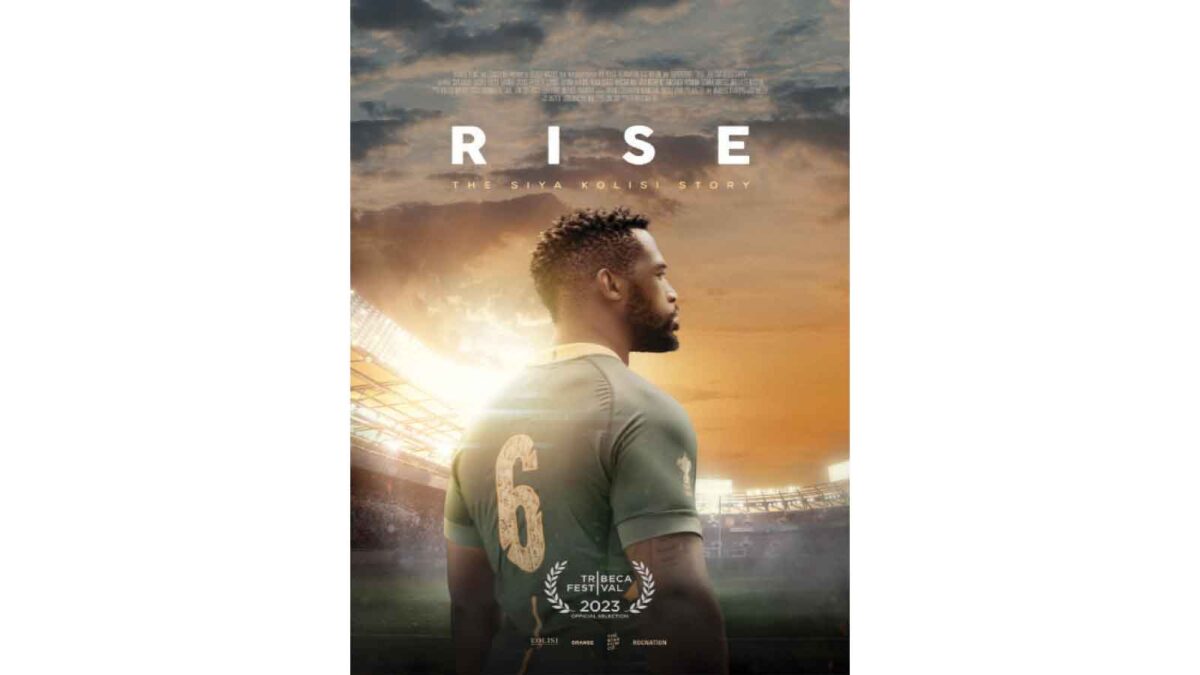
When I first sat down to watch Rise, I must admit I had reservations. My concern when approaching local documentaries is often the production quality.
I sat down, hoping it wouldn’t look like a film shot like a Die Antwoord music video. But there is no gentle introduction to this story, one that is true to so many young boys, and men in South Africa.
The documentary opens with archival rugby footage playing on a television, immediately placing Siya Kolisi’s story within South Africa’s long and complicated rugby history.
Speaking with Bheki Dalla, board member of the African Film DAO, we unpacked exactly how the film’s technical brilliance drives its emotional punch.
The documentary doesn’t just list Kolisi’s hardships; it forces you to feel them.
You feel the gut-punch of his childhood poverty, the raw grief of losing the grandmother who anchored his world, and the heavy, silent burden of a teenager navigating a fractured reality between a privileged high school and a struggling township.
For too long, low budgets and limited resources have set a poor standard, forcing local audiences to accept productions that are a mere fraction of what is possible
Rise shatters this standard. It proves that South African filmmakers can capture devastating, raw intimacy while delivering a confident, world-class cinematic experience that commands international respect.
During our interview, I pointed out the exact visual that caught me off guard and anchored the emotional weight of the film: a shot bearing the text “only known footage of Kolisi at home,” accompanied by that recognisable sacred King symbol.
There is such a limited visual record of his early life.
The audience knows the man Kolisi became, but that stark on-screen admission asks viewers to pause over the child he once was.
This single piece of footage is an iconic representation of the distance between the boy in the image and the man holding the World Cup.
The film confronts his father’s absence, imprisonment and alcoholism. Dalla noted that these are authentic African stories, and the documentary balances that hardship perfectly with the development of Kolisi’s deep sense of duty.
Dalla mentioned how the film sets a blueprint for the wider local film and production houses, a blueprint shown through Siya’s survival in South Africa.
“We need to make sure that the people who are going to be the end viewers are not going to be fed low-quality production,” Dalla explained.
Without strict quality control, Dalla warned that “South Africa’s film industry remains uncompetitive globally, relegated to being service providers for international productions rather than telling our own stories with the ambition they deserve.”
In the township of Zwide, Gqeberha, sixteen-year-old Phakama gave birth to Siyamthanda “The Bear” Kolisi on June 16, 1991.
On Youth Day in 1991, the Zwide community welcomed the Nations Son with hope.