Wallace Ruzvidzo Zimpapers Reporter
RUSSIAN investors have expressed strong interest in exploring business opportunities in Zimbabwe, with delegations expected to visit the country as Harare moves to translate its growing diplomatic relations with Moscow into concrete investment partnerships.
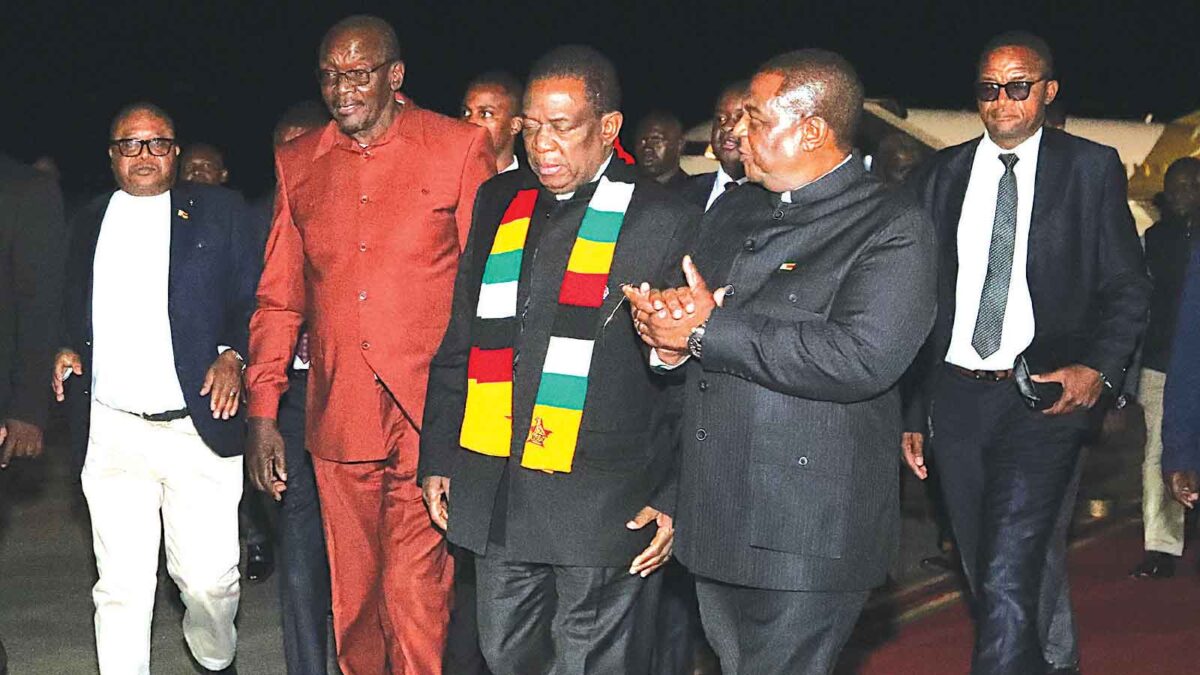
President Mnangagwa said this on Friday night upon arriving at the Robert Gabriel Mugabe International Airport from Moscow, where he attended the Third Russia-Africa Summit and held engagements with Russian business leaders.
The President said members of the Russian business community were keen to explore investment opportunities in Zimbabwe after expressing confidence in the country’s business environment.
“They are very interested in coming to Zimbabwe and I told them that Zimbabwe is open for business,” he said.
President Mnangagwa said Russian businesses had found Zimbabwe cooperative and were interested in expanding their commercial engagement with the country.
“They find that Zimbabwe is very cooperative and they want to do more business. So we expect to have some business delegations coming to Zimbabwe,” he said.
The anticipated visits are expected to provide an opportunity for Russian investors to assess potential projects, engage local businesses and explore partnerships across various sectors of the economy.
The engagements are in line with the Second Republic’s economic diplomacy thrust, anchored on President Mnangagwa’s Engagement and Re-engagement Policy, which seeks to strengthen Zimbabwe’s international relations and translate diplomatic goodwill into trade, investment, technology transfer and development partnerships.
Under the Open for Business mantra, the Government has been pursuing reforms aimed at improving the investment climate, attracting foreign direct investment and positioning Zimbabwe as a destination for both domestic and international investors.
The thrust also aligns with the National Development Strategy 2 (NDS2), which runs from 2026 to 2030 and seeks to accelerate progress towards Vision 2030 through economic transformation, industrialisation, investment mobilisation and enhanced international economic cooperation.
The strategy identifies strengthening international partnerships, attracting foreign direct investment, expanding export markets and mobilising development finance as key components of the country’s economic development agenda.
Zimbabwe and Russia have, over the years, maintained longstanding diplomatic relations, with both countries seeking to broaden cooperation in areas such as mining, energy, agriculture, manufacturing, infrastructure, science and technology.
The latest engagements build on ongoing efforts to deepen business-to-business relations between the two countries.
In June this year, ZimTrade and Russia’s Roscongress Foundation signed a five-year co-operation agreement aimed at strengthening trade relations and creating opportunities for businesses from both countries to explore new markets.
Zimbabwe’s exports to Russia rose by 80 percent to US$2,4 million last year, up from US$1,3 million in 2024, reflecting growing commercial exchanges between the two countries.
Statistics from the International Trade Centre (ITC) managed Trade Map online database show that tobacco and manufactured tobacco substitutes, products, whether or not containing nicotine, were the main product group category, earning the country US$2,27 million, followed by works of art, collectors’ pieces and antiques on US$83 000.
Trade Map data also showed that the country imported goods worth US$42 million from Russia, as fertiliser assumed pole position with imports of US$35 million, followed by cereals of US$5 million.
During the Moscow summit, President Mnangagwa also called for stronger business-to-business engagement, with governments playing a facilitating role in expanding trade and investment partnerships, particularly in agro-industrial development.
The engagements come as Zimbabwe seeks to diversify its international economic partnerships, attract new sources of capital and accelerate industrialisation through value addition and beneficiation of its natural resources.
Speaking at the summit, Russian President Vladimir Putin said trade between Russia and African countries stood at US$27 billion but remained significantly below its potential, calling for the figure to be doubled.
He also noted that national currencies, including the Russian rouble, now accounted for 85 percent of commercial settlements between Russia and African countries, reflecting efforts to expand alternative payment arrangements in bilateral trade.
On concerns that Africa could become a battleground for competition among major global powers, President Putin rejected the suggestion that Russia regarded African countries as pawns in geopolitical rivalry.
“We have not pursued any colonial policies. It is the opposite: We helped them to liberate themselves from the neo-colonial yoke,” he said.
President Putin also backed Africa’s longstanding calls for reforms to global governance institutions, including the United Nations Security Council, saying the continent deserved permanent representation.
“I am absolutely convinced that Africa must be represented there on a permanent basis, including in the Security Council,” he said.
The Third Russia-Africa Summit provided a platform for African countries and Russia to discuss expanded cooperation in trade, investment, energy, food security, science and technology, among other areas.