Samsung Electronics has strengthened its position in Africa’s smartphone market, recording a 34.8 percent year-on-year increase in unit sales in the second quarter of 2026, despite a 16.6 percent contraction in the broader market.
The South Korean electronics manufacturer ranks first in both smartphone revenue and unit sales, according to market research firm TechInsights, following its first-place position in revenue during the first quarter.
Its performance comes as the company expands flexible payment options that allow customers to pay for devices daily or weekly rather than upfront.
Samsung is forecast to end 2026 with a 38.7 percent share of Africa’s smartphone unit sales and 34.5 percent of market revenue. This would represent a substantial increase from its 22.4 percent unit sales share in 2024 and 26.5 percent in 2025. The payment model addresses affordability challenges in a market where monthly incomes range between $100 and $500 (R1 659-R8 295), while major Galaxy A models cost about $200 (R3 318). Many consumers earn daily or weekly wages, making conventional upfront payments difficult.
Samsung says 46 percent of its smartphone revenue in Africa this year comes through the instalment programme, highlighting the importance of alternative financing in converting consumer demand into sales.
The strategy also extends beyond affordability. With mobile money transactions in sub-Saharan Africa reaching $1.4 trillion (R23.23 trillion) last year, according to the GSM Association, smartphone security has become an important consideration for consumers who rely on their devices for financial transactions.
Samsung is positioning its devices around long-term reliability, with its Galaxy A series offering up to seven years of operating system and security updates, alongside Samsung Knox protection.
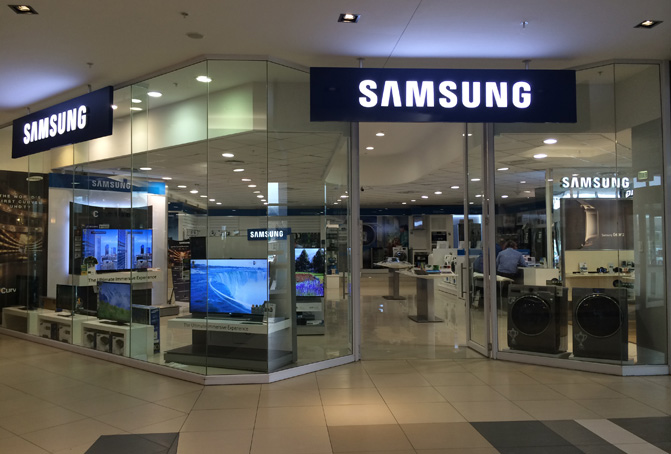
The company has also expanded its service network to 281 locations across 38 African countries. Meanwhile, sales of its premium Galaxy S and Z series devices in Africa have increased by 20 percent year on year.
The figures suggest Samsung’s growth is being driven by a combination of flexible payment structures, security considerations, and demand for higher-priced devices in a market where affordability remains a significant constraint. – Moneyweb