Online Reporter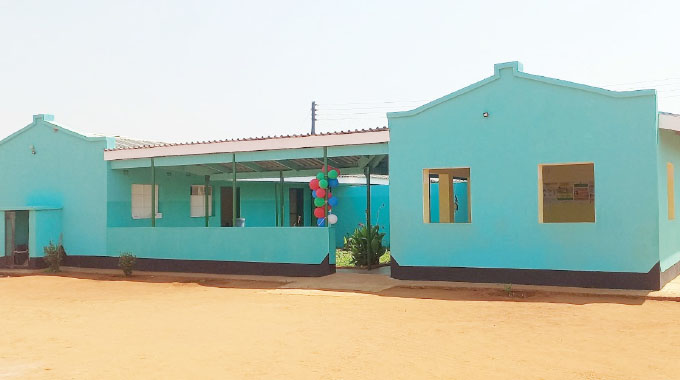
Thupeyo Muleya, Beitbridge Bureau
COMMUNITIES in Beitbridge are beginning to see tangible benefits from Government devolution funds, with significant improvements recorded in education, health, water and road infrastructure across the district.
For decades, residents of the border district grappled with inadequate schools, clinics and basic public services – a situation that fuelled concerns over access to quality education, healthcare and sanitation for a population estimated at over 250 000.
However, the rollout of devolution funds under the Second Republic has begun to reverse the trend, with capital projects taking shape across rural wards and urban settlements, bringing essential services closer to communities.
Beitbridge Rural District Council chief executive officer, Mrs Kiliboni Mbedzi, said the devolution initiative has significantly transformed service delivery in the district, enabling local authorities to respond meaningfully to long-standing infrastructure gaps.
She said the intervention by Government has made the local authority highly visible in meeting minimum service delivery requirements within the community.
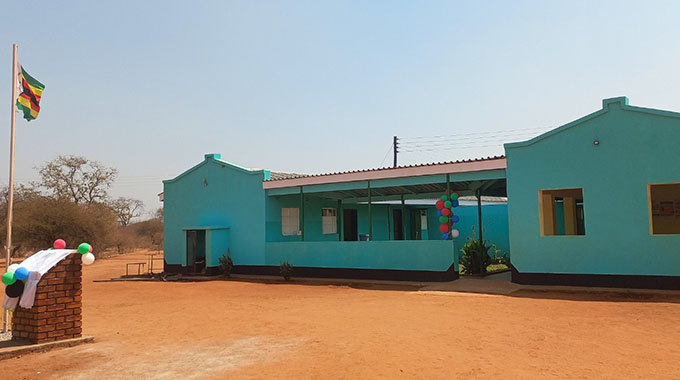
Mrs Mbedzi said the council has prioritised education infrastructure, resulting in the construction of new schools and the refurbishment of existing facilities to cater for a growing learner population.
Among the projects underway or recently completed are classroom blocks at Mtangamtshena Secondary, Matshiloni Secondary, Jopembe Primary, Makakavhule Primary, Msane Secondary and Langeni Secondary, as well as Early Childhood Development (ECD) blocks at Tshokotshoko Primary, Faranani ECD Centre and Makapile ECD Centre.
Other projects include Novhe Primary School, Sita Primary School, the rehabilitation of Mpande Secondary School and the construction of Makombe Secondary School.
“These projects are at various stages of completion, with some awaiting final touches. The availability of more child-friendly schools is helping reduce dropouts, particularly during the transition from primary to secondary education,” said Mrs Mbedzi.
Health delivery has also received a major boost, with Beitbridge RDC managing more than 16 rural health centres across the district.
Mrs Mbedzi said the Tshabili Clinic has already been completed, commissioned and is now serving more than 6 000 people, including transit migrants, while Dumba Clinic in Beitbridge East is awaiting commissioning.
Other health projects include the construction, repair or upgrading of Whunga Clinic, Ndambe Clinic, Tshipise Clinic, Mtetengwe Clinic, Shashe Clinic Waiting Mothers’ Shelter, and staff house repairs at Zezani Clinic.
“The council’s goal is to ensure that each of the 15 rural wards has at least two clinics, particularly in newly established settlements,” said Mrs Mbedzi.
To address water shortages, the council implemented an extensive dam scooping programme, rehabilitated solar-powered water systems and drilled additional boreholes across the district.
“We drilled and equipped boreholes to improve access to potable water and support village business units. In some areas, communal boreholes are being modernised to solar-powered systems, while piped water schemes are being developed with support from devolution funds and development partners,” said Mrs Mbedzi.
Devolution funds have also enabled Beitbridge RDC to strengthen its operational capacity through the procurement of critical equipment, including a motorised grader, two tipper trucks and a backhoe/front-end loader.
Using the new equipment, the council rehabilitated Sentinel Road and Dite Road, which had become nearly impassable.
Mrs Mbedzi said the local authority plans to commence civil works for Zezani Community Hall, construct cattle sale pens at Malibeng and Pemenene, and build a district stadium – all funded through the devolution initiative.
Beitbridge Town Clerk, Mr Loud Ramakgapola, said the municipality has also recorded notable progress since the introduction of devolution funding.
He said the town council has procured a refuse compactor truck, upgraded public lighting, drilled boreholes to augment water supplies, acquired earth-moving equipment, upgraded ICT infrastructure and purchased service vehicles. The municipality is also planning to construct 28 new two-roomed houses using devolution funds to ease overcrowding in older sections of Dulivhadzimu suburb – a problem dating back to the colonial era.
“So far, we have completed the construction of Makhado Primary School in Khwalu 2 suburb, west of the border town, and it is expected to open for its first enrolment soon,” said Mr Ramakgapola.
On health infrastructure, he said construction of a new clinic in Mabidi suburb, north of the town along the Beitbridge-Bulawayo Highway, is underway.
The clinic will service residents from Tshitaudze, Madinginye and Mabidi suburbs.
Mr Ramakgapola said future plans include the construction of a polyclinic, procurement of a 20 000-litre water bowser to strengthen firefighting services, acquisition of a 12-tonne roller compactor, an ambulance, installation of additional public lights, purchase of more service vehicles and drilling of boreholes at strategic locations.