

 Online Reporter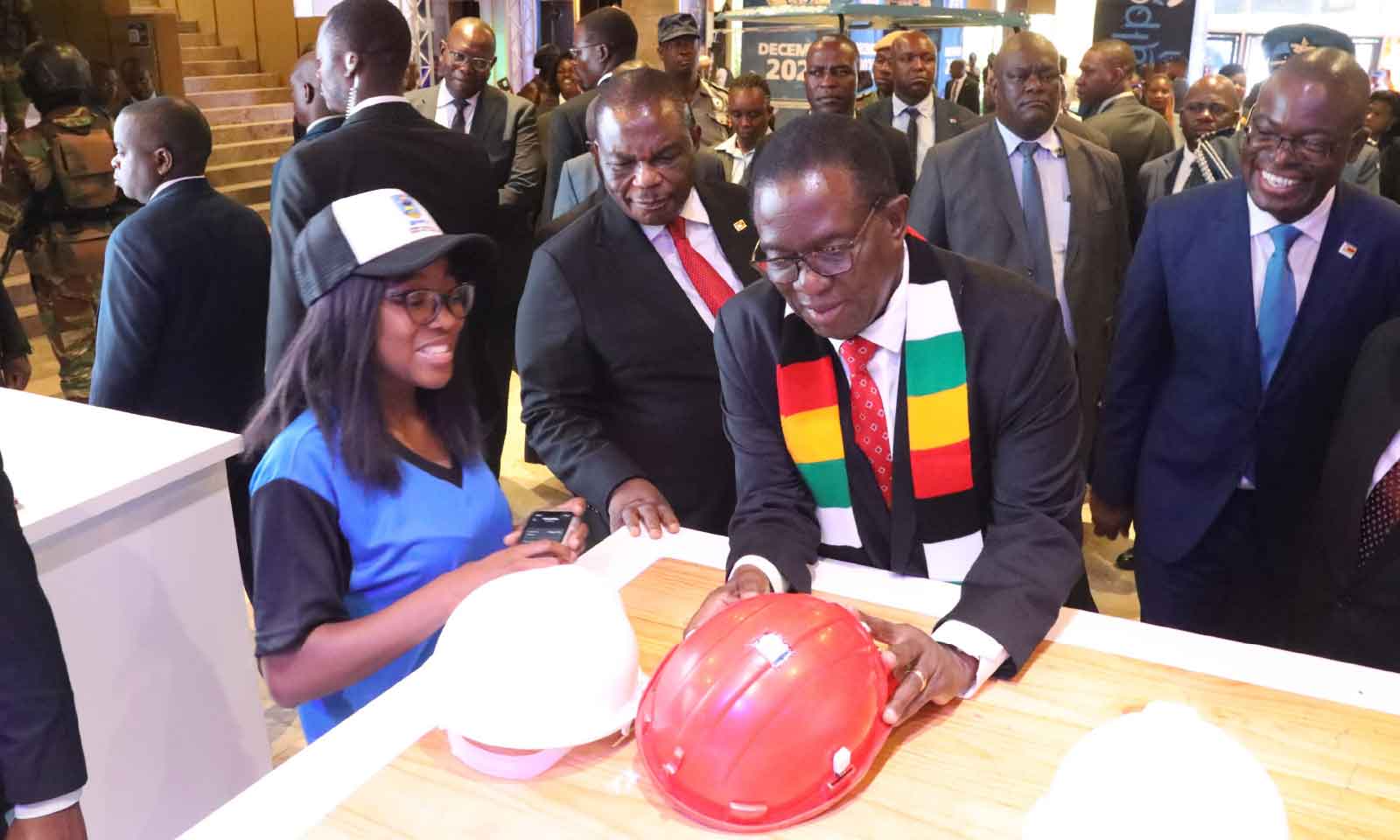
Richard Muponde
Zimpapers Politics Hub
ZIMBABWE’s history of innovation has been a tale of two distinct intellectual eras – on one hand it is dominated by a few white inventors during colonial period Rhodesia and the other side of the post-Independence era has witnessed a flurry of innovations being spearheaded by the previously marginalised.
The work of Dr Peter Morgan in the early 1970s stands as an important reminder of both the technological successes and the structural exclusions engineered by colonial rule.
Zimbabwe, then Rhodesia, entered the global stage through Dr Morgan’s groundbreaking inventions, such as the Blair Ventilated Improved Pit (VIP) latrine in 1973, a sanitation system that revolutionised rural hygiene by eliminating the smell and flies associated with pit toilets.
The VIP became the Rhodesian Ministry of Health standard by 1975 and remains widely used today.
His redesign of the bush pump, later adopted and mass-deployed in the early 1980s, transformed rural water access for millions. These innovations earned international recognition, including acknowledgment by UNICEF.
Yet these achievements coexisted with a deliberate marginalisation of black intellectual potential.
Colonial policy designed education for black Zimbabweans to produce clerks and labourers rather than scientists or industrial innovators. White communities enjoyed access to laboratories, workshops, state funding, and expansive academic privileges.
The disparity was systemic rather than reflective of ability.
The historical record strongly undermines the colonial myth that blacks lacked the capacity to innovate.
The colonial state engineered a system that suppressed black creativity while elevating white output.
The post-independence burst of black ingenuity – including the late Mr Daniel Chingoma’s Taisek Pump and his helicopter prototype, as well as an automatic pap (sadza) cooking machine by Zimbabwean engineer, Engineer William Gwata demonstrated clearly that the capacity had always existed, but the enabling environment had not.
The Second Republic and the Recalibration of the National Innovation Agenda
The arrival of the Second Republic under the stewardship of President Mnangagwa re-centred innovation as a national priority, aligning it with industrialisation, modernisation, and economic transformation.
A new national ethos emerged, captured by the guiding philosophy of “Nyika Inovakwa Nevene Vayo/Ilizwe lakhiwa ngabanikazi balo,” which vouches for an economy built by its own citizens and inclusive of all social spaces, marching towards Vision 2030 of an upper middle society.
This shift was supported by broader and equitable access to innovation opportunities for young people, institutions, and community inventors.
The adoption of the Heritage-Based Education 5.0 model marked a decisive break from the colonial education legacy.
For the first time in modern Zimbabwean education, universities and colleges were mandated not only to teach and research, but also to innovate, industrialise, and commercialise ideas. Innovation hubs, industrial parks, and start-up incubation facilities became national infrastructure.
Products emerging from Zimbabwe’s innovation hubs demonstrate the practical application of the Education 5.0 model. For example, Zambezi Ark Technologies has developed off-grid LED systems, uniquely crafted from up-cycled plastic, showcasing a commitment to sustainable and local manufacturing.
Similarly, the University of Zimbabwe (UZ) contributed the Lawnbot, an automated solution demonstrating robotics in a practical setting.
During the Covid-19 pandemic, the Harare Institute of Technology (HIT) quickly responded with the production of prototype ventilators, illustrating the rapid-response capacity of the national innovation infrastructure.
Furthermore, Great Zimbabwe University is actively involved in agro-industrial textile and food processing ventures, linking academic research directly to the agricultural sector.
Other notable innovations include the Bindura University of Science tablet and the Palpo from HIT, underscoring the broad range of technological advancements emerging from higher learning institutions across the country.
These examples embody this new educational and industrial culture and demonstrate how the institutional architecture created by Education 5.0 provides the enabling environment that was denied to black inventors during colonial rule.
Innovation Fair 2025: A New National Imperative
This week’s Presidential Innovation Fair in Harare has become the symbolic centrepiece of Zimbabwe’s innovation renaissance. President Mnangagwa’s message emphasised urgency, maturity, and national responsibility.
“Our nation has reached a point where innovation must no longer end in the laboratory. We must transform ideas into companies that create jobs and wealth.
“We cannot continue importing everything when our innovators are producing world-world-class prototypes.
“The time has come for Zimbabwe to export its own solutions. Let us accelerate the journey from creativity to commercial reality. This is how nations build lasting prosperity,” he said.
The President’s remarks highlight a strategic shift. Innovation must no longer be symbolic; it must be industrial.
His insistence that local companies support innovators signals a policy turn towards strengthening ties between academia and industry.
This is critical because without industrial uptake, prototypes remain academic exercises and fail to transform the national economy.
President Mnangagwa also emphasised that these awards are intended to generate momentum.
“These innovation awards are not ceremonial. They exist to challenge our young creators to go further. They should push boundaries, explore the unknown, and set new standards.
“I want every innovator in Zimbabwe to know that their nation believes in them. No talent should go unnoticed, unprotected, or unsupported. We advance faster when every citizen takes part in the innovation journey,”
The fair’s inclusivity, drawing universities, start-ups, ministries, community innovators, and young technologists, demonstrates this participatory ethos.
Education 5.0 as an Industrial Engine
Minister of Higher and Tertiary Education, Science, and Technology Development, Dr Frederick Shava, reinforced this national direction, directly tying education to industrialisation.
“Zimbabwe is moving away from an education system that prepares people to seek employment. We are now building an education system that manufactures industry.
“Our institutions have become innovation factories, producing technologies that can compete globally.
We believe every academic discipline must translate into a product or service. This is the foundation on which we shall modernise our economy,” Dr Shava said.
He further contextualised the Presidential Innovation Fair within the broader policy architecture.
“The Fair is proof that Your Excellency’s vision for a heritage-based Education 5.0 is succeeding. Each year, we see more inventions, more patents, and more industrial prototypes.
“Our youth have embraced the call to be creators of value. As we move forward, we shall ensure that innovations graduate into start-ups that employ thousands,” he added.
The Minister’s reference to 269 submissions reflects a growing national innovation culture, one that has expanded beyond universities to include polytechnics, start-ups, independent makers, and rural communities.
From Prototypes to Prosperity: The National Challenge
The country now stands at a crossroads, with a rich history of innovations, from Dr Morgan’s VIP latrine to contemporary work in renewable energy, agritech, e-learning, biotechnology, and software engineering. Yet the challenge remains commercialisation.
For Zimbabwe’s innovations to influence global markets, as SR52 maize hybrids did, or to transform domestic sectors like Afrosoft’s integrated software systems, the country must build stronger patent regimes, industrial partnerships, access to venture financing, and manufacturing capacity.
The path forward lies in balancing historical context with future aspirations, recognising past exclusions while building an inclusive and dynamic innovation ecosystem that leaves no talent behind.



