Online Reporter
Lenin Ndebele, Guest Writer
IN a few words, I would say he was like Diego Maradona — we witnessed his brilliance and his flaws. And sadly, Babongile Sikhonjwa Moyo’s fade to black came far too soon, at the tender age of 49.
For those in the arts, a fade to black is the gradual darkening of a screen until it’s completely black — signifying the end of a scene, a passage of time, or a dramatic conclusion.
For hip-hop lovers like Sikhonjwa and me, what comes to mind are Jay-Z’s lyrics: “They say they never really miss you ‘til you’re dead or you’re gone . . .” And yes, we miss him now.
In the history of obituaries, as far as I can recall, no socialite in Bulawayo has had their story told by so many people, from so many different angles, quite like this one. Now, I suppose it’s time to tell my version — especially Sikhonjwa’s impact on the party scene, fittingly through a newspaper he loved.

I was introduced to a dreadlocked, occasionally arrogant (when it suited him) Sikhonjwa by my then boss, the late Edwin Dube, in 2004 when I was a cub reporter. The two had spent time together in the United Kingdom in the late ’90s — Dube was pursuing postgraduate studies, while Sikhonjwa was already pushing music.
From around 2003 to 2014, Sikhonjwa lived in a flat opposite The Chronicle newspaper. Back then, working in the newsroom was a big deal, but some of us would sneak off to spend hours at his flat. It was a mix of clean and dirty jokes, gossip, and showbiz scoops.
One day, I admired his traditional cowhide blanket (ixaba), and the next week, a certain woman wore it on live TV during the Miss World beauty pageant in 2005.
In 2004, Sikhonjwa joined Visions Night Club, owned by Dr Tanius Mumbengegwi, following the death of another socialite, Charles Arnold, also known as Charlie Boy or Charlie Fresh. At Visions, Sikhonjwa served as entertainment manager and ran a music recording studio where artistes like Otis Ngwabi emerged.
He was also a lyrical genius of sorts. In case you didn’t know, he was the first artiste to remake the traditional “We MaNcube” song. It became the chorus of a hilarious track, and my favourite line was: “I Aids izolithola, shuwa lizozisola.”
Another first was his animated music video for “I Spy With My Eye.”
At Visions, he had a good run. He introduced Nduduzo Tshuma and me to nearly every South African artiste who came to perform in Bulawayo. We got exclusive interviews — so much so that when DJ Fresh visited, he’d say, “Come on guys, let’s have fun — there are no stories to tell anymore.” Just like that, we were friends with celebrities.
When he passed away, I received a call from Oskido, followed by a WhatsApp message: “Eish ntwanas, we have lost a solid player. Life reminds us we are just passing through, and one day it will be our turn to answer the call.”
Sikhonjwa was so prominent that we often reminded him he was a big fish in a small pond in Bulawayo. He was a national super-star and needed to spread his wings. But sometimes, that got to his head.
On the club scene, things weren’t always smooth. After parting ways with Mumbengegwi, things got rough — but his smile never faded. In most pictures, he’s smiling with his head tilted upwards. Maybe it was his best look, but it always showed a happy soul, no matter the situation.

During the tough times, he opened a kitchen behind the then Savanah Night Club, owned by Martin Barrows. But fate was preparing him for his biggest achievement on the club scene. Around 2007, Sikhonjwa and fellow socialite Lucky Sibanda started a movement called Ballers League. It was mostly a Friday night party scene, and back then we partied at Bulawayo Athletic Club (BAC) — before it became a nightclub. It resembled a high school hall, but it drew huge crowds, including the late Patimile Dube.
In just over a year, Ballers League moved to Hartsfield Rugby Grounds — the birth of Kudu Bar. Lucky stepped back, and Sikhonjwa took the lead with his sidekicks: Keith “Beaster” Kangausaru (alias Mini Me), the late Gunz, DJ Kananjo, Kid Wicked, and Slammer DJ. They dominated Bulawayo’s nightlife.
Kudu Bar was a lifestyle. It was so popular that it emptied dance floors at other clubs. On some nights, it was packed to the brim, and Sikhonjwa would plead with revellers to go elsewhere.
That’s when I saw a different side of him. The money was there, the fame, and the vices. Sometimes, he’d act like he didn’t know you — maybe he didn’t need some of us then. I didn’t understand it.
Imagine hanging out with him and the late South African artiste Mapaputsi at his flat one day, and the next night — he doesn’t know us! We grew to accept that side of him. But I personally believe that’s what killed Kudu Bar.
The profanity and obscene language became too much. Things went wrong. He lost the lease. Today, our beloved Kudu Bar is known as Hartsfield Shisanyama. Just like that, a chapter closed.
For a few years, he tried different ventures. Then one day, a friend, Biggie Chinoperekwei of Divine Assignments, asked me who could push their brand in Bulawayo. I introduced him to Sikhonjwa. They worked together for years — until his passing.
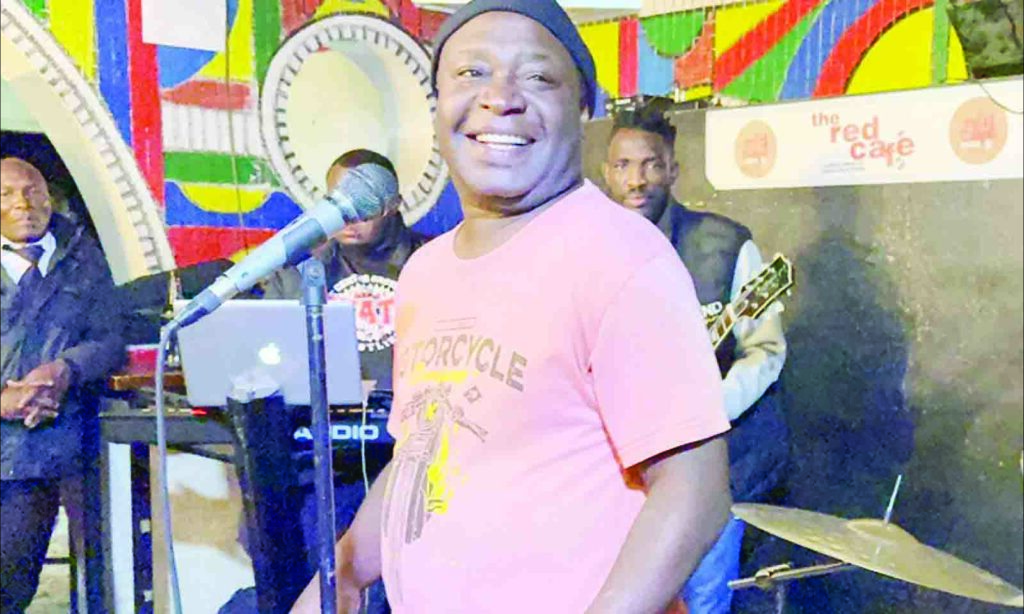
Red Café is what it is today because of Sikhonjwa. In Bulawayo’s history, it’s the only pub with a live band every night.
Last Tuesday, we chilled until the early hours at Red Café — just three guys: prominent businessman Bekezela Moyo, Sikhonjwa, and I. That was our goodbye to Mgabe, alias Foza (short for Mfowethu), among the many aliases he carried.