Sekai Manyere-Online Reporter
THE Ministry of Skills, Audit and Development has held consultations to formulate its 2027 Strategic Plan, which seeks to address critical skills gaps and align workforce competencies with national economic priorities.
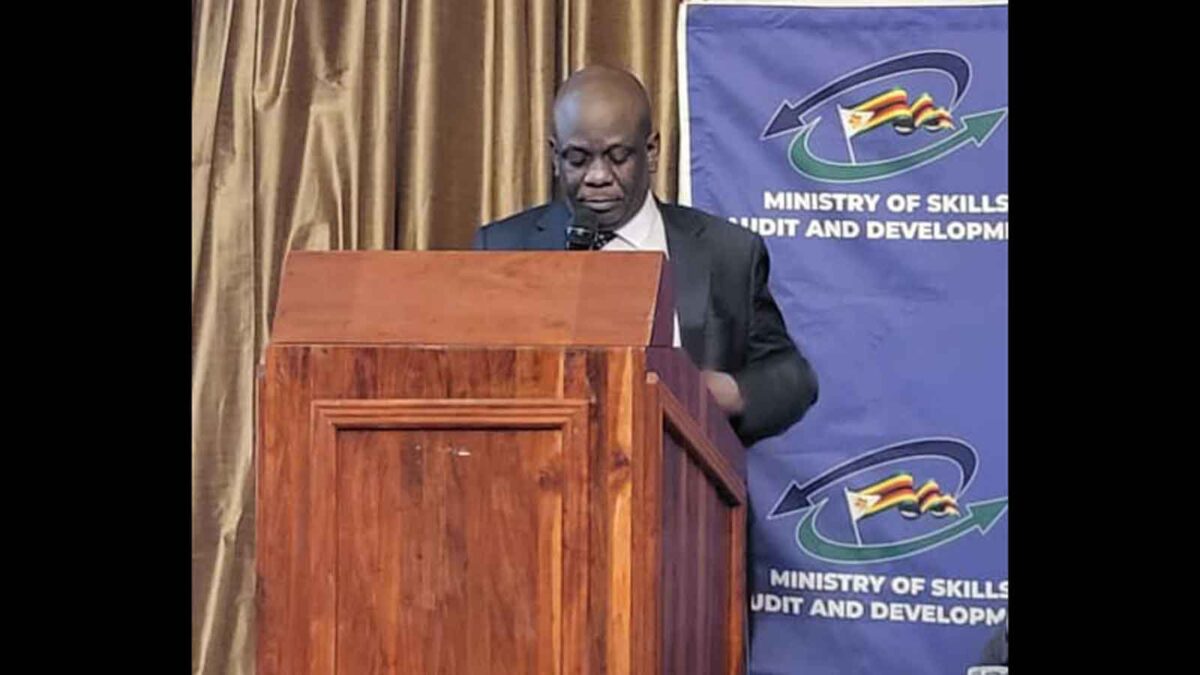
Speaking at a consultative workshop held on Tuesday, Acting Permanent Secretary Mr Clifford Matorera said the quality of the strategic plan would depend on the expertise and insights contributed by participants.
“We must agree on priorities, responsibilities, measurable outcomes, and practical interventions that connect skills development directly to productivity, industrialisation, employment creation, and inclusive economic growth,” he said.
Mr Matorera said the National Development Strategy 2 (NDS2), which provides a framework for Zimbabwe’s economic transformation from 2026 to 2030, underscored the urgent need to develop a skilled workforce capable of supporting national development objectives.
“No nation can industrialise beyond the skills and productive capabilities of its people,” said Mr Matorera.
He said the strategic plan is built on five pillars: National Skills Audit and Skills Intelligence, Skills Research and Development, Recognition of Prior Learning, Strengthening Technical and Vocational Skills Development, and Digital and Special Skills Development.
“Skills must be treated not as a secondary outcome of education, but as a strategic economic resource,” he said.
He urged participants to identify critical gaps and recommend mechanisms for improving skills intelligence to bolster productivity and national competitiveness.
He added that, as Zimbabwe seeks to harness its rich mineral resources and enhance industrialisation, the ministry is committed to closing the gap between existing competencies and the skills required for economic advancement.
He said the plan’s success will depend on the collaborative efforts of educational institutions, industries and government bodies, ensuring that Zimbabwe’s workforce is equipped for the future.
Meanwhile, the ministry’s acting Deputy Director of Strategic Planning, Mr Bune Trymore, underlined the need for urgency in transforming the country’s skills development architecture.
“The mission is clear: we must identify and develop requisite skills and competencies that will catalyse socio-economic transformation in Zimbabwe. We aim to ensure our graduates are adaptable to the rapidly changing technological, economic, environmental and social landscapes,” said Mr Bune.
He noted the ministry’s four key mandates include formulating policies to align education systems with the fourth and fifth industrial revolutions, focusing on scholarship programmes for critical skills, and promoting entrepreneurship among graduates.
“We must not merely prepare our students for jobs; we must equip them to become employers,” he said.