Judith Phiri [email protected]
SMALL businesses in Bulawayo have been challenged to move beyond survival-driven operations and embrace strategies that promote growth, formalisation and scalability, drawing lessons from the South African small and medium enterprises (SMEs) sector, where businesses continue to face the challenge of expanding despite operating in a relatively developed market.
SMEs in Zimbabwe are the backbone of the economy, comprising roughly 76 to 85 percent of all businesses, contributing about 60 percent to the national gross domestic product (GDP), and employing millions.
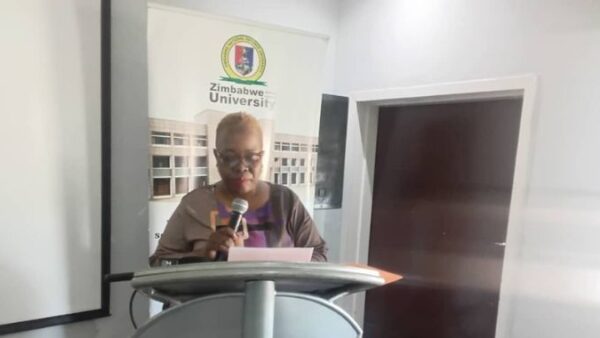
Bulawayo Chamber of SMEs vice-chairperson Ms Sithabile Bhebhe, drawing from her experience with small businesses in South Africa, said local entrepreneurs could learn valuable lessons in business management, financial discipline, innovation and market access to build sustainable enterprises capable of competing in wider markets.
“I spent September to October visiting Durban, Cape Town and Johannesburg, and everywhere I met small business owners with the same story we have in Bulawayo, we are surviving, but we are not growing.
“The new State of SMME in South Africa 2026 Report (800 businesses surveyed) confirms it. 32.1 percent of small businesses have operated for over 20 years, yet 39 percent still employ only 1 to 5 people. They have survived load-shedding and COVID-19, but not scaled into employers,” she said.
“The biggest surprise, their main problem is not money. 56.9 percent said they need access to markets and customers, only 39.5 percent said finance and 78.1 percent said from big corporates they want regular purchase orders, not grants or mentorship. A standing order from Shoprite is worth more than a workshop.”
She said this hit her hard as in Zimbabwe they always say “we need funding,” while South Africa has over 300 funders with 600 products, yet 90 percent of MSMEs are still self-funded.
Ms Bhebhe said the reason behind this was because their books are not formal and only 9.7 percent have bank loans, while banks were not short of money, they were short of readable business proposals.
She added: “Durban taught me about logistics — MSMEs now stock “Just-in-Case” not “Just-in-Time” because of port delays. Johannesburg taught me about township enterprise, entrepreneurs staying in Soweto serve their community. Cape Town taught me about branding, the cost of protecting your product when you export.”
Ms Bhebhe said the biggest change was digital as 52 percent of SMEs now use AI daily, not to be fancy, but to answer WhatsApp customers while driving or send invoices faster.
She said there were three lessons for Bulawayo namely considering orders before loans by pushing corporates and mines to buy from local SMEs consistently.
“There is need to formalise to finance. Separate business and personal money, keep records and a 6-month bank statement is more powerful than a business plan.
“Lastly, also think of African Continental Free Trade Area (AfCFTA) clusters. South Africa is now growing SMEs outside big cities and Bulawayo can be Zimbabwe’s agro-processing and clothing cluster for the continent,” she said.
Ms Bhebhe said South African SMEs scored only 3.9 out of 10 for business environment in 2026, below world average and resilience alone was not enough.
She said in Bulawayo, SMEs were resilient but now needed to scale up. Her observations come at a time when Zimbabwean SMEs are being encouraged to move beyond survival-driven operations towards structured businesses capable of attracting investment, accessing wider markets and creating employment.