Online Reporter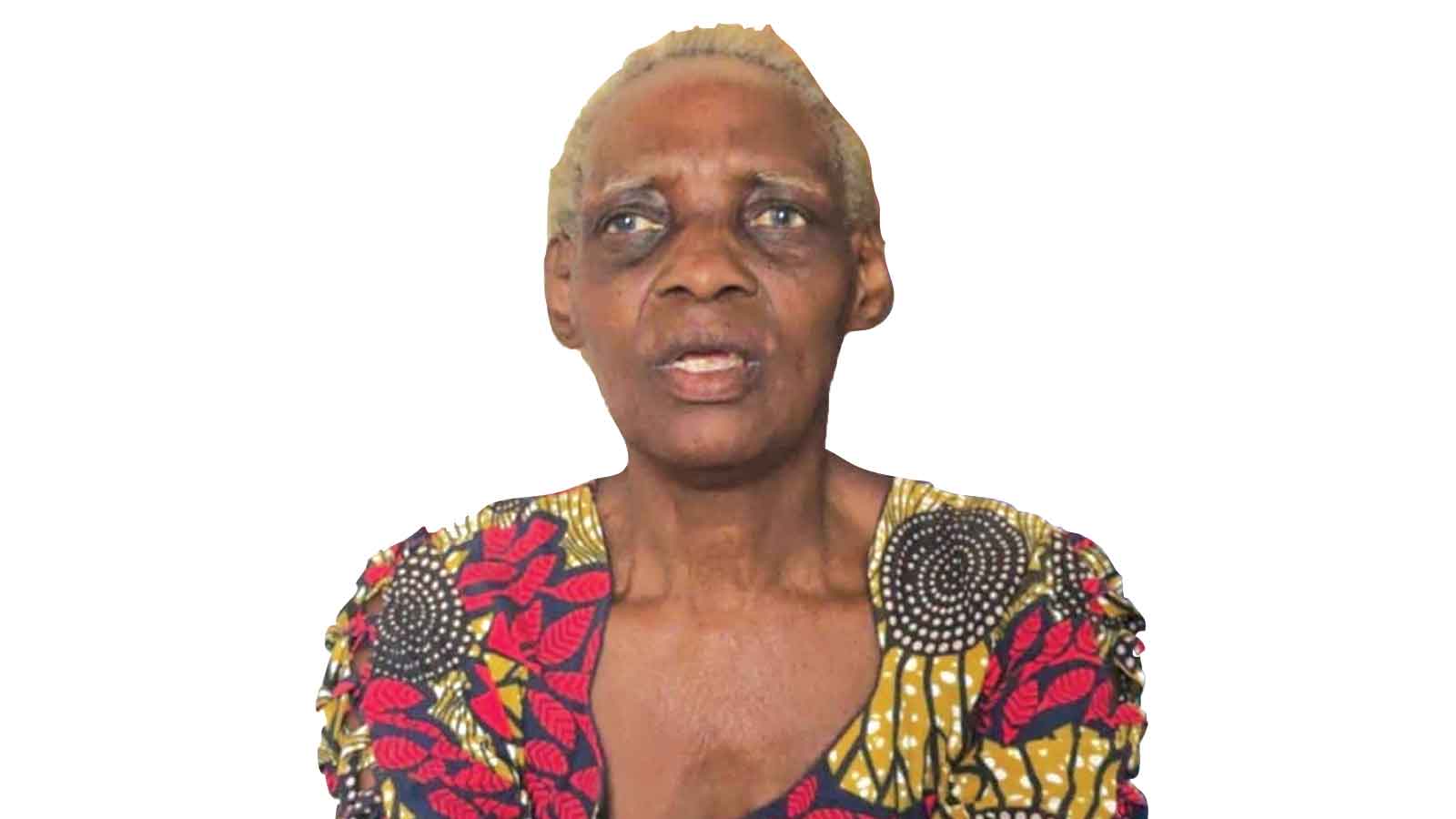
CDE NANCY MUSIYIWA, whose Chimurenga name was Cde Muchaneta Mabhunu, was among the first female cadres to join the liberation struggle in 1972. After crossing into Zambia, she worked as secretary to ZANU chairperson Cde Herbert Chitepo. She was with Cde Chitepo shortly before his assassination in March 1975. Before that, she survived after being kidnapped by members of the Nhari Rebellion. This week, Cde Musiyiwa recounts to Zimpapers Politics Hub’s KUDA BWITITI the traumatic incident that ultimately led her to join the liberation struggle.
***************
Q: Can you start by introducing yourself?
A: I was born Nancy Musiyiwa in Maravanyika village, Bare, Chiweshe, Mashonaland Central province, on June 13, 1956. I attended school from Sub A to Standard Six in Chiweshe. My mother is Lillian Maravanyika, while my father was Assah Pagwaungana, also known as Maphosa. My mother was from Chiweshe, while my father originated from Shurugwi. I grew up in Mashonaland Central and was raised by my maternal grandmother, Mbuya Musodzi, in Bare, Chiweshe.
Q: How did you come to be raised by your grandmother?
A: My father died when I was only two years old. In 1971, I needed a birth certificate.
My maternal uncle, Martin Maravanyika, told me that if I wanted to proceed to Form One, I needed assistance from my mother. He told me that my mother had remarried and was now living in Dotito, in the Mt Darwin area of Mashonaland Central.
I thus moved to Dotito to reconnect with my mother. She was married to my stepfather, Daniel Nyamupfukudza. After I had stayed with them for some time, my stepfather suggested that, because I had been born in Chiweshe, it would be easier for me to obtain a birth certificate there.
Before I returned to Chiweshe, however, we learnt that my maternal uncles had moved to Mt Darwin, specifically to the Kandeya area. It was during the August school holidays and I was in Form One. I had started Form One but needed a birth certificate to proceed.
The plan was, therefore, to travel to Kandeya and seek assistance from my maternal uncles. However, on August 11, the incident that changed my life happened.
Q: Tell us about this incident in detail.
A: Some freedom fighters besieged our house. I vividly remember this day. It was Sunday because we had attended our church, the Salvation Army. The comrades arrived around 7pm.
Q: Were you able to tell immediately that they were freedom fighters?
A: At first, we did not know who they were. But the history was that in 1964, at the ZANU Gwelo (Gweru) Congress, a declaration was made that the party would take up arms to fight for independence from colonial rule. So, by 1972, in Mashonaland Central, the war was heating up. Mt Darwin in particular was targeted by the colonial forces. Spirit mediums were directing the recruitment and the war itself. So, in general, we knew that the area we lived in was infested with Rhodesian forces and that comrades also operated there. The freedom fighters were called different names, such as matororo, magandanga or freedom fighters, depending on who was speaking.
Q: But what is the incident that changed your life when the freedom fighters besieged your house?
A: I was with my sisters — Sylvia and Mildred — inside a round hut.
We heard footsteps and noises outside. Initially, we were not sure who was outside. Then the strangers started speaking.
We could hear them threatening to forcibly open the door if we did not open it ourselves. They eventually broke it down and opened it, just as I was about to open it.
There were several men dressed weirdly. They wore unusual woven hats and when they spoke to themselves, they would speak in a tone that I could not easily understand but changed to Shona that we would understand when they addressed us.
One of them, whom I later came to know as Cde James Bond, asked where my stepfather was.
I told him that my stepfather was sleeping in a spare room, while my mother, who had infant twins at the time, was in the bedroom. The others then said: “We are going to deal with your father.”
Some of the comrades went to the room where my stepfather was sleeping, while others remained with us.
Those guarding us introduced themselves. One said his name was Cde Abel Mabhunu. Others identified themselves as Cdes Machakaire and Mugwagwa. We then heard my stepfather crying as he was severely beaten by the comrades.
Q: Why were they beating him?
A: During those days, people who worked in cattle-dipping programmes were often regarded as sellouts. Apparently, this was my stepfather’s job. There was a general belief that people involved in cattle dipping travelled to diverse areas and could easily interact with both the freedom fighters and white people. It was suspected that they could pass information about the movements of freedom fighters to the colonial authorities.
My stepfather was left for dead. This traumatised me greatly, and I assumed he had died. The comrades then decided to move on to their next victim, who happened to be my stepfather’s brother, my step-uncle.
His name was Ben and he lived nearby, in an area called Kutsonga.
When the comrades said they were going to attack my stepfather’s brother, I made a bold decision.
I told them that since they had beaten my stepfather and left him for dead, there was a possibility that he would die. If he died, I would be left with nothing because he was responsible for taking care of me.
So, I told them that the only way forward was for me to go with them. Although I was deeply saddened by what had happened to my stepfather and traumatised by the violence I had witnessed, part of me also understood that the freedom fighters were fighting for a worthy cause. So, I convinced them that I should go with them.
Q: What was the response from the comrades to your demand to leave with them?
A: Cde Patrick Mupunzarima (one of the comrades) told me that I did not know where they were going and that it would, therefore, be unwise for me to accompany them.
However, when I saw that there were other adolescent girls of my age among them, I became even more determined. I insisted that I would not accept being left behind. I even told the comrades that some of the girls that they were with were smaller than me, and, therefore, I should not be left behind. Seeing my determination, they decided to take me along. So, that was how I left home. By then, it was around 9pm on that Sunday, August 11.
Although I had decided to go with them, I was still traumatised by what they were going to do to my step-uncle . . . I had to come up with a plan.
Q: Do you have the names of the comrades who recruited you and females that you were with?
A: The trained cadres who recruited us were Cdes Mupunzarima, James Bond, Machakaire, Abel Mabhunu, Josiah Ziso, Mayor Urimbo, Short, Peter Baya, Shumba, Gumbo, Solomon Simpson, Sarudzai Chinamaropa, Sheba and others. The female recruits I was with included Cdes Revai, Handiroti, Letwin, Rudo, Ratidzo, Margaret, Theresa Mbune, Emma, Loveness, Fungai Hondo and Magorira.
Next week, Cde Musiyiwa recounts what happened as the freedom fighters headed to attack her step-uncle.