Online Reporter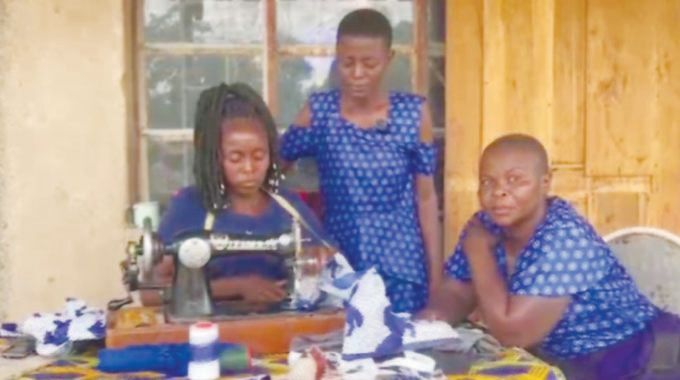
Correspondent
FOR years, many of Binga’s youths have lived suspended between schooling and employment, between hope and inertia. Skills were scarce, capital scarcer still, and agriculture was not an option as the climatic conditions of Binga meant droughts year in, year out.
Fishing, which was the only alternative, was heavily regulated and already congested and the nearest cities were hundreds of kilometres away. In this context, doing nothing was not a choice so much as a condition.
That situation has started to change for 207 young people in Mlibizi following the launch of a vocational skills initiative under the United Nations Development Programme (UNDP)’s Climate Adaptation, Water, and Energy Infrastructure Programme, known as CAWEP. The project is being carried out by UNDP and is funded by the UK Government through the Foreign, Commonwealth, and Development Office (FCDO).
On paper, the intervention appears modest. Training was offered in tailoring, welding, building, cosmetology, and solar installation. In practice, it has redrawn the contours of daily life for its beneficiaries, turning idle hours into income, survival into planning, and dependence into self-reliance.
Ms Early Mudimba (32) was selected for training in cutting and designing, as well as basic building skills. She had completed her O-levels, but like many young women in Binga, education did not translate into employment.
“Before the training, I was idle and would spend the day doing nothing in the village,” she said.
“But ever since the training by CAWEP, I have significantly transformed my life, and I am now able to sustain my livelihood.”
The change reached beyond earnings. Ms Mudimba supports her child and younger siblings who depend on her. Before the training, illness carried a particular fear.
“At one point, during my idle life, I fell sick, and with no revenue stream, I was unable to seek the health services that were needed,” she said. “The stress levels made me deteriorate.”
Today, she speaks of stability not as comfort but as relief. “I am now able to seek health services at any time because I am financially stable, and this was made possible by the training I received to be a professional tailor.”
The transition was neither immediate nor easy. After completing her training, Ms Mudimba rented a sewing machine from a relative and worked wherever she could find space. She later made a strategic decision to relocate her work to a busier area with higher foot traffic.
“With more clients, I managed to save up,” she said.
Ms Mudimba now owns two sewing machines, one plain and one overlocking machine, expanding both her output and income. She continues to refine her craft by learning new designs, and a practice she says has helped her attract more customers and steadily increase her monthly earnings.
The impact of the training has not remained with her alone. Ms Mudimba now trains others in her community, including students on industrial attachment and individuals who missed out on the CAWEP programme due to age limits.
“I feel obligated to help others so that they do not miss out on their dreams,” she said.
For Mr Khumbulani Muleya, the welding training marked the difference between survival work and skilled production.
“Before the training, I was an amateur welder,” he said. Although he owned a welding machine, his work was limited to small repairs. “To be honest, the jobs I would do were very shoddy.”
When CAWEP opened training opportunities, he enrolled immediately. The results have been profound.
Mr Muleya now designs and manufactures boats and scotch carts from scratch, equipment central to daily life along the Zambezi.
What once earned him about US$10 per job has been replaced by projects that fetch between US$500 and US$600.
“When I was an amateur welder, I would just fix leakages on boats,” he said. “But now I start a boat from scratch.”
As a father of three, he says the transformation has fundamentally altered his household’s prospects. His ability to provide for his family has improved significantly.
He has also taken on apprentices, deliberately mentoring young people from his community and enforcing strict safety standards in a trade where mistakes can be fatal. The training extended beyond technical welding skills.
Mr Muleya says the CAWEP training also strengthened his communication and digital skills, enabling him to manage his business more effectively and engage clients with greater confidence. “CAWEP has been a game-changer for me,” he said, noting that continued follow-ups from the programme have kept beneficiaries motivated and accountable.
The vocational training is part of CAWEP’s broader Business Development and Financial Inclusion component, designed to move rural communities from subsistence activities towards sustainable enterprises.
Of the 207 people trained, 111 were women and 97 were men. In addition, 136 participants received business and entrepreneurship training to support the establishment of small and medium enterprises.
Twenty-two beneficiaries accessed loans from a revolving fund, totalling US$35 000 disbursed. — UNDP