Business Reporter
As the Confederation of Zimbabwe Industries (CZI) Strategic Intelligence Forum entered its second day, local corporate leaders have been urged to move away from reactive decision-making and embrace strategic foresight to protect corporate earnings and drive sustainable growth.
Organised by CZI in partnership with Zimpapers at Hyatt Regency The Meikles Harare, the three-day executive development forum has convened chief executives, board members, entrepreneurs, regulators, development partners and sustainability practitioners.
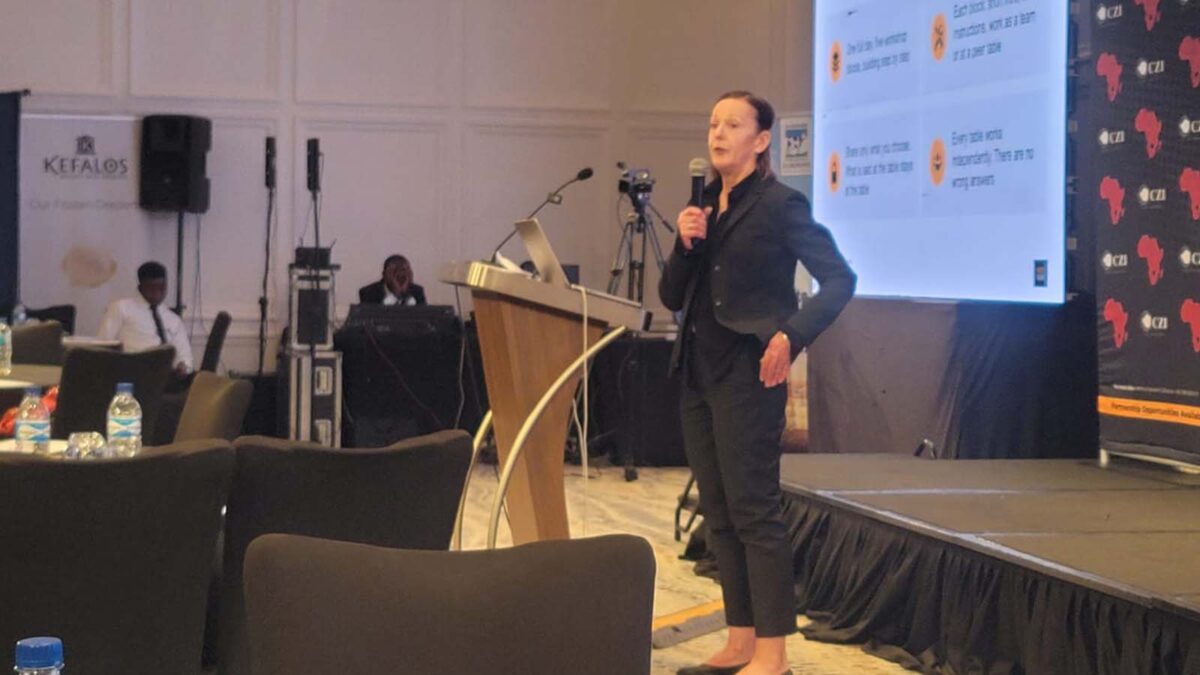
A central highlight of the forum was an immersive masterclass delivered by Ms Nina Al-Ghussein Norrman, a senior consultant, adviser and future strategist at international research and management consultancy Kairos Future.
Opening her session, Ms Norrman emphasised that even world-class institutions operate with finite resources, making the disciplined allocation of capital vital for survival and long-term profitability.
“Whatever organisation you are, even the top-level global organisations, they have limited resources,” Ms Norrman noted. “So it’s all about putting your resources where it will matter the most. No company can afford to lose sight of that.”
Drawing on foundational strategy concepts from Peter Drucker and Seth Godin, Ms Norrman stressed that strategic terms must directly translate into tangible commercial impact.
She warned local business leaders against relying on historical business models in times of heightened market volatility.
“The greatest danger in times of turbulence is not the turbulence itself, but to act with yesterday’s logic,” Ms Norrman quoted Drucker, highlighting that 83 percent of executives expect significant changes in their operating environment, yet only 6 percent feel prepared.
For Zimbabwean firms navigating supply chain disruptions, currency shifts, and technological transition, relying on “yesterday’s logic” exposes businesses to structural failure.
To illustrate this, Ms Norrman presented three case studies of global corporate disruption.
Shell Oil: By adopting scenario planning during the 1970s, Shell anticipated the shifting geopolitical power of Gulf oil producers, allowing them to turn a global energy crisis into a competitive market advantage.
Safaricom (M-Pesa): By looking beyond conventional branch-banking models, Safaricom leveraged mobile infrastructure in Kenya to create a transformative micro-loan and financial services ecosystem, lifting 194 000 families out of extreme poverty while securing massive market dominance.
Kodak: Despite inventing the digital camera in 1975, Kodak collapsed into bankruptcy in 2012 because its internal incentive systems and executive leadership clung to an entrenched “official future” centred on traditional film.
“If you do not know where you are going, it does not matter what route you take,” Ms Norrman stated, urging executive boards to actively test alternative scenarios rather than committing to a single, narrow strategy.
To protect bottom-line margins and stimulate top-line growth, local enterprises must apply future-oriented strategies directly across value chains.
In Zimbabwe, where firms have in the past faced frequent macro-economic shifts and infrastructure challenges, strategic foresight acts as an early warning mechanism.
Ms Norrman outlined how shifting from raw material exports to higher-value refining along domestic value chains changes underlying business logic to favour long-term resilience. Rather than focusing solely on short-term 1-to-3-year operational plans, executives must build “robust strategies” that remain profitable across multiple potential economic futures.
To systematically implement foresight, Ms Norrman outlined the TAIDA framework (Tracking, Analysing, Imaging, Deciding and Acting) alongside the “Should-Want-Can” model.
Tracking and Analysing: Identifying core trends, signals and underlying drivers within the operating environment to detect early warnings.
Imaging and Deciding: Establishing a clear vision (Want) while stress-testing capability gaps (Can) against emerging uncertainties (Should).
Acting: Developing and executing adaptable strategies that withstand market shocks.
A core takeaway for Zimbabwean business leaders was the requirement to actively challenge legacy corporate assumptions. “Change creates tension,” Ms Norrman stated, noting that human evolution leads brains to conserve energy rather than explore unfamiliar concepts.
“Foresight is a lot about getting the fuel to challenge assumptions… asking uncomfortable questions is the first step.”
She reminded attendees that while external strategists facilitate the framework, local executives remain the primary experts who must populate strategic models with operational knowledge.
“You fill it with your knowledge, your analysis, and the things that you bring,” she urged.
Local chief executives and board members have been challenged to integrate continuous foresight into their annual governance cycles. By shifting focus from immediate operational firefighting to proactive long-term planning, Ms Norrman said, Zimbabwean firms can safeguard capital, capture emerging market opportunities and turn economic volatility into sustainable profitability.
#NewsOnTheGo