peter
peterCultural Heritage with Pathisa Nyathi
What is clear so far is that the circular design pervaded Ndebele cultural landscape.

Indeed, this was the case with other African groups and true of the ancients in other parts of the world.
The circular design had always been associated with common motivation, the design as perceived in the cosmic world.
Further, the resulting meaning and significance of the circular design was also shared in common by African societies.
We should always be mindful of the fact that the circular design was similarly expressed in cyclicality where orbiting cosmic bodies did so along elliptical paths.
Their cyclical movements were regular and their cycles were of different periods/durations.
Cosmic bodies thus were rotating around their axes and revolving around their elliptical orbits.
This is by way of introducing the cattle byre within the royal enclosure at Old Bulawayo.
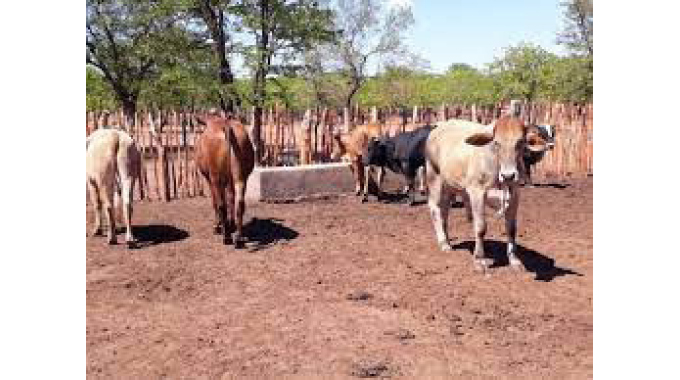
The cattle pen, in the first instance, displayed a circular design in line with Ndebele perceptual ideas.
Its palisade comprised wooden poles that were not straight.
Instead, the wooden poles were branched, allowing people to perch themselves on these especially at the time when a bride was departing her parents’ home for the home of the groom.
The circular palisade was dug into the ground.
It was this orientation of the wooden poles-dug into the ground, which gave the name umbelo to the palisade.
Umbelo derived from the word imba, meaning to dig.
Once the Ndebele people were settled in southwestern Zimbabwe towards the middle of the 19th Century, their cattle pens began assuming a different kind of palisade-in the manner of relating to the ground.
Instead of the poles being erect, dug into the ground, they assumed a horizontal orientation relative to the ground.
However, it was no longer accurate to call the palisade umbelo, as it did not have the wooden poles dug into the ground.
Local cultural traditions were beginning to take their toll on the Ndebele ways of life.
Goat pens however continued to display erect palisades that qualified to be called umbelo.
In an earlier article, we did refer to the fact that cattle pens were located at the centres of settlements, at the time when these were quite massive.

The royal cattle byre was the most expansive structure and expressed the enormity of royal wealth in the form of cattle.
The King possessed a large herd with some of his herds being looked after by people in distant lands so that in the case of some disease outbreak not the entire royal herd would be wiped out.
Old Bulawayo, because of relative cattle security, had the royal cattle pen located not at the centre but as constituting part of the royal palisade.
The reconstruction of Old Bulawayo took place at a time when village and homestead designs had undergone marked alterations.
Individual homesteads, instead of compound villages, were the order of the day.
At the time, cattle byres were located quite some distance from the homestead on the western side
. In most instances, the cattle byre faced the west just like the entrance to the homestead.
This is what the Ndebele elders knew and their knowledge influenced, for worse, reconstruction at Old Bulawayo.
The cattle byre correctly faced east while the first beehive hut also faced west.
Important cultural considerations had been ignored.
The entrance to the royal enclosure was quite clear; it faced east.
The King, when sitting in front of the entrance to his beehive hut viewed his prized herd as it went into the cattle pen.
That was an important cultural consideration.
There was no way the King would have given his back to his pride possessions returning from the grazing range.
Some corrective measures were taken.
The huts faced in the direction of the cattle byre so that both the cattle byre and the huts faced east.
The position of the cattle byre was very distinct.
In the summer season, the lush vegetation bore evidence to the position of the cattle pen.
The rich soil with nitrates and phosphates encouraged the growth of lush grass vegetation.
In the winter season when the ground was bare, the whitish colour of the dung-derived soil pointed to the location of the cattle pen.
In cultural terms, the cattle pen assumed important roles in the lives of the Ndebele people.
The cattle pen represented the male domain within the gendered spaces within the whole settlement.
The males spent quite some time in that front part of the village.
Young men joined the elders there where male conversations took place.
Current issues were discussed while the male elders were smoking dagga using some apparatus known as igudu-hence the familiar expression, “Indaba esegudwini.”
The cattle byre assumed important political, cultural, spiritual and economic importance.
Here, at the cattle pen, the family members approached the departed ancestors whenever there were life issues that required their guidance and intervention.
In essence, therefore, the males dominated and controlled this part of the homestead and took measures to exclude the womenfolk.
Upon death, the head of the family, inevitably a male, was buried either within or near the spiritual and economic site, the cattle pen.
Cattle were slaughtered within the cattle byres before the various cuts of meat were delivered to appropriate sections of the multiple homestead.
In life, the male head of family would have been visiting the site for lighter ablution requirements.
As he did so, he sniffed for the smell of festering cattle wounds and instructed the boys to attend to the cow.
Traditional veterinary solutions to cattle diseases were known back then.
Only during weddings were mature girls beyond puberty allowed into the cattle byre.
Of course, before reaching that stage in life the young girls were allowed inside the byre as it was believed their biological conditions did not interfere with the cattle medicines, ibaso/umthuso, applied to the herd.
Girls would attend to the calves while the boys milked the cows.
Departing from the home to the home of the groom took place at the cattle byre.
Her father led a young bride well-groomed for the occasion into the centre of the cattle byre.
A gourd with frothing mixture of roots and water was placed on her head while the father vigorously stirred the mixture.
The father would meanwhile be informing the ancestors that his daughter was getting married to some identified man.
Arranged marriages, especially to rich old men were common.
The tradition faced onslaught with the advent of Western and Christian ideas and practices following conquest towards the close of the 19th Century.
When father and daughter exited the pen, they did not do so through the entrance, isango/impundu. Instead, they found space within the palisade, umbelo.
Meanwhile, the wedding party, umthimba, would have been singing jubilantly outside ready to receive the bride and lead her to her groom’s place.
The women who constituted umthimba would be wearing imincwazi (singular umncwazi), some kind of wreath over their brows.
From the cattle byre the dung was obtained for various domestic uses, Dry pulverised dung, umquba, was used as the absorbent for blood and fluids when expectant mothers were delivering babies in the kitchen huts.
Premature babies were kept in warm powdered cow dung within kitchen huts.
There they would live with their mothers suckling them until they reached the normal gestation period.
Fresh cow dung was collected for use in plastering hut walls and floors.
Fresh dung was mixed with anthill soil.
During cooking fresh dung was used to hermetically close the large clay pots in which meat was cooking.



 Online Reporter