admin
admin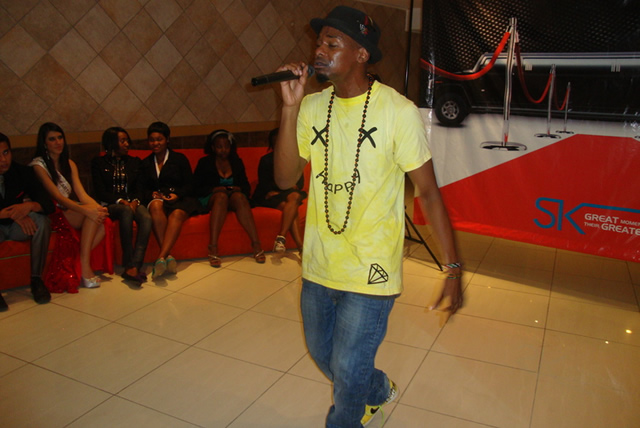
Fred Zindi Music
I was sitting next to Tehn Diamond and his manager, Tsungi Zvobgo at the just ended Musica Workshop, which was organised by Pamberi Trust when I asked him if there was any future in Hip-Hop music in Zimbabwe. He gave a resounding “Yes” as an answer to that question. I had my doubts but after he gave his presentation at this workshop, I was
convinced there is a lot of life left for Hip-Hop as a music genre in Zimbabwe. As a matter of fact organisers of the annual Zim Hip-Hop Awards, which has been running for the past five years are already processing this year’s ceremony. Sean Campbell, the Zim Hip-Hop Awards’ Operations Manager has confirmed that everything is in place and the ceremony will take place on December 10 at the Long Cheng Plaza.
Hip-Hop, which is a subculture of rap music is defined by four key stylistic elements: MC-ing/rapping, DJ-ing/scratching, sampling and beat-boxing. These elements are borrowed from American and Jamaican street culture.
Zimbabwean Hip-Hop follows the same styles but is mainly composed of Shona lyrics. Hip-Hop is a music genre consisting of a stylised rhythmic music that commonly accompanies rhythmic and rhyming lyrics that is chanted. In Jamaica the chanting is referred to as ‘toasting’.
The term hip-hop music is sometimes used synonymously with the term rap music. Although rapping is not a required component of hip-hop music; the genre may also incorporate other elements of the hip-hop , including DJ-ing and scratching, beat boxing, and just instrumental tracks. The first American artistes to be associated with hip-hop music were bands such as Africa Bambaata, Sugarhill Gang, Grandmaster Flash and Rappers’ Delight.
It is believed that Keith Cowboy, lead singer with Grandmaster Flash created the term hip-hop while teasing a friend who had just joined the US Army by scat singing the words: ‘hip- hop, hip-hop’ to mimic the rhythmic cadence of soldiers marching and it became part of his stage performance. The hip-hop culture eventually spread to artistes like M.C. Hammer, Dr Dre and Snoop Dogg and later 50 Cent, Jay Z and Kanye West.
In Zimbabwe, artistes such as Mau Mau a.k.a. Shingirai Sabeta, Blackbird a.k.a. Nonkululeko Vundla, Stunner a.k.a. Desmond Tambaoga Chideme, Junior Brown and Tehn Diamond have followed the American formula and made hip-hop relevant to the country. TehnDiamond,a.k.a. Tendai Nguni or Happy Smurf, who is Zimbabwe’s own hip-hop artiste and a likely candidate for this year’s hip-hop Awards, was born on the January 17, 1985. He is the son of Sylvester Nguni, former minister of state in the office of the Vice-President.
He was raised in Borrowdale Brooke in Harare, and attended St George’s College after which he moved to Brisbane, Australia to pursue a degree in finance, but later dropped out to pursue a music career. In 2008, as part of the sanctions imposed upon Zimbabwe by Western governments, the Australian Government revoked student visas for eight children of senior members of President Robert Mugabe’s regime and Tendai Nguni (Tehn Diamond) was one of them.
He relocated to Singapore where he continued to explore his music talent. Whilst in Singapore, Tehn Diamond performed several shows, before moving back to Zimbabwe where he now resides.
In 2012 he received a National Arts Merit Award (NAMA) accolade for Best Video. In December 2014, he embarked on a tour of Zimbabwe, which saw him perform at multiple venues across Zimbabwe culminating in a show in Bulawayo, which was hosted by Vault, a local beauty products company.
He has also done several collaborations with other fellow Zimbabwean artistes including The Djembe Monks from Bulawayo. Tehn Diamond also headlined M-Net Africa’s biggest reality television show, Big Brother. His song titled “Happy” was played nationally by all major radio stations in Zimbabwe which include Star FM, ZiFM and Power FM and was nominated for best song of the year at the Zim Hip-Hop Awards.
On Valentine’s Day this year, he opened for Cassper Nyovest at 1+1 Long Cheng Plaza in Harare, of which Twitter went crazy over his impressive performance with Caspper Nyovest himself tweeting “…you dope!”
uring his presentation at the Musica Workshop, Tehn Diamond explained his desire to make $100 000 this year through shows, album sales and selling merchandise as he considers music as a business that should have set financial targets like any other. He also said he wanted to spread his wings by staging shows in other countries.
“This year is all about doing music business and I’ve set a goal of generating $100 000 in revenue and penetrating the regional market. “I’m focusing on four pillars of revenue which are performances, merchandising, publishing and advertising where I hope to get $25 000 from each,” he said.
The rapper launched a clothing line last year with merchandise including T-shirts with the Happy logo and flat baseball caps written ‘Tisu Ngoda Dzacho’ – in line with his stage name, Tehn Diamond. According to the “Happy” hit-maker, his third album “The Perfect Tehn”, which was meant to be released last year had to be put on hold as he was focusing on coming up with a viable business model.
“Last year I didn’t do anything musically because I was planning for this year. I wanted it to be a year with change not for myself, but for the hip-hop movement around the country,” he said. Tehn Diamond who performed during one of the Big Brother Africa 2013 eviction shows, said there was no magic formula that guarantees stardom besides hard work.
He also urged fellow artistes to identify viable business models instead of relying on show promoters for gigs. He said he appreciated music by Bulawayo hip-hop artistes including POY, Cal Vin and Tear Dream Boys who he hoped to collaborate with.
“Totanga tatora Makoso edu watino lover, tobva tatenga ma drinks edu atino lover, toita Happy Happy Happy!” Splendid!
◆ Feedback: [email protected].


 Online Reporter