Online Reporter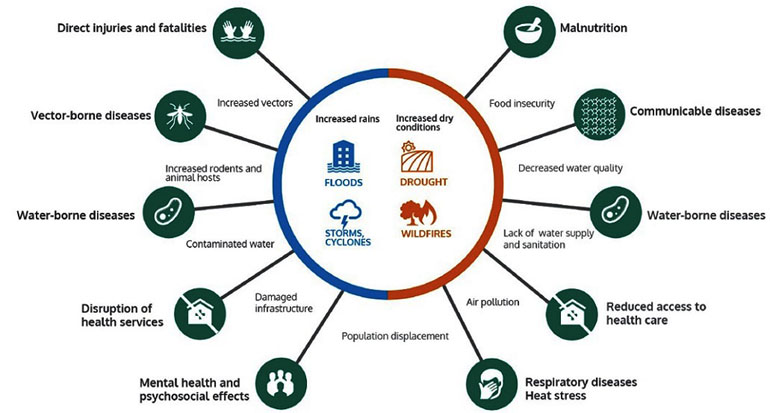
Ray Bande
Senior Reporter
EL Niño means little boy in Spanish, but it has the potential to deliver a massive blow to communities and economies across the world.
Its heaviest impact will fall on children.
“We are already seeing disruption and devastation from droughts and floods and we expect these impacts to increase as El Niño intensifies,” World Meteorological Organisation Secretary-General, Ms Celeste Saulo, said in a recent Press release after a summit which confirmed that El Niño is set to become very strong, raising risks of extreme weather going into 2027.
Forecasts from WMO’s Global Producing Centres indicate an exceptionally high likelihood of nearly 100 percent that El Niño will persist through to February 2027.
This is the first time that a WMO El Niño/La Niña update has been so unequivocal, reflecting strong agreement within WMO’s extensive network.
Fuelled by exceptionally warm ocean conditions across the tropical Pacific, El Niño is expected to strengthen further in the coming months to a very strong intensity before peaking towards the end of this year, with climate impacts continuing well into 2027.
Although the WMO notes that National Meteorological and Hydrological Services remain the authoritative source of official warnings, and locally relevant climate information, the WMO El Niño/La Niña update is a reliable source.
It is prepared through a collaborative effort between the WMO and the Centre for Climate Systems Research/International Research Institute for Climate and Society, Columbia Climate School, USA, and is based on contributions from experts from different reputable meteorological institutions worldwide.
For academic clarity, El Niño and La Niña are opposite phases of the El Niño–Southern Oscillation, one of the most powerful naturally occurring climate patterns on earth.
El Niño is characterised by a warming of ocean surface temperatures in the central and eastern equatorial Pacific. It typically occurs every two to seven years and lasts around nine to 12 months.
It generally begins developing between March and June, and reaches peak intensity between November and February. Its impact on global temperatures can extend beyond the period of peak ocean warming and be most pronounced in the year after development.
El Niño is a natural climate phenomenon, and is not caused by climate change. Because it can reshape weather and climate patterns thousands of kilometres away from the tropical Pacific, reliable forecasts provide governments, humanitarian agencies, businesses and communities with valuable time to prepare.
This is not a story solely about El Niño.
It is a story about El Niño told through the eyes of a child.
The effects affect children the most. This story is also about measures that can help prepare for the worst and cushion the young ones.
Speaking during a recent stakeholders meeting, Mutare District Social Development Officer, Mr Vincent Masukume, conceded that children are heavily affected by El Niño, and said major issues that affect children in drought situations include food poverty, child labour and forced child marriages.
“Some of the major issues that affect children owing to effects of El Niño like drought include food insecurity in households caring for children and food poverty. Child malnutrition prevalence during drought periods is relatively high according to Middle Upper Arm Circumference measurements conducted by nutritionists to determine malnutrition. It is known that in such times, families adopt negative coping mechanisms like child labour, school dropouts and forced child marriages and other harmful cultural practices, high proliferation of drug and substance abuse among children,” said Mr Masukume.
He added: “Child migration risks leading to streetism, unaccompanied and separated children risks also surface. Other common social ills include child sexual violence risk is high in drought and crisis situations.”
Mr Masukume said the risk is even higher among child-headed and elderly-headed households owing to adult migration.
“Effects of El Niño such as drought has huge adverse implications on birth registration with low prioritisation in drought years,” he said.
Mr Masukume did not just present the problems. He also proposed solutions.
“As part of mitigation strategies, there is need for strengthening community surveillance system through community level capacitation of community child care workers, child protection systems and local community leadership.
‘‘Strengthening early warning systems interventions including violence against children screening, targeting schools and community combined is also a panacea,” he said, citing social behaviour change initiatives targeting traditional leadership as critical.
“Decolonisation of social work practices and utilisation of indigenous knowledge systems in child protection imbedded in smart agriculture initiatives like conservation farming, Pfumvudza/Intwasa, targeting child-headed and ultra-poor households,” he said, pointing to budgeting and administrative measures.
“Child sensitive budgeting in drought mitigation planning including ring fencing of budget lines can also go a long way in helping the young ones. Mobile registration in drought years is also crucial. Drought insurance for vulnerable transient and chronic poor households can also add to the raft of solutions on the impact of El Niño on minors,” he said.
In an interview, Deputy Director for Local Government Services for Manicaland Province, Mr John Misi, outlined some of the dos and don’ts in the face of El Niño in Manicaland that will also assist in maintaining the wellbeing of children.
Based on Zimbabwe Meteorological Services Department, Food and Agriculture Organisation, and Ministry of Health and Child Care El Niño advisories for the 2025/2026 season, Mr Misi said health and Water, Sanitation and Hygiene (WASH) are central.
“When hit by floods, for example, water treatment is crucial. Boil, chlorinate, or use WaterGuard. This is because El Niño impacts result in more water shortages and contamination.
‘‘There is need for nutrition gardens to be in place in time to mitigate child stunting. Heat protection, including working early morning and late afternoon as well as hats, water for field workers and school children,” he said, adding that disease surveillance must be heightened.
“There is also need for disease watch with more cases of malaria in Mutare, Chimanimani, Chipinge lowveld. Children must sleep under nets. People should also be on the look-out for cholera if water is scarce,” he said.
Mr Misi warned against unsafe water and delayed treatment.
“People must not drink from unprotected wells or rivers without treating. Cholera and typhoid spike in drought. They must not ignore diarrhoea symptoms, but go to clinics early. Dehydration kills fast in heat.
‘‘They must not burn bushes as this increases respiratory issues and we all know that veld fires are prevalent in dry season,” he said, urging household water rationing and protection of sources.
“Ration water at household level. Two buckets per person per day target. Protect water sources, fence off boreholes and springs from livestock as well as wildfire control. Make fireguards around fields and homes before October,” said Mr Misi, while emphasising on preservation of indigenous fruit trees.
“Don’t cut down indigenous fruit trees, mizhanje and mitohwe among others. They are food security during drought. Don’t dump waste in rivers. It blocks flow and contaminates,” he said.
He urged communities to rely on official information. “Listen to Zimbabwe Meteorological Services Department and local authority updates on WhatsApp and community radio. El Niño forecasts change. Know your evacuation routes, all districts have GPS coordinated evacuation centres if you are in Chimanimani and Nyanga flood-prone areas. Heavy late rains can cause flash floods,” he said.
“It is also important to join village grain banks, social protection programmes through Social Welfare.
‘‘Don’t panic and start selling assets at low prices. Go through Agritex for advice first. Don’t spread rumours about Government food support. Use official channels, contact District Development Coordinators and Council Officials,” he said.
After all is said and done, for the sake of children, the bottom line for El Niño in Manicaland is clear. Save water, plant small grains early, protect health, preserve trees, especially fruit trees, and do not plant everything at once.