
Inside ZIFA
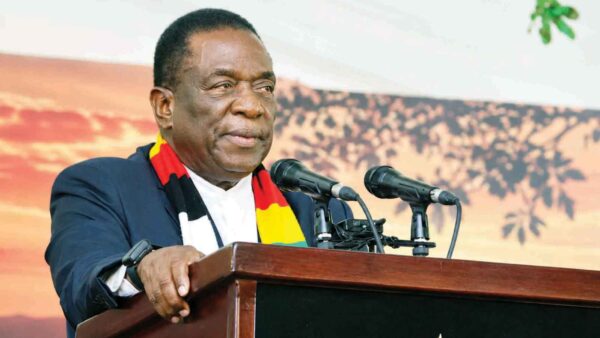
Nqobile Magwizi
FOOTBALL has a way of testing not only the quality of our teams, but also the strength of our ambitions, our preparation and our response to difficult moments.
This past week offered Zimbabwean football two contrasting experiences.
Our Under-23 men’s team suffered a 0-3 home defeat to Mali in the first leg of their Africa Cup of Nations qualifying tie, while our senior men’s team, the Warriors, secured a valuable away draw against Equatorial Guinea in Yaoundé, Cameroon, in the 2027 Africa Cup of Nations qualifiers.
Both results carry lessons, and both present us with responsibilities.
For the Under-23 team, the defeat to Mali was a difficult outcome, particularly on home soil.
We must acknowledge that honestly.
In international football, results rule and representing Zimbabwe demands that we approach every assignment with the determination and expectation to compete for victory.
Mali demonstrated qualities that we must examine carefully.
Their performance provides our technical team with an opportunity to assess where the differences lay, whether in organisation, intensity, physical preparation, tactical execution or the management of important moments in the game.
The return leg in Bamako this week will be another demanding examination.
The three-goal deficit presents a significant challenge, but our players must approach the assignment with courage, discipline and a determination to represent their country with distinction.
They must compete to the best of their ability and demonstrate that lessons have been learned from the first encounter.
This competition carries significance beyond the immediate result.
The Under-23 Africa Cup of Nations is important as a development platform and qualification tournament through which African teams will earn places at the 2028 Olympic Games in Los Angeles.
The opportunity to compete at that level gives us further reason to invest in the preparation and development of this generation of players. The Young Warriors have inspiration to draw from.
Past Under-23 performances still resonate through the football community and heroes of these performances such as George Mbwando, Methembe Ndlovu, Alois Bunjira, Stewart Murisa, Muzondiwa Mugadza and Gift Muzadzi always bring life to conversations and should ignite the fight in our players.
The Warriors, meanwhile, returned from Yaoundé with a point earned away from home against Equatorial Guinea.
Away matches in African international football are rarely straightforward, and securing a result under those circumstances is valuable.
The team showed resilience under pressure, with goalkeeper Nelson Chadya making important interventions to preserve the clean sheet.
However, we must understand the difference between appreciating a point and being satisfied with our position.
The Warriors are second in Group E on four points from three matches, level with Equatorial Guinea and behind group leaders the Democratic Republic of Congo, who have nine points.
Sierra Leone are yet to register a point.
Our position keeps us in contention, but the qualification campaign demands consistency and the ability to turn opportunities into victories.
The return fixture against Equatorial Guinea at the National Sports Stadium tomorrow presents an important opportunity.
We must take the confidence gained from the away result and translate it into a performance that delivers maximum points.
Playing at home brings its own responsibility and we will need the support of our supporters as the team pursues this important objective.
The experience of playing Equatorial Guinea in Yaoundé should also provide useful technical and tactical insights.
We have now had an opportunity to assess our opponents at close quarters.
Our preparation must take account of what we observed, while our players must approach the return encounter with belief, discipline and a clear determination to win.
These two experiences bring me to a principle that must guide our football development.
We must never become comfortable with losing, but neither should we waste the lessons that difficult results can teach us.
Football development requires ambition, honesty and a willingness to learn. When we encounter opponents who demonstrate superior qualities in certain areas of the game, our responsibility is to study them.
How do they prepare their players? How do they organise themselves defensively? How do they transition between defence and attack? How do they manage the tempo of a match, maintain concentration and respond to pressure?
And what can we learn from their coaching structures, physical preparation, technical programmes and player development systems?
These are questions that must be asked by our technical teams and addressed through deliberate work.
Learning from stronger football nations does not mean abandoning our own identity or attempting to copy everything they do.
It means identifying what works, understanding why it works and adapting those lessons to our own circumstances, resources and footballing environment.
We must be confident enough to learn, disciplined enough to adapt and ambitious enough to believe that we can eventually match and surpass the standards we observe.
This is also why our investment in football development cannot be confined to the senior national team or to isolated international assignments.
We must strengthen the structures that prepare players long before they receive a national team call-up.
Our coaching systems, domestic competitions, talent-identification programmes, youth pathways and technical capacity must all contribute to producing players who are better equipped for the demands of international football.
At every level, we must establish a culture in which performance is assessed honestly, improvement is pursued deliberately and winning remains the ultimate competitive objective.
There will be difficult results along the way.
What matters is how we respond to them. A defeat must provoke reflection and corrective action. A draw must provide a platform for further progress.
A victory must reinforce the standards and behaviours that made it possible. As we look towards the next assignments for our national teams, our expectations remain clear.
We want our teams to compete with courage, represent Zimbabwe with pride and pursue victory with conviction.
We must respect our opponents, learn from their strengths and continually raise our own standards. But we must never surrender our ambition to surpass them.
The pursuit of excellence is not about accepting where we are. It is about understanding where we need to be and doing the work required to get there.
That is the mentality we must build across Zimbabwean football: learning without complacency, competing without fear and pursuing victory without compromise.
Nqobile Magwizi is the president of ZIFA.