Online Reporter
Gibson Mhaka, Senior Features Writer
WHILE for many girls the onset of their period was a rite of passage that they had come to expect and maybe even anticipated, for *Silungile, who got hers at 14, it turned out to be a terrifying moment that turned her world upside down.
This was not merely a coming-of-age moment for a pubescent teenager who could now finally see adulthood on the horizon. This was a life-changing event that shifted how she viewed the world and how it, in turn, interacted with her.
“I was 14 when I got my first period. I still remember it perfectly,” she shared, the memory carrying a palpable weight.
She recalls the shock of blood staining her skirt during break time, immediately drawing the cruel mockery of schoolboys.
Panicked, she fled home. While her mother provided guidance and sanitary pads, reassuring her that it was normal, Silungile still stayed home for three days, feeling ashamed and in pain.
Her experience, though terrifying, highlights a privilege. She had a mother, tools and reassurance.
Centering the crisis: Disability and helplessness
Now, imagine that same terrifying moment through the eyes of a visually-impaired girl like Susan, now 19, who was 15 when she had her first menstrual period, living with her aging grandmother in rural Gwanda, Matabeleland South province.
*Susan’s education stopped after Grade Seven due to the lack of inclusive resources like Braille and a white cane, which allow visually impaired people to safely navigate their environment.
Her first period was not just scary — it was a blind, disorienting descent into helplessness. She was alone, with her equally clueless younger brother, when it came. As the liquid dribbled down her leg, she feared that she might be wounded without knowing it.
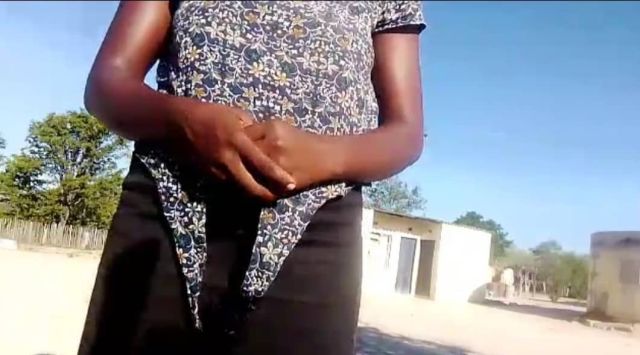
Susan recounted: “When I had my first period, it was really scary and very painful and my granny was not around. I felt helpless as I didn’t know what to do, how to clean it or take care of it.” Unable to see the stain, she only felt the sticky warmth, fearing she was severely injured.
Her brother, also panicked, rushed next door to inform their neighbour. When the neighbour arrived, the explanation of a “menstrual cycle” meant nothing to Susan, who had never received sexual health education.
“When I had my first period it was really scary and very painful. I felt helpless of my body as I didn’t know what to do, how to clean it or take care of it.
“It’s also difficult for me to wash my clothes, as I can’t see if they are clean or still bloodstained. I will never be able to tell the colour of my discharge during menstruation.”
“I felt like I was an outcast when the neighbour cleaned me and stuffed pieces of old clothes between my legs to stop the blood from dripping.”
Every month is now a constant struggle, forcing her to rely entirely on her grandmother — a dependency that strips her of her independence and dignity.
“It’s also difficult for me to wash my clothes, as I can’t see if they are clean or still bloodstained.
“I’m also constantly worried that my clothes would be stained during my period.
“I will never be able to tell the colour of my discharge during menstruation,” Susan said.
She sharply questioned the public health system and its priorities. “If the Government could successfully ensure the free supply and widespread access of condoms for public health reasons, why is there a clear failure to prioritise and consistently supply free sanitary pads — a necessity that directly impacts a girl’s education, dignity and sexual and reproductive health?”
Period Poverty, Non-Verbal Barrier and Safety Risks
Susan’s story is a textbook case of the myriad of challenges faced by adolescent girls with disabilities in rural communities, a struggle amplified by societal neglect.
It highlights that while menstrual hygiene management has received increasing attention as a public health issue globally, in some parts of rural Zimbabwe menstrual practices are still tainted by taboos and other sociocultural constraints, which adversely affect health since adolescent girls with disabilities in rural communities are unaware of the scientific facts regarding menstrual hygiene practices.
At the heart of the problem is period poverty — the inability to afford or access menstrual hygiene products. Disposable pads are prohibitively expensive, forcing rural girls to resort to unsafe and improvised alternatives such as cloth, tissue paper, leaves, or even cow dung.
These solutions not only fail to protect but also pose significant health risks, particularly for girls with disabilities, sometimes forcing them to miss classes and ultimately failing to manage their menstrual hygiene with pride and dignity.
As a result of this, they often experience a double stigma related to their disability and menstruation.
Speaking through her mother, Nobukhosi (15), who is hearing and speech impaired and in Form Two, explained that girls with these disabilities struggle immensely to express their needs or understand instructions.
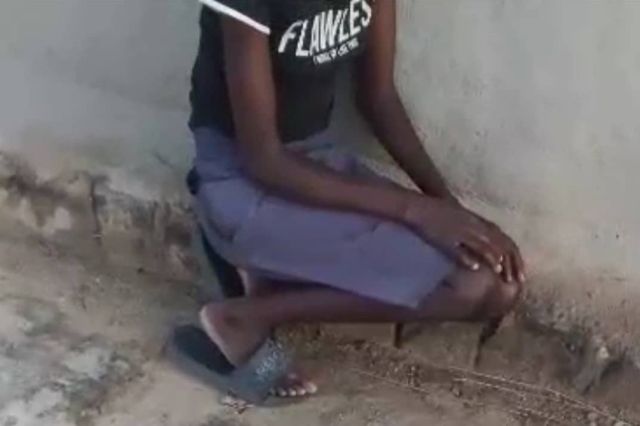
“People treat us as less important humans in society,” she said.
Compounding the problem, school facilities are often not disability-friendly, preventing them from learning critical hygiene practices independently.
The difficulties are amplified for girls requiring constant care. They rely almost entirely on their families for all information and assistance.
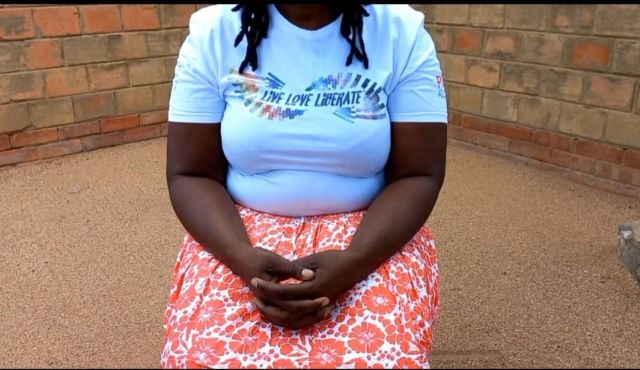
The mother of a 13-year-old girl from Kezi in Matabeleland South province who is speech and hearing impaired and does not attend school shared a heartbreaking reality. She has to provide both diapers and pads, which often require changes four to six times a day, proving very costly.
“I face many challenges looking after her… She can’t talk or do anything for herself. To make matters worse, she always wears diapers. Managing her period is a big challenge because she can’t communicate when it starts,” she said.
“I face many challenges looking after her. She cannot talk or do anything for herself. To make matters worse she wears diapers and I have to change her four to six times a day. She can’t communicate when it starts.”
I live with boy children, and I must protect her privacy and dignity. When I bathe or change her, I have to make sure the boys go outside. As a girl, I make sure she wears trousers because her inability to sit properly could expose her.”
Another challenge she highlighted was her inability to leave the girl alone, stressing that someone must always be present to look after her.
“I live with boy children, and I must protect my daughter’s privacy and dignity. When I bathe or change her, I have to make sure the boys go outside.
“She can’t sit properly on her own. As a girl, I make sure she wears trousers because her inability to sit properly could expose her.
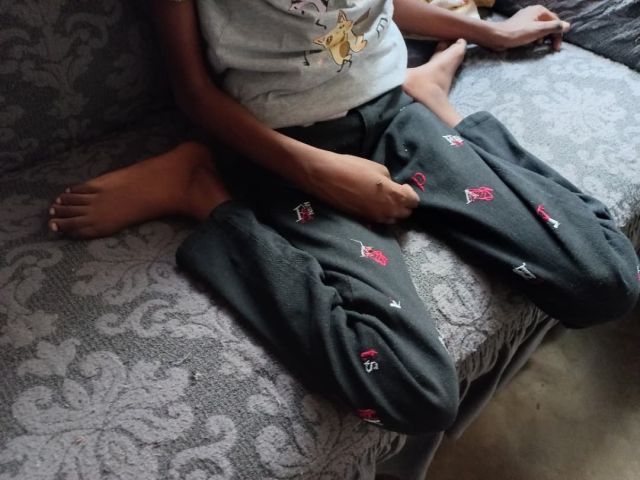
“I also must ensure someone is always looking after her because people could take advantage of her condition and sexually abuse her,” the mother stressed, highlighting the safety risks accompanying the lack of autonomy and constant dependency.
Other physical barriers exist; a 16-year-old girl from Lupane in Matabeleland North province living with hands without fingers testified to the immense difficulty of washing clothes and changing sanitary pads properly.
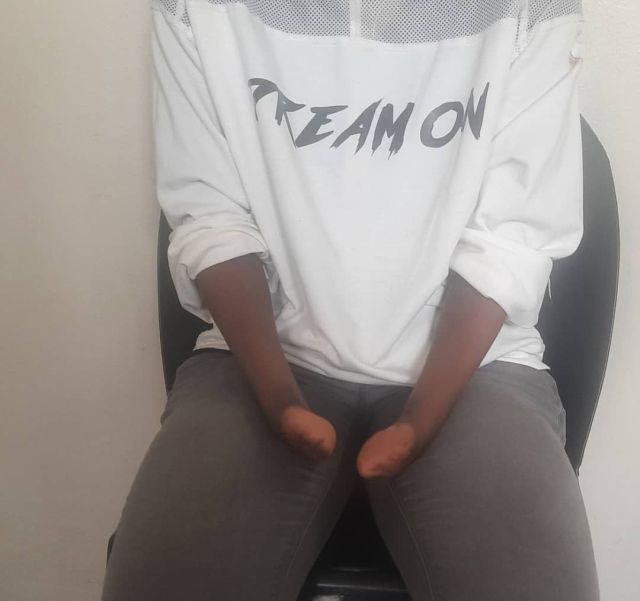
“Reusable pads are particularly difficult for me because I have to wash them, and water is often a challenge in our area. The whole process compromises my dignity because I often need help,” she said.
Adolescents with neurological differences, like Autism Spectrum Disorder (ASD), face sensory challenges, requiring constant reminders from caregivers to maintain hygiene, further impacting their independence and social acceptance.
“As a girl child with disabilities living in rural areas, I find it difficult to manage my menstrual hygiene. Since I’m living with hands without fingers, I find it difficult to wash my clothes, change, and handle sanitary pads.
Sometimes, we have to use worn-out clothes or cow dung because pads are expensive here in the rural areas. Even reusable pads are difficult to use since there is water shortage.
“Every time I have to remind her… go and get a new pad on, soak this, go wash that. She is not taking care of her hygiene without being told.
“I keep on telling her, you just worked out, you really smell… I don’t want people looking at her. I can’t let her go around like this,” shared the mother of a 15-year-old girl with ASD from Umguza, Matabeleland North province.
Exclusion from SRHR Programmes and Activist Calls
The World Health Organisation (WHO) estimates that about 1.8 million Zimbabweans live with some form of disability.
Despite the Constitution of Zimbabwe guaranteeing the right to basic healthcare services, and the government ratifying the United Nations Convention on the Rights of People with Disabilities, adolescent girls with disabilities, particularly those from rural communities, continue to suffer violations of their SRHR.
Disturbingly, research indicates that most girls with disabilities in rural communities are unaware of their Sexual Reproductive Health and Rights (SRHR), placing them at high risk of infection and signalling their exclusion from crucial programmes.
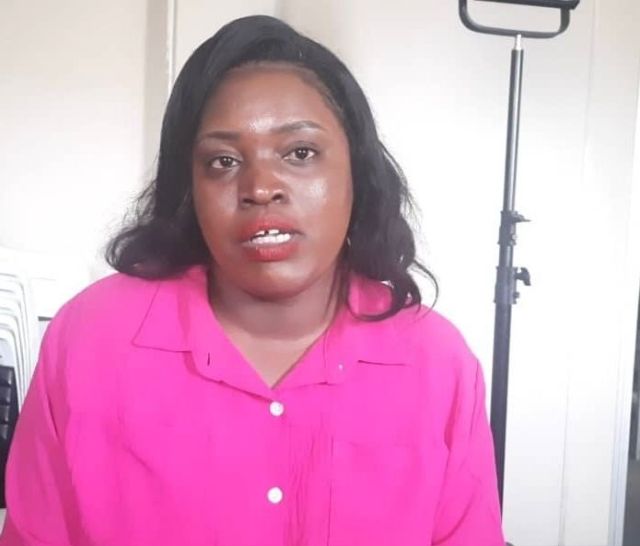
Ms Sukoluhle Mhlanga,”if services like condoms are being rolled out for free across the entire country, why not sanitary wear? Sex is a choice; you decide. Menstruation is not by choice.”
Disability activist Ms Sukoluhle Mhlanga who represents young women with disabilities confirmed that the girls’ testimonies about period poverty and shame are “very true”.
She stressed the need for activists to expand programming to rural areas so that communities recognise that persons with disabilities are part of the community.
“Period poverty is real in rural areas. Sanitary pads should be provided for free, particularly to young girls in rural communities… The question raised from those testimonies is this: if services like condoms are being rolled out for free across the entire country, why not sanitary wear? Sex is a choice; you decide.
Menstruation is not by choice,” Ms Mhlanga asserted.
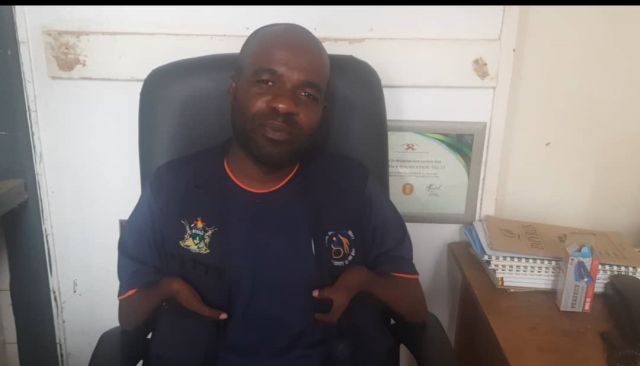
Mr Pick Nkomwa, Executive Director of Nkomwa Foundation Trust (NFT), a Gwanda based organisation that assists and advocates for the rights of people with disabilities around Matabeleland South, a rural province, highlighted that young women struggle to access health centres because many practitioners lack proficiency in sign language, and vital information often lacks basic technical aids like Braille.
He said NFT works to counteract the harmful societal stigma that incorrectly labels young people with disabilities as asexual, which leads to their deliberate exclusion from necessary health education.
“We also attempt to counteract the isolation caused by caregivers who often lock these young people indoors, thereby restoring opportunities and access to information that is otherwise denied to them,” he said.
Responding to questions raised by adolescent girls with disabilities during interviews, Ms Patience Kaerezi, Programmes Officer for Shamwari Yemwanasikana, (Friend of the Girl Child) noted that national menstrual health policies rarely consider girls with disabilities, especially those who are homebound or out of school, as distribution models are mostly school-based.
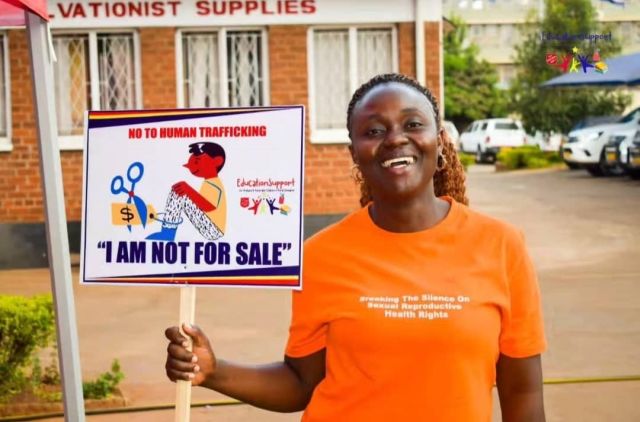
“While national menstrual health policies exist, they rarely consider girls with disabilities… Distribution models are mostly school-based, leaving many girls behind,” she said.
“There’s also poor coordination between key ministries and limited disability data, which makes tracking support difficult.”
Ms Kaerezi called for inclusive budgeting and community-based outreach, adding that SRHR materials are still designed for able-bodied learners, leaving visually and hearing-impaired girls without access to vital information.
“Every girl deserves to manage her menstruation with pride, regardless of ability or location,” she said.
Ministry of Health Acknowledgment: Testimony Prompts Policy Action
The deeply personal testimonies from these adolescent girls have not been in vain; they have prompted public acknowledgment and commitment from the Government.
(MoHCC), acknowledged the urgent testimonies
Dr Dorcas Mutede, Director of Family Health in the Ministry of Health and Child Care stating they illuminate “critical gaps” in their SRHR programming.
“As the Ministry of Health and Child Care (MoHCC), we acknowledge the urgent and deeply personal testimonies shared by adolescent girls with disabilities from Zimbabwe’s rural communities,” said Dr Mutede.
She noted that current training materials and clinic protocols have not adapted to the diverse needs of adolescents with disabilities.
“We recognise that shame, misinformation, and inaccessible facilities compound the struggles of girls with disabilities… The Ministry has been working on raising awareness to all health care workers on the rights of persons with disabilities and has introduced pre-service and in-service training in sign language to frontline health care workers,” Dr Mutede said.
Addressing the disparity query, Dr Mutede stressed: “Menstrual hygiene is not a luxury, it is a health necessity.”
She acknowledged that MoHCC is working with sister ministries and partners to ensure distribution of free sanitary pads, prioritising rural and populations with disabilities.
Policy Gaps Undermine National Commitments
The trauma and isolation faced by adolescent girls with disabilities in rural Zimbabwe, as vividly detailed by the interviewed girls and mothers, expose a profound failure in public health and social inclusion.
Despite this dire reality, MoHCC has expressed a resolute mission, “no adolescent girl — regardless of ability or geography — should be left behind in the pursuit of health, dignity, and empowerment.”
This commitment is backed by ongoing budgetary allocations for disability-inclusive health programming and facility upgrades.
The Need for Global Action
These national efforts are critically worsened by a glaring lack of regional and global policy attention to menstrual hygiene management (MHM) for marginalised groups.
Key frameworks intended to guide development and health, such as the Southern African Development Community (SADC) Sexual Reproductive Health and Rights (SRHR) Strategy 2019–2030 and the Sustainable Development Goals (SDGs), currently lack explicit guidelines that promote or enforce governments to provide for MHM.
This omission means that menstrual hygiene, a fundamental health and dignity issue, is neither a mandated priority nor an indicator for accountability, thereby undermining the efficacy of domestic action.
Perhaps it is also driven by the assumption that menstrual health management is not typically a life-threatening issue.
A Catalyst for Change
The girls’ silent struggles have forced policy to shift, transforming their pain into a catalyst for change.
This commitment by the MoHCC marks a vital first step, but it must be sustained. Ultimately, ensuring menstrual dignity and bodily autonomy for every girl requires tangible, community-level action that proves their rights are non-negotiable.
Hence, there is no doubt that by addressing these challenges, adolescent girls with disabilities in rural communities can be empowered to manage their menstrual hygiene with dignity and pride so that they participate fully in their education and social lives.
* Names were changed to protect the girls’ identities.