Online Reporter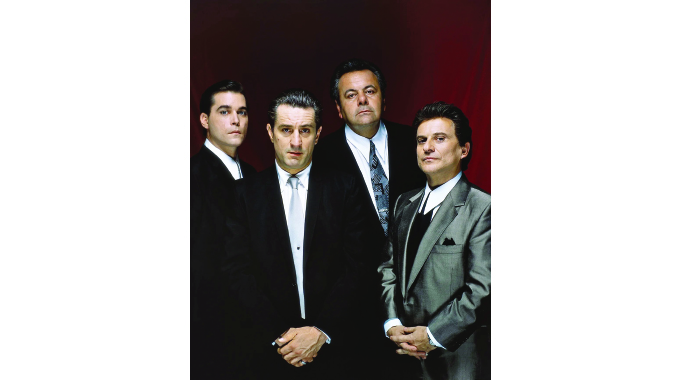
LOS ANGELES.—Martin Scorsese’s crime epic was released 35 years ago. In 1990, the director and his stars, Robert De Niro and Ray Liotta, revealed its secrets to the BBC.
There was some trepidation when Martin Scorsese unveiled Goodfellas at the Venice International Film Festival on 9 September 1990.
The director’s previous film, The Last Temptation of Christ, had generated no small amount of controversy when shown at the same festival two years previously.
A crowd of 25,000 Christians had protested outside Universal Studios in Los Angeles when it opened in the US, a Paris cinema where it was playing had been set on fire, and Scorsese himself had received death threats.
Initially, the signs for Goodfellas had not been promising, either.
Warner Bros’ test screenings had gone badly, with reports of multiple people walking out during the film’s violent opening sequence, in which actor Joe Pesci’s vicious and unstable character repeatedly stabs a wounded gangster with a kitchen knife.
But Scorsese needn’t have worried.
Goodfellas opened to huge critical acclaim, and he picked up the festival’s Silver Lion award for best director.
The film went on to earn six Oscar nominations, with Pesci’s terrifying turn as Tommy DeVito, based on real-life gangster Thomas DeSimone, winning him the Academy Award for best supporting actor. Goodfellas is now widely recognised as a cinematic masterpiece. Just a decade after it was released, it was selected by the US Library of Congress for inclusion in the National Film Registry for being “culturally, historically or aesthetically significant”.
The film is based on Nicholas Pileggi’s 1985 bestseller, Wiseguy, and anchored by a charismatic central performance from Ray Liotta.
It chronicles the true story of Irish-Italian Henry Hill’s rise and fall in the world of organised crime.
Starting as an eager-to-please teenager who runs errands for local gangsters in Brooklyn, New York, Hill works his way up through the criminal ranks with the aid of his mentor Jimmy Conway (played by Robert De Niro, and based on real-life mobster James Burke) and his friend, Pesci’s volatile DeVito.
Hill goes from selling stolen goods and committing arson to hijacking and being involved in brutal murders.
His mob career culminates with the Lufthansa heist at John F Kennedy airport in 1978, where US$5m in cash and US$875,000 worth of jewels were stolen, before Hill begins to descend into drug dealing and cocaine-fuelled paranoia.
To avoid jail or murder, he eventually decides to become an FBI informant, testifying against his former criminal compatriots and entering, along with his family, the federal witness protection programme.
This latter part of Hill’s story is the inspiration for the comedy My Blue Heaven, written by Pileggi’s wife Nora Ephron, which also came out in 1990.
Scorsese had made his name with 1973’s Mean Streets, his electrifying portrayal of the criminal life he witnessed growing up in New York’s Little Italy district, and he told the BBC’s Barry Norman in October 1990 that he was initially wary of revisiting the “gangster subculture”.
“Mean Streets was one particular thing that was very important to me. It was myself and my old friends, a lifestyle I grew up in,” he said.
But he found that Hill’s “recollections or his stories (or) whatever you want to call this incredible marathon narrative that Nick Pileggi put together, with all these tapes that he had, had such a wonderful honesty about it”.
As authentic as possible What appealed to Scorsese was that in his book, Pileggi, who would end up co-writing the script, gave such a vivid and authentic depiction of what it was to be part of that world.
“(It gave) a really accurate look at the spirit of the lifestyle. [How] they dress and what they eat, the ritual of eating, all of this adds up to a film that approaches them as human beings.”
Scorsese wanted the film to feel as true as possible, even casting a real US Attorney, Edward McDonald, to play himself.
He is seen having the same conversation with Liotta as he had with the real Hill.
“We all had the same dilemma, there was a movie that was presented to us that we were going to do, and we wanted to make it real,” Liotta told Norman.
The seductive side of the criminal lifestyle — the money, power and special treatment that drew Hill in — is on full display early in the film. — BBC