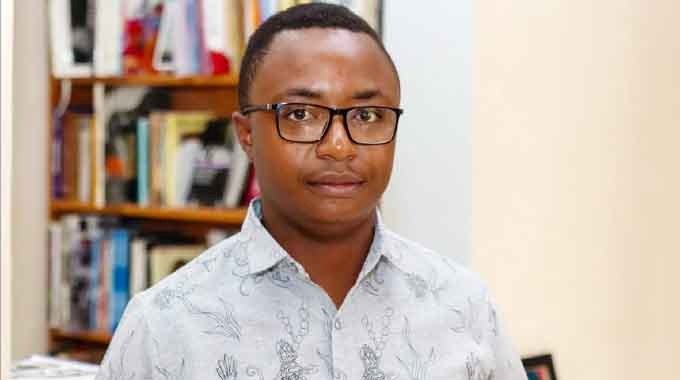
AWARD-WINNING African and black authors have come out guns blazing in defence of their Zimbabwean counterpart, Simbarashe Kundizeza.
The Zimbabwean author’s short story won the Caine Prize, which carries a £10,000 prize money.
Kundizeza has been accused of using Artificial Intelligence to write his award-winning short story.
A recent article in The Atlantic claimed that AI-detection software, Pangram, had shown Kundizeza’s story “Blue Fighter,” which is about a boy, whose family falls on hard times, was entirely AI-generated.
The article in The Atlantic, a US magazine, was written by journalist Vauhini Vara.
However, Kundizeza has hit back at the accusations he used AI.
“For the avoidance of doubt, I wrote The Blue Fighter,” he posted on X.
Caine Prize chair, Ellah Wakatama, told the BBC she was shocked that the US magazine had not waited for a full investigation before publishing.
“I do wish The Atlantic had spent more time investigating this so that alongside Pangram, they did have evidence of real human investigation of it before tainting the prize and tainting this winner,” Wakatama said.
Kundizeza’s literary agency has said it is confident the story, which won the African Writing Prize, was his own work.
Wale Lawal, founder and editor-in-chief of The Republic, the Lagos-based magazine, wrote:
“This is crazy, racist and wildly unethical. Seems? Despite there being no shred of credible evidence? Maddening.”
Karen Attiah, an award-winning journalist who founded The Washington Post’s Global Opinions section and was named the National Association of Black Journalists’ 2019 Journalist of the Year, wrote:
“It is really chilling to see how quickly Black, Caribbean, and African writers and academics have become the global face of AI use and plagiarism.
“For such a serious charge, @vauhinivara’s article rests on . . . a Pangram scan. No comment from the African writer in question.”
Aiwanose Odafen, the Nigerian novelist and author of Tomorrow I Become a Woman and We Were Girls Once, called it “a very irresponsible article.”
She stated: “The only proof given is the use of an AI-detection tool and author’s own assumption of what is considered cliche in African writing.
“She then goes on to quote Panagram’s own ‘research’ as proof that it rarely detects false positives.”
Oghenechovwe Donald Ekpeki, the Nigerian speculative fiction writer, editor, and publisher, wrote:
“These attacks on African and Black writers are nothing new. AI is just the tool of the age. Before this, it was plagiarism. It was almost like a rite of passage.
“Now it’s AI. The root cause remains the same. Racism, anti-Blackness, Afrophobia.”
Romeo Oriogun, the Nigerian poet and winner of the $100,000 2022 Nigeria Prize for Literature, brought in a historical perspective:
“From the moment African literature first encountered the West, it has never been allowed to exist on its own terms.
“The West has always demanded that we defend ourselves and our languages and its accusations have taken different forms over time. AI is just one of those forms.”
Sue Nyathi, the Zimbabwean novelist and author of The Polygamist and the award-winning An Angel’s Demise, asked:
“So are we saying writers aren’t supposed to grow and evolve stylistically??”
Elnathan John, the Nigerian novelist and satirist, author of Born on a Tuesday and a former Caine Prize shortlistee, criticised the article and its author in strongly worded terms, saying the journalist is entitled to dislike the story but that the claim about a change in style was the worst part of the piece.
“My writing changes every few years. Sometimes significantly,” he wrote. “Different stories also demand different styles… you cannot be a slave to style. Your first duty is to the story.”
The only conversation he’s interested in, he said, is whether it is a good story and whether it moves people. – H-Metro ReporterBC/brittlepaper.com