Online Reporter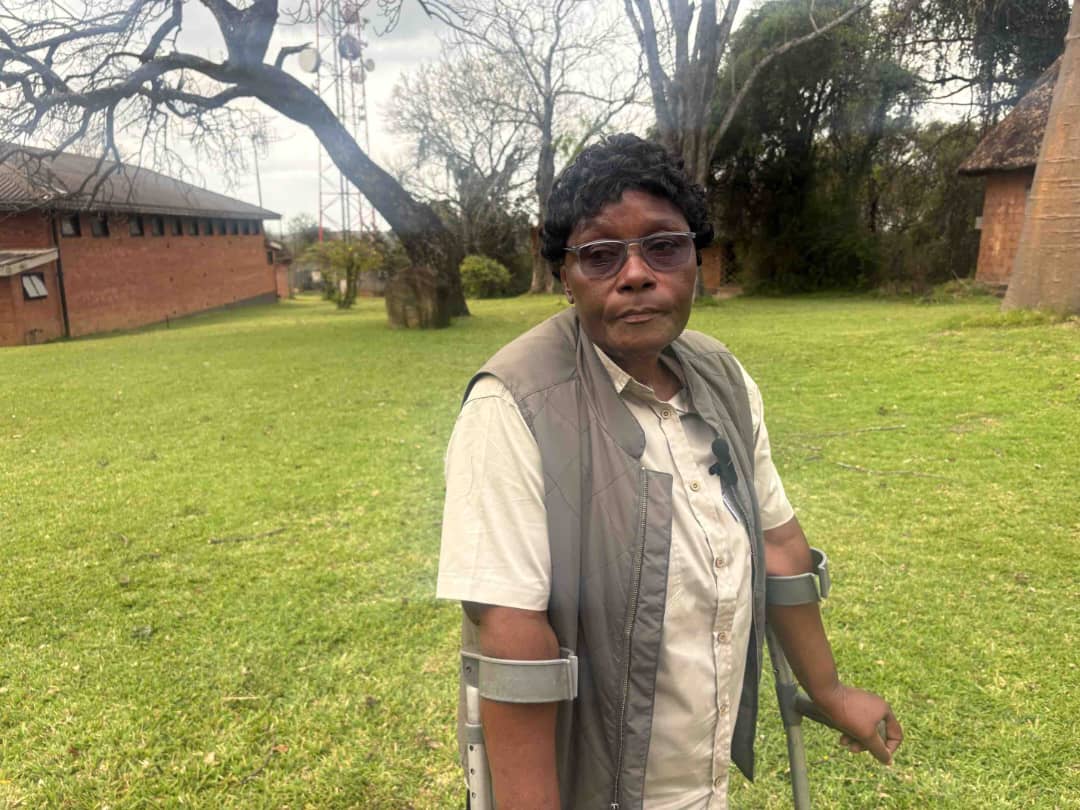
George Maponga
Masvingo Bureau
THE Lowveld is poised for a tourism boom anchored on its rich sugar-production heritage, with plans underway to transform the Triangle Museum into a major tourist attraction and heritage centre.
The Triangle Museum, also known as the Murray Macdougall Museum, houses historical artefacts and memorabilia belonging to Thomas Murray Macdougall, who is regarded as the founding father of Zimbabwe’s sugar industry.
Macdougall planted Zimbabwe’s first commercial sugar cane at Triangle Estates in 1931, laying the foundation for an industry that has since become one of the country’s major agricultural and industrial sectors.
The museum has been maintained with assistance from Lowveld sugar producer Tongaat Hulett Zimbabwe, but tourism authorities now want to reposition the facility as a major focal point for visitors travelling to the Lowveld.
The Zimbabwe Tourism Authority and the Ministry of Tourism and Hospitality Industry recently took local journalists on a tour of the museum as part of activities leading up to this year’s Sanganai/Hlanganani World Tourism Expo, which will be officially opened by President Mnangagwa in Masvingo on Wednesday.
The expo will run from September 9 to 12 at the Gymkhana Grounds.
Triangle Museum attendant Mrs Nancy Mthombeni said the facility had significant potential to become a key stopover destination for domestic and international tourists visiting the Lowveld.
“Zimbabwe has unique stories to tell, and Triangle has one of them,” said Mrs Mthombeni.
“This museum explains how sugar production started in this country, and it will showcase the complete history of our sugar industry, which is one of the biggest in Africa.”
The museum has significant potential to become a major tourist attraction, she said.
“At the moment, we are receiving a good number of local and international visitors, including school groups, and we are using the revenue to renovate the facility.
“Our broader goal is to ensure that tourists who pass through Chiredzi spend more time and money in the community, thereby creating jobs and empowering locals,” she added.
The proposed facelift comes as Government seeks to diversify tourism products and promote heritage-based tourism, with communities expected to benefit from increased visitor spending.
The Lowveld already boasts several major tourism attractions, including Gonarezhou National Park, which forms part of the Great Limpopo Transfrontier Park, and the Malilangwe Conservancy.
Tourism authorities believe the Triangle Museum could complement these attractions by offering visitors an insight into the history of Zimbabwe’s sugar industry and the pioneering efforts that transformed the dry Lowveld into a major agricultural production zone.
Macdougall’s story is closely intertwined with the development of the region.
Born in the rugged highlands of Scotland on March 4, 1881, Macdougall left school at the age of 10 and, as a teenager, travelled in search of adventure.
At the age of 14, he began working at a sugar estate in Demerara, British Guiana, where he learnt the fundamentals of sugar-cane production.
In 1902, he arrived in Cape Town, South Africa, before travelling to Natal, the Eastern Transvaal and Swaziland.
Historical records indicate that he earned a living as a transport rider using teams of oxen and mules, while his experiences abroad exposed him to commercial agriculture and sugar production.
He was also reportedly inspired by sugar-cane plantations he encountered during his travels in Brazil.
When Macdougall eventually arrived in Zimbabwe’s Lowveld, he saw potential in the region’s dry terrain and set out to transform it into productive cane fields.
In 1912, he secured land in the Lowveld and, with the support of his Shangani companion, Tom Dunuza, began developing what would become Triangle Ranch.
Working alongside local communities, the pair cleared land, dug canals and laid the foundations for what would eventually become a major sugar-producing enterprise.
Against considerable odds, Macdougall also oversaw the construction of the Jatala Weir along the Mutirikwi River and the excavation of tunnels through solid rock to channel water to the cane fields.
His vision for harnessing water resources in the Lowveld eventually contributed to the development of Lake Mutirikwi, formerly known as Kyle Dam, which was constructed in the late 1950s and has a capacity of about 1,37 billion cubic metres.
The museum preserves this history and offers an opportunity to connect the Lowveld’s agricultural heritage with its growing tourism industry.
The proposed redevelopment is therefore expected to create a broader tourism circuit linking the sugar heritage of Triangle with the wildlife and conservation attractions around Chiredzi and Gonarezhou.
For tourism authorities, the museum represents more than a collection of historical artefacts. It is a potential gateway into the story of how determination, local knowledge and the harnessing of available resources helped transform the Lowveld into one of Zimbabwe’s major agricultural regions.