Online Reporter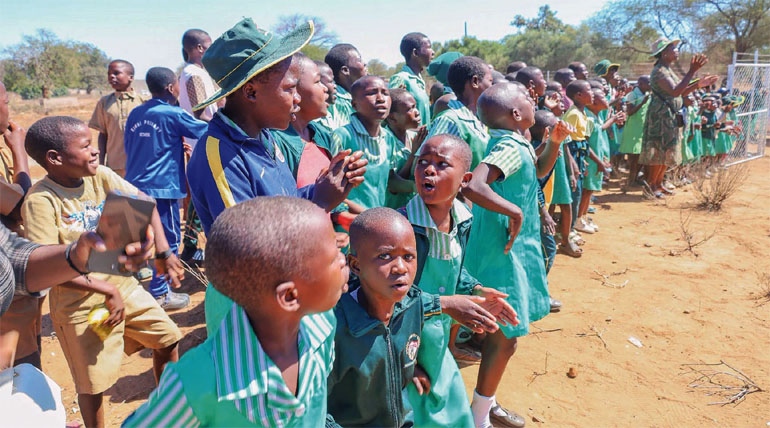
Tendai Gukutikwa
Post Reporter
FOR years, some children at Kondo Primary School in one of the most remote corners of Chipinge learned lessons beneath the open sky.
Today, thanks to a partnership between the Government and conservation stakeholders, those same children are learning beneath a roof, with renewed hope for a brighter future.
There was a time when a classroom at Kondo Primary School was not always a classroom in the conventional sense.
Sometimes it was four walls standing beneath the vast African sky, without a roof overhead. During lessons, children could glance up and watch birds soaring above them. On scorching summer days, the sun turned classrooms into ovens. When clouds gathered and rains threatened, learning could be interrupted at any moment.
At times, overcrowding forced some learners outside altogether. They sat under trees or in open spaces, attempting to concentrate on their lessons while battling the heat, dust and unpredictable weather.
Yet every morning they came.
They arrived carrying exercise books, pencils and ambitions far bigger than the challenges confronting them. Some walked several kilometres from their homes through the surrounding safari area, determined not to let difficult circumstances stand between them and an education.
For them, school represented possibility.
Kondo Primary School has experienced significant growth over the years. Today, it serves 690 learners, comprising 367 boys and 323 girls, taught by a staff complement of 20 teachers.
While enrolment continued to rise, infrastructure struggled to keep pace.
The result was overcrowded classrooms, strained facilities and immense pressure on teachers trying to deliver quality education in conditions far from ideal.
For parents, the situation was painful.
They understood that education remained the most reliable pathway out of poverty, yet every day they watched their children learn in conditions that reflected the challenges of life in a remote rural community.
Determined to find a solution, the school and community took matters into their own hands.
In 2024, construction of a two-classroom block began. Parents contributed labour. School authorities mobilised resources. The community united behind a shared goal.
Slowly, the structure began to emerge from the ground.
Brick by brick, the walls rose.
But construction is expensive.
Eventually, the project stalled at gable level.
The roofless building stood as both a symbol of hope and a reminder of the limitations facing the community.
Kondo Primary School head, Mr Fixon Matsaire, still remembers the frustration of that period.
“We started constructing the classroom block, but resources were limited. We managed to reach the gable level, but there was still a lot that needed to be done. We needed roofing, plastering, windows, doors and furniture before it could become a fully functional learning space,” he said.
As learner numbers continued to increase, the unfinished structure became an increasingly painful sight.
“The available classroom accommodation became inadequate. This placed pressure on existing facilities and made it more challenging to provide effective teaching and learning,” said Mr Matsaire.
For parents, the issue went beyond infrastructure.
It was about opportunity.
Mrs Lucia Mhlanga, whose children attend the school, said parents often felt helpless despite recognising the importance of education.
“You send your child to school hoping they will have opportunities that you never had. But when you see learners crowded into classrooms or learning outside, you naturally worry.
“We know education is important, but there are some challenges that communities cannot overcome on their own,” she said.
Learning outdoors presented its own difficulties.
“A child should be concentrating on books and lessons, not worrying about rain clouds or extreme heat. Every child deserves a proper learning environment,” she added.
Another parent, Mr Tonderai Simango, said the community never sat back waiting for assistance.
“We tried. The school tried. Parents tried. That building was started because there was a genuine need.
“Getting the structure to gable level was an achievement, but completing it required resources that were beyond our reach,” he said.
For many residents, the unfinished building became a daily reminder of what could have been.
“You could stand there and picture children learning inside, but it remained a dream because the classrooms were incomplete,” he said.
Then came a turning point.
In 2025, Government partnered with conservation organisation AWARE Trust, resulting in an investment of US$30 000 towards completion of the project.
What had stood as a stalled construction site was transformed into a fully functional classroom block.
The support funded roofing materials and trusses, plastering, painting, door and window installations and other finishing works necessary to make the classrooms ready for use.
The intervention went beyond bricks and mortar.
The partnership also delivered 100 single-seater desks, 100 chairs and modern dual-purpose boards that can be used with both chalk and whiteboard markers.
For Mr Matsaire, it was a moment of profound relief and pride.
“We were fortunate to receive this assistance. The classrooms were completed, plastered and fitted with windows and doors. Before, they were simply open spaces. Now they are proper learning facilities,” he said.
The additional classrooms have significantly reduced congestion and improved the learning environment.
“We are proud that our teaching and learning space has expanded. These facilities will contribute to improved educational outcomes and better classroom experiences for our learners,” he said.
But according to Mr Matsaire, the greatest impact cannot be measured in roofing sheets, desks or paint.
“Most importantly, this development has restored dignity and hope. Learners perform better when they are taught in a safe, comfortable and appropriate environment.”
For Mrs Rudo Sithole, another parent, the project sent an important message.
“When you live in a remote area, you sometimes feel forgotten. You wonder whether your children will ever enjoy the same opportunities as children elsewhere.
“This project showed us that our children matter too,” she said.
The initiative’s impact extends beyond classrooms.
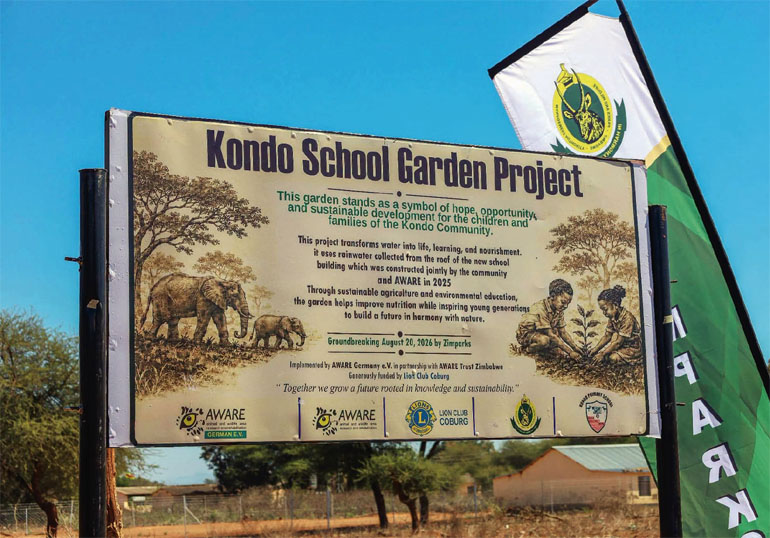
AWARE Trust is also supporting the establishment of a school garden aimed at teaching practical life skills such as responsibility, patience and teamwork.
Dr Martin Kessler of AWARE Trust believes rural location should never determine a child’s future.
“We told the learners that being born in a remote village should never limit their ambitions.
“The future of Kondo does not lie in the walls that have been built. It lies in the children themselves. Within them are dreams waiting to grow, talents waiting to be discovered and futures waiting to unfold,” he said.
Dr Kessler described a classroom as much more than a building.
“A classroom is where ideas grow, where confidence develops and where children begin discovering what they are capable of becoming.
“These classrooms are opening doors to opportunities that will shape the future of this community.”
He also paid tribute to the teachers who remained committed despite difficult circumstances.
“Buildings are important, but even the finest classroom means nothing without dedicated teachers who fill it with knowledge, inspiration and care.”
For generations, the children of Kondo often looked up during lessons and saw nothing but the sky.
Today, they look up and see a roof.
More importantly, they look ahead and see possibilities.
For the child who once learned beneath a tree or in a roofless classroom, the completed classroom block stands as a powerful reminder that where one starts in life does not have to determine where one ends up.
In Kondo, a roof has been built over the learners’ heads. But perhaps the greatest structure being built is invisible: hope for a future without limits.