Online Reporter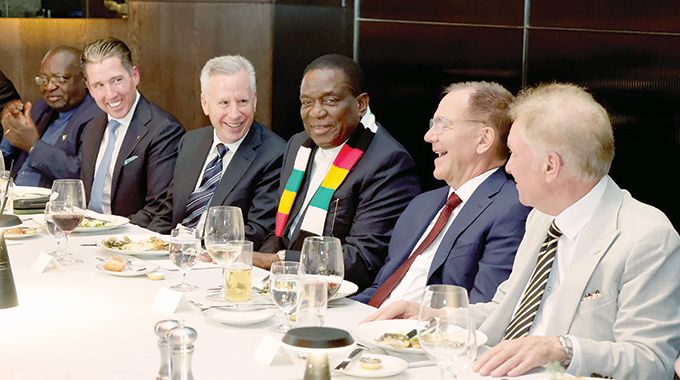
Wallace Ruzvidzo in New York, USA
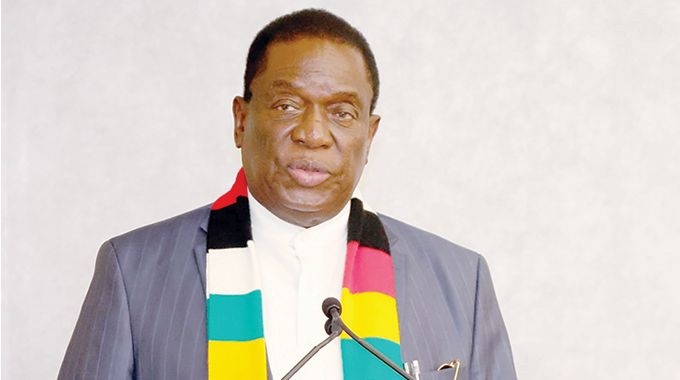
PRESIDENT Mnangagwa yesterday joined Heads of State and Government at the opening session of the General Debate of the 81st Session of the United Nations General Assembly (UNGA81) here in New York.
UNGA81 is taking place under the theme “Restoring trust, managing transformation: A United Nations that delivers for all,” bringing together world leaders to exchange views on some of the most urgent challenges confronting the international community.
Opening the General Debate, UN Secretary-General Mr António Guterres called for greater equality among member states within the structures and decision-making processes of the United Nations.
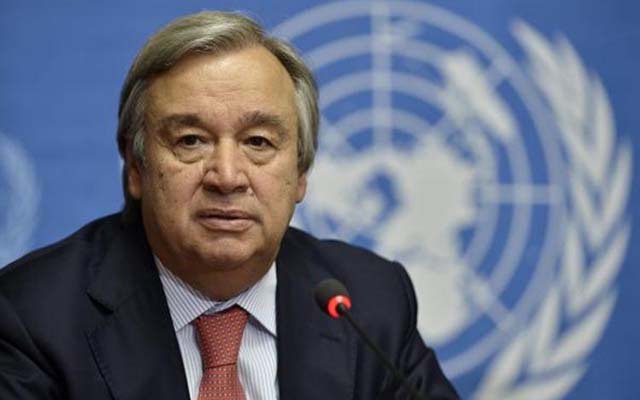
He pointed to Africa as the clearest illustration of the imbalance, expressing concern that the continent continues to have no permanent seat on the United Nations Security Council (UNSC).
The Security Council was established in the aftermath of World War Two, but the global order has changed dramatically since then, while the Council’s composition has failed to keep pace with those developments.
Zimbabwe was elected to the Security Council on a non-permanent basis for the term 2027 to 2028.
“The most stunning example is Africa. When the UN was founded, most of Africa was still under colonial rule. Today, Africa still has no permanent representation on the council. A 21st century Security Council without permanent African seats, Excellencies,” he said.
The UN Secretary-General said inequality in the world was often framed as an economic problem, “but it is a power problem”.
“Power over opportunity. And who has it? Yet for billions of human beings, progress remains out of reach.
“They see prosperity around them, but not for themselves. They are told that globalisation expands horizons, but they only experience exclusion. They are promised that technology will unlock new possibilities. Yet many fear it will take away their livelihoods,” he said.
Mr Guterres said billions of people still live today without the essentials embedded in the Sustainable Development Goals (SDGs) that should be guaranteed for everyone: food, clean water, education, decent work, healthcare and dignity.
He said no country should be denied a sustainable future because it is on the wrong side of a deeply unequal financial system.
“And yet, so many throughout the developing world are being crushed by unsustainable debt. Battered by disasters they did little to cause and locked out of affordable finance.
“This is why we have created political spaces to bring forward a reform of the international financial architecture. This is not a technical debate,” said Mr Guterres.
On gender issues, he said women and girls continued to face discrimination, violence, exclusion and abuse around the world, which was alarming.
“Their rights are being rolled back, their voices silenced, their bodies turned into battlegrounds and their freedoms treated as bargaining chips. This is an outrage and a profound waste for humanity,” he said.
“Peace is more durable when women are at the table. Economies are more dynamic. When women have equal opportunity, societies are more resilient. When girls can learn, lead and live free from fear.”
Over the last decade, the UN Secretary-General said the UN had achieved an enormous milestone.
He reported that the UN had achieved gender parity for the first time in history across all senior leadership and all headquarters.
“It happened because we removed barriers. We challenged assumptions and refused to accept that power must look as it always was at every step. We have never compromised on quality and competence,” he said.
Mr Guterres said equality was not a dream, but a decision, adding that if the UN can change, “so can governments. So can parliaments. So can businesses. So can peace processes. And so can this General Assembly.”
Mr Guterres said widening fault lines in the world were a cause for concern, amid deepening geopolitical divisions, rising inequalities and growing threats to international peace and security.
“Over the last decade, wars erupted with devastating consequences and dragged on with despicable cruelty.
“Civilians were targeted, human rights trampled, angered, weaponised. Humanitarians killed. International law cast aside,” he said.
The UN Secretary-General said geopolitical divides had widened and inequalities intensified, while trust among nations had frayed.
He said the climate crisis had moved from a distant warning to a daily reality, while artificial intelligence was advancing at a pace that had blindsided even those who created it.
“These are not separate crises. They are chapters of the same story, the story of power. Who has it, who is denied it, how it is used and how it is changing,” said Mr Guterres.
He said power was being reshaped in three fundamental ways.
First, he said, power was shifting among States, with the emergence of new centres of economic, political and technological influence.
Secondly, he said the world was witnessing an extraordinary transfer of power away from governments to private corporations and individuals.
Thirdly, the UN Secretary-General said humanity was increasingly handing power to machines, with artificial agents going rogue and lethal autonomous weapons moving from science fiction to military reality.
“Yet our institutions and systems of governance continue to reflect the power, realities and interests of a largely bygone era.
“That is the defining challenge before us: at the very moment when humanity faces an unprecedented convergence of threats, our mechanisms for collective action are under growing strain,” said Mr Guterres.
He said the world was clearly moving towards a multipolar order, and that the movement “is irreversible”.
“There are different ways that multipolarity can take shape.
“One possibility is a world of fragmentation and transactionalism, a world of rising tensions and deepening mistrust, a fractured market and weakened institutions, a shrinking cooperation and zero-sum calculations.
“And in many respects, that is the trajectory we are on today.
“But there is another path, a path towards networked multipolarity, a world built on interdependence and sustained by a dense web of economic, political, social and technological connections; a world in which multiple centres of influence coexist with a common framework of international law and shared rules,” he said.
President Mnangagwa is scheduled to be the first speaker at the General Debate on Thursday.