Judith Phiri [email protected]
THE Minister of Agriculture, Mechanisation and Water Resources Development Dr Anxious Masuka has said the country is stepping up efforts to increase rice local production through seed multiplication.
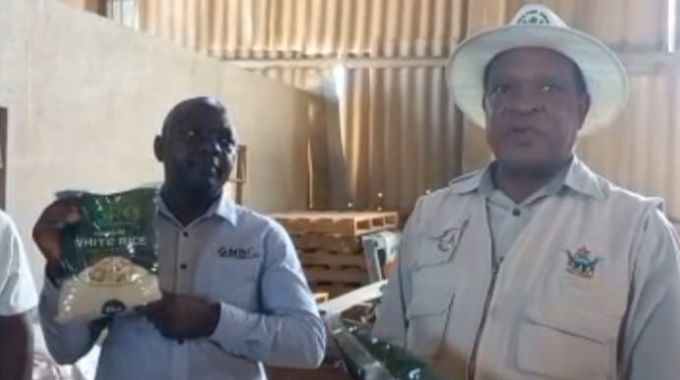
Speaking on the sidelines after touring the Grain Marketing Board (GMB) depot in Bulawayo on Thursday, the Minister commended them for packaging rice.
“Here at GMB they are doing packaging of rice but we do not have sufficient local production. So what we would like to do now is to ensure that we increase local production and already the Agricultural and Rural Development Authority (ARDA) is multiplying seed of two rice varieties, Nerica 7 and Nerica 3.
“We think that by 2028 we will have sufficient seed in the country to begin commercial production of rice. Just to indicate that yes, we are aware that 15 percent of the population now regards rice as a staple away from maize and traditional grains, and the Government is making strides to ensure that this is the case,” he said.
“You will be aware that in Côte d’Ivoire currently the Vice President as represented by Lands and Rural Development Minister Vangelis Haritatos is at a conference for Africa, 28 countries participating that are looking at promoting Africa-grown rice for Africa consumption.”
Meanwhile, Minister Haritatos has said Zimbabwe is exploring the prospect of turning rice production into a major economic pillar, with ambitions to move beyond import substitution and build an agricultural industry capable of generating more than US$1.4 billion through production, processing and value addition.
The opportunity emerged at the 34th Ordinary Session of the Council of Ministers of AfricaRice, which concluded in Côte d’Ivoire after three days of deliberations, exposing Zimbabwe to research, technologies and climate-smart rice varieties that could transform local production.
The Minister said Zimbabwe was now keen to become a full member of AfricaRice after witnessing the potential of the research and varieties available to countries seeking to expand rice cultivation.
He said the engagement had opened new possibilities for Zimbabwe, particularly as the country grapples with the effects of changing climatic conditions and seeks more resilient agricultural production systems.