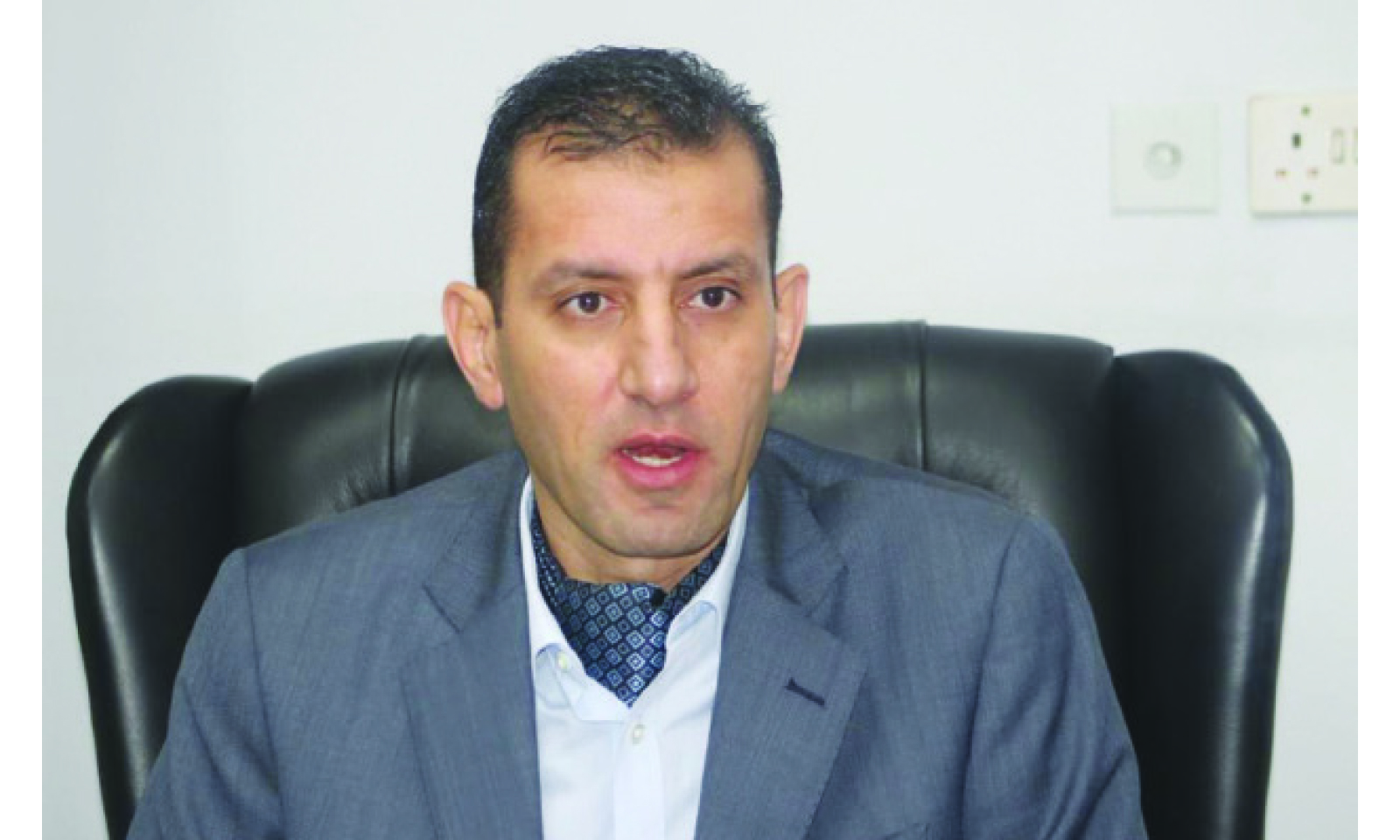
The Gaza Strip, an area covering 365km² and almost three times smaller than the Harare Metropolitan Province at 982km², is considered the world’s open prison. At least two million Palestinian citizens are living under heavy Israeli bombardment. In an interview, following months of the Hamas-Israeli peace failing to hold, Palestinian Ambassador to Zimbabwe Dr Tamer Almassri (TA) told Zimpapers Politics Hub’s Gibson Nyikadzino (GN) that his people want peace, not revenge. Below are the excerpts:
GN: The Gaza Strip is under fire, the situation in the West Bank is escalating. What will it take for peace to be experienced in this part of the world following the Hamas-Israeli conflict?
TA: I want to refuse the narrative of the Israeli apartheid occupation when they say that they are fighting only Hamas or the Palestinian resistance. The Israeli apartheid occupation is fighting or they are killing and oppressing all the Palestinian people in the West Bank, before Gaza Strip, and in the occupied city of Jerusalem, our capital.
GN: How do we understand all this in view of the Gaza Peace Plan that was signed last year in October?
TA: The international community celebrated the American announcement that there will be a ceasefire in the Gaza Strip. But unfortunately, the concept of ceasefire is different. Because the Israeli apartheid leadership, they think the ceasefire should be from one party, and they will be allowed to kill anywhere. This actually happens, not only in Gaza, not in West Bank, only even in the other areas, for example, like Lebanon and the other countries who suffered from the Israeli aggressions. Israel thinks that they should have what is so called the freedom of work. And they call it even in the United Nations and their speeches and their political speeches, the freedom of work. What does it mean? This work means they kill you, kill your family, and kill your children. This is actually the real work that they are expected to do. Since last year’s announcement of what is called the ceasefire, Israel killed until now over 1420 martyrs and we have about 3000 people injured. And Israel, daily, it demolishes and bombs new areas in Gaza Strip. According to the United Nations, Israel destroyed more than 86 percent of the Gaza Strip. All of the Gaza Strip was actually destroyed. Israel destroyed education infrastructure, from 13 universities and university colleges. there is no one now stand in Gaza Strip.
GN: What has been the major stumbling block to this peace initiative? Is the international community really backing this initiative?
TA: We discovered that the Israeli apartheid occupation does not actually want a ceasefire and it is not an accusation. The Israeli election last month was a contest of political leaders who could announce or raise the extremist goals against Palestinians. One of them is to evacuate or to dismiss or to transfer the Palestinian people from Gaza Strip. Israel actually deceived the international community. This is the main issue. Israel was not willing from day one to stop the occupation or to behave as a normal country. It behaves as a protected apartheid regime, and there is no one who can judge them or can punish them or can apply the international law on them. For this reason, they want until now to dismiss the Palestinian people from the Gaza Strip.
GN: Without mentioning names, how do you interpret the actions and signals by some members of the international community that they now recognise Palestinian statehood?
TA: Unfortunately, these big powers or the international community, have no tools to apply or to impose their ideas about the peace or stability. You have to see that Israel, from day one, has its establishment as a superpower, so the international community cannot treat Israel as any normal country. The recognition of statehood is highly appreciated, but how do we apply this recognition on the ground? Because there is an occupation going on, on the ground.
GN: How then do we convince the international community or the United Nations, to take real action to apply the Palestinian statehood?
TA: There is nothing. There is no tool. The main issue of solidarity is if you want to recognise the Palestinian people or their statehood, you should recognise their rights to live as normal people. The first step is to stop dealing with Israel, especially exporting the weapons to them. These countries’ recognition is important, but also, stop supporting Israel in many ways, like intelligence, weapons, military, and the other fields. I am sure one day the international community will blame each other about what is happening in Gaza. The difference of the Israeli genocide in Gaza nowadays from the other genocides that happened before is that it happens live. It happens in the time of social media, when every single person can be a journalist or activist. Nowadays, when we hear that some countries want to recognise Palestine that is a great action because the public opinion internationally started to recognise that Israel is dangerous to stability and international peace.
GN: What are we likely to see in the end from this situation? Is this peace process something that you see being implemented to bring peace in the region?
TA: We have always wanted peace from the first day. And from now, Israel can announce that we accept the two-state solution and we will respect the international resolutions and the United Nations resolutions. The Palestinian people will be happy. And we will let us go for historical peace. But there is no one; Israel killed the two-state solution. We ask for a two-state solution because it is the minimum from the Palestinian historical rights. That is the minimum. We accept it as a deal to achieve the stability, peace and security in the world, yet Israel refuses that. I think the main solution is that the United Nations and the international community should deal with Israel as normal country, not a superpower. If they do something bad or if they have violations against the international community, international law, or the United Nations resolutions, they should be treated as a normal country. And at the end of the day, we want the justice for the victims. I am one of the Palestinian people who actually paid a price in this genocide. We are not talking about revenge. We are talking about justice. We want international law to be active. We want the international justice to be applied in Palestine.