Professor Paul Mavima
Vision 2030 is not a slogan.
It is not a rhetorical flourish reserved for podiums and communiqués.
It is a binding national commitment articulated by President Mnangagwa to transform Zimbabwe into an upper middle-income economy by the year 2030.
As Government, we have been unequivocal that this transformation must be measurable, tangible and, above all, visible to every citizen, whether in the workplace, in the marketplace or, critically, in communities that house our daily lives. It is the considered position of the Ministry of National Housing and Social Amenities that Vision 2030 cannot remain confined to macroeconomic indicators.
Gross domestic product (GDP) growth rates, export volumes and industrial capacity utilisation figures are important, but they are abstractions to the ordinary Zimbabwean.
What is not abstract to every citizen is the roof over one’s head, the mall in which one shops, the clinic where one is treated and the growth point through which one conducts daily commerce.
These are some of the spaces where Vision 2030 must be seen, felt and lived.
The Government’s position is firm: The built environment is not a passive backdrop to national development; it is an active instrument for the attainment of Vision 2030.
Progress towards national target
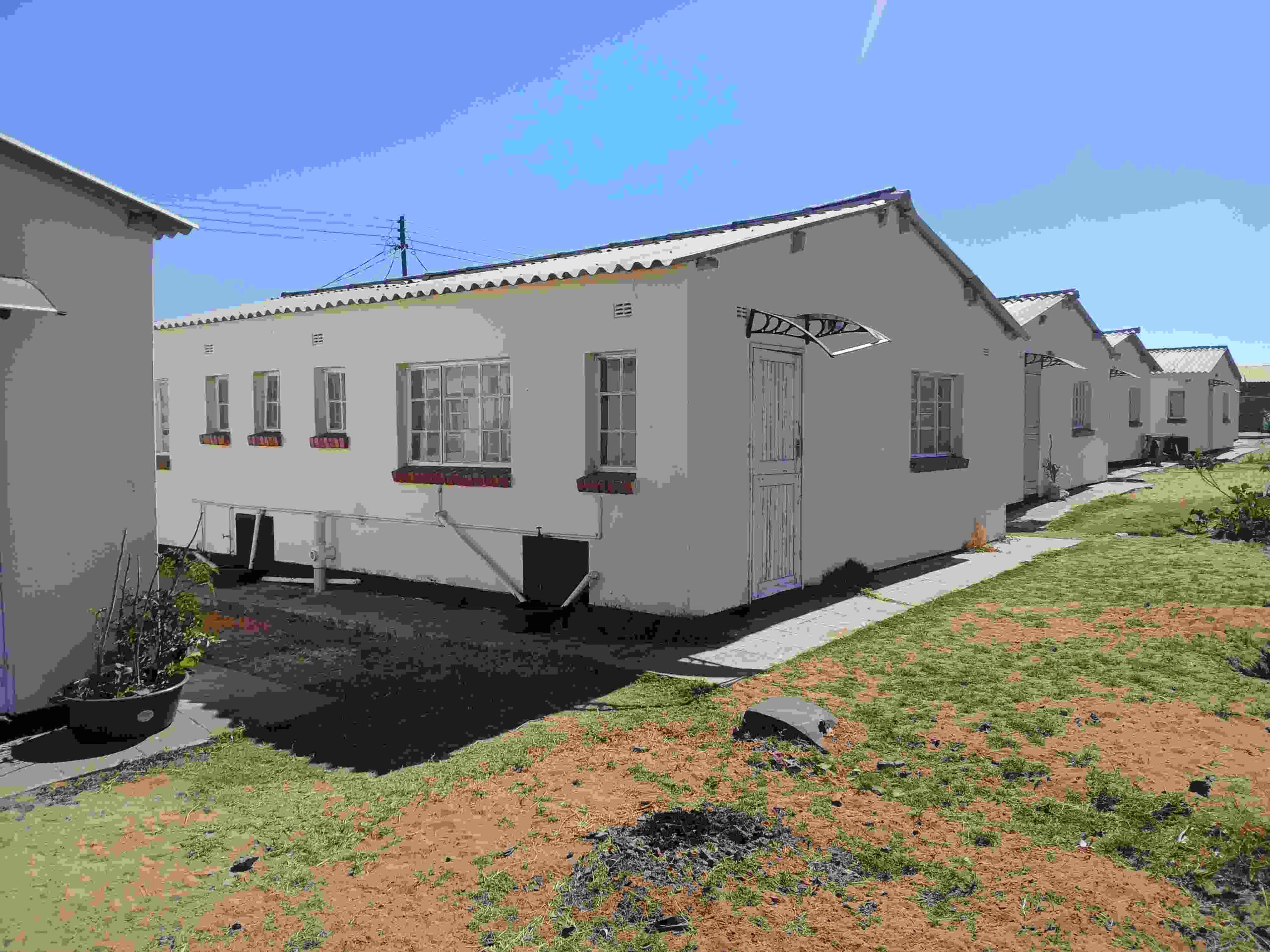
As far as housing is concerned, the yardstick is clear. Under the first phase of the National Development Strategy (NDS1), the Government achieved a target of one million housing units.
With the same determination, we have set the same target for NDS2.
This target translates to an average of 200 000 housing units per annum over the five-year period.
To date, 45 percent of the annual target has been achieved, with the balance of 55 percent still to be delivered before year-end.
Going by the numbers, we are confident that Zimbabwe will not only meet the target but surpass it.
This progress is driven by a broad-based, multi-sectoral approach that brings together the public sector, local authorities, private players and individual home builders, and its footprint is visible in every province.
The ministry has, accordingly, taken deliberate and structured steps to ensure that housing and social infrastructure developed across the country reflects modern, forward-looking standards consistent with Vision 2030.
This is not an aspiration left to chance.
It is a policy direction, communicated clearly through our local authorities, developers and financial institutions — that new developments must be planned, designed and constructed with the future in mind, not merely the present.
It is also significant that, under NDS2, housing and infrastructure have been brought together in a single pillar: the built environment.
This is deliberate.
Housing and infrastructure have a symbiotic relationship. Homes cannot function without the roads, water, sewage system and power that serve them. Infrastructure achieves its purpose only when it serves the people and enterprises around it. Both housing and infrastructure are needed for Vision 2030 and for the live, work, play concept in which citizens find their homes, their livelihoods and their leisure within one well-planned and well-serviced community.
Government and private capital partnership
The Government, however, is emphatic that this transformation cannot and must not be carried by the State alone.
The scale of the built-environment challenge before us, in the form of decades of infrastructural backlog, rapid urbanisation and rising expectations from both local and diaspora Zimbabweans, requires a whole-of-society response.
The private sector, particularly players in construction, retail development and social amenities, must recognise themselves not as passive beneficiaries of Government policy but as active partners in nation-building.
Complementarity between Government and private capital is not optional; it is the operating model through which Vision 2030 will be realised. The results are already on the ground.
Financial sector players, from pension funds and insurers to banks, are investing in the built environment. Institutions such as the National Social Security Authority and Old Mutual have invested in mixed-use developments that combine residential and commercial components, while banks involved in housing, such as CBZ, NMB and FBC, are also playing their part.
To give further practical effect to this partnership, Government, through the ministry, has moved to accord prescribed asset status to private sector players who commit to acquiring land and delivering developments aligned with national priorities. This instrument is deliberate.
It is Government’s way of saying, in policy terms, capital deployed towards developments which embody the standards of Vision 2030 will receive the recognition and support of the State.
Prescribed asset status is, in effect, an invitation extended to pension funds, insurance companies and other institutional investors who hold long-term capital to direct these resources into structures that will define how Zimbabweans live, trade and gather for the next generation, and Government will stand behind that investment.
Through it, funds from insurance and pension funds are being facilitated into housing projects at concessionary rates, which translates into more affordable housing and more serviced stands for ordinary citizens.
This is how a developmental state is expected to behave, not by supplanting private capital, but by channelling and de-risking it towards outcomes of national significance.
Government disposes of its land at its intrinsic value, which significantly lowers the overall cost of a housing unit.
Rewriting the rules of construction
Central to this effort is the review of the 1977 Model Building By-Laws.
Important as they were for safety, these regulations are outdated and often prescribe rigid, expensive standards that price many Zimbabweans out of the market.
The new regulations will promote modern, cost-effective construction technologies, including prefabricated components, and are expected to reduce both the cost of building and the time it takes to complete a building project.
These technologies are not only faster; they can also be more climate-resilient and more sustainable.
Let it be understood, however, that quality and safety are not being traded away: Every material and method must still meet approved planning and structural standards so that homes are durable and safe.
The Government’s position, communicated through the Ministry of National Housing and Social Amenities, is that building plans submitted to local authorities and relevant approving bodies must increasingly meet set standards as a rule, not an exception.
Sustainable power systems, chiefly solar integration, must be designed as a standard feature of new developments rather than an afterthought, thereby reducing pressure on the national grid and insulating households and businesses from disruption.
Modern sanitation and sewerage infrastructure must meet acceptable urban and peri-urban health standards, and must be extended deliberately to growth points that have historically been overlooked in infrastructure planning.
Architectural design must be climate-appropriate, including provision for air conditioning and insulation suited to Zimbabwe’s varied climatic zones, improving both occupant comfort and long-term energy efficiency.
Complete communities, not just stands
A house is only as good as the community around it.
Guided by the Zimbabwe National Human Settlements Policy, Government is committed to delivering complete, serviced and sustainable human settlements, rather than bare stands or structures.
The policy promotes integrated planning and the provision of roads, water, sewerage, electricity and social amenities, and it insists on an end to parallel development so that housing never races ahead of the infrastructure meant to support it.
The ministry is working with local authorities to give this principle force.
Ministry teams regularly visit local authorities and development sites to assess compliance with approved plans and development standards and to identify gaps that require corrective action.
The intention is that land, housing, infrastructure and social amenities are planned and delivered as one integrated package, instead of deficiencies being addressed after the houses are already standing.
Upgrading, not simply demolishing
Vision 2030 is also a commitment to those who already live in informal settlements.
Government’s approach is to enforce proper urban planning while protecting families and ensuring that no one is unnecessarily displaced.
The Zimbabwe National Human Settlements Policy provides for the regularisation of informal settlements, including in-situ upgrading through appropriate infrastructure, services and security of tenure.
Where settlements stand on land suitable for habitation, Government will work with local authorities to regularise and upgrade them rather than demolish them.
Vision 2030 will, therefore, be delivered brick by brick, plan by plan, and development by development by every architect who reimagines a shopping centre with the next decade in mind, every contractor who wires a growth point store for solar power, every local authority that approves plans with foresight rather than habit, and every family that chooses a design oriented towards the future rather than the past.
The Ministry of National Housing and Social Amenities stands ready, and indeed is already positioned, to walk this journey in step with the private sector, through prescribed asset status, through policy support and through planning guidance issued in the national interest.
Government’s role is to set the standard, provide the enabling framework and remove the obstacles that stand in the way of ambitious development.
The private sector’s role is to build.
And every citizen’s role is to demand of their surroundings the same standard of progress that Vision 2030 promises the nation as a whole.
Prof Mavima is the Minister of National Housing and Social Amenities.