Wallace Ruzvidzo
Sunday Mail Reporter
ZIMBABWE’s economy is moving from strength to strength despite the yoke of illegal Western-imposed sanctions, with the country entering an irreversible era of tangible progress and self-reliance, President Mnangagwa has said.
The Government is currently pursuing a double-pronged strategy of sustained diplomatic engagement for the removal of sanctions while simultaneously strengthening domestic production, value addition, competitiveness and economic empowerment to build a more resilient economy.
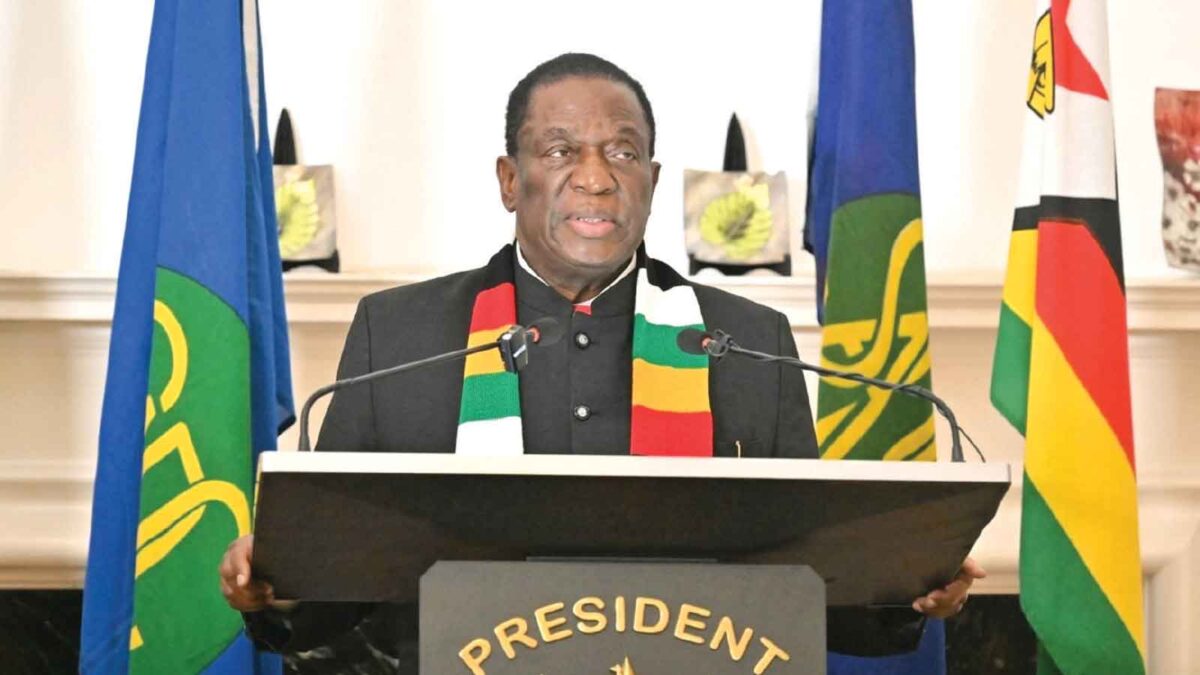
Addressing the nation to mark the occasion of the 2026 SADC Anti-Sanctions Day commemorations, President Mnangagwa said Zimbabwe would continue broadening its international partnerships and deepening regional integration to expand markets, attract investment and accelerate economic transformation.
“The development trajectory of our nation is moving from strength to strength despite the illegal sanctions,” he said.
Zimbabwe has been under illegal sanctions imposed by some Western countries for more than two decades, with the measures restricting access to international finance and investment, and affecting the country’s participation in global trade.
While the Government will continue demanding the unconditional removal of the sanctions, President Mnangagwa said, the country could not afford to wait for their removal to pursue development.
“Internally, the approach by my administration combines sustained diplomatic engagement for the removal of sanctions with practical measures,” he said.
“These include strengthening domestic production, value addition, competitiveness and increasing broader empowerment opportunities for our people.”
President Mnangagwa said strategies to boost production and productivity across all sectors were being implemented at an accelerated pace, with infrastructure, green energy and water being prioritised as key enablers of modernisation, industrialisation and regional integration.
Zimbabwe’s development strategy, he said, was being implemented against a difficult global backdrop characterised by climate change, energy supply disruptions and international transport and trade challenges that were increasing the cost of doing business.
“The strengthening of domestic production, diversification of trading relationships and an increased capacity to withstand external shocks has become of critical importance to our governments,” he added.
“No country can be entirely insulated from events in the wider world, but through cooperation, diversified global partnerships, sound planning and stronger productive capacities, we should improve our ability to manage any shocks that may arise.”
The President also said regional integration through the Southern African Development Community (SADC) and the Common Market for Eastern and Southern Africa (COMESA) would be critical to Zimbabwe’s economic transformation by opening up markets and strengthening cooperation in trade, industry, agriculture, energy and infrastructure.
He called for increased intra-regional trade in goods and services, alongside greater investment in value addition and beneficiation so that more economic value could be retained within communities.
“As SADC, there is need to increase intra-regional trade in both goods and services, while also scaling up investments that advance value addition and beneficiation to retain maximum value at source, within our communities,” he said.
“We must move decisively to ensure that the benefits of regional integration reach every citizen, leaving no one and no place behind.”
Zimbabwe’s diplomatic strategy — anchored in the philosophy that the country is “a friend to all and an enemy to none” — is presently opening opportunities for new trade and investment partnerships.
The country’s election to the United Nations Security Council for the 2027-2028 period and its assumption of the COMESA chairmanship, he added, would provide additional platforms for strengthening multilateral engagement and mobilising partnerships in support of national development priorities.
The partnerships would focus on enhancing trade and productive investment, developing industries, improving agricultural productivity, accessing new markets, modernising infrastructure and advancing science and technology.
“Our country’s election to the United Nations Security Council for the 2027-2028 period and assumption of the chairmanship of the COMESA provide important platforms to deepen regional cooperation, advance multilateral engagement and mobilise partnerships that support our development priorities,” he said.
President Mnangagwa also reaffirmed Zimbabwe’s commitment to working with countries prepared to engage on the basis of mutual respect and mutually beneficial partnerships.
He said the country’s approach was particularly important as the global economic environment continued to change, exposing developing economies to external shocks.
It is believed that stronger productive capacity at home, combined with diversified international relationships, would enable Zimbabwe to withstand disruptions while continuing to pursue its national Vision 2030 objectives.
Zimbabweans were also urged to remain committed to national development.
“I call upon all of us to remain steadfast in our collective resolve to build our nation, brick by brick, stone upon stone and step by step. The destiny of our beloved motherland, Zimbabwe, is in our hands.”
The country’s development agenda, President Mnangagwa said, would continue to be driven by hard work, resilience, patriotism and commitment to national development by citizens at home and in the diaspora.
“Together, united in purpose and resolute in action, we are building a sovereign, prosperous and self-reliant Zimbabwe, for both present and future generations,” he said.
“Even under the illegal economic sanctions, Zimbabwe is rising.”