Herald Reporter
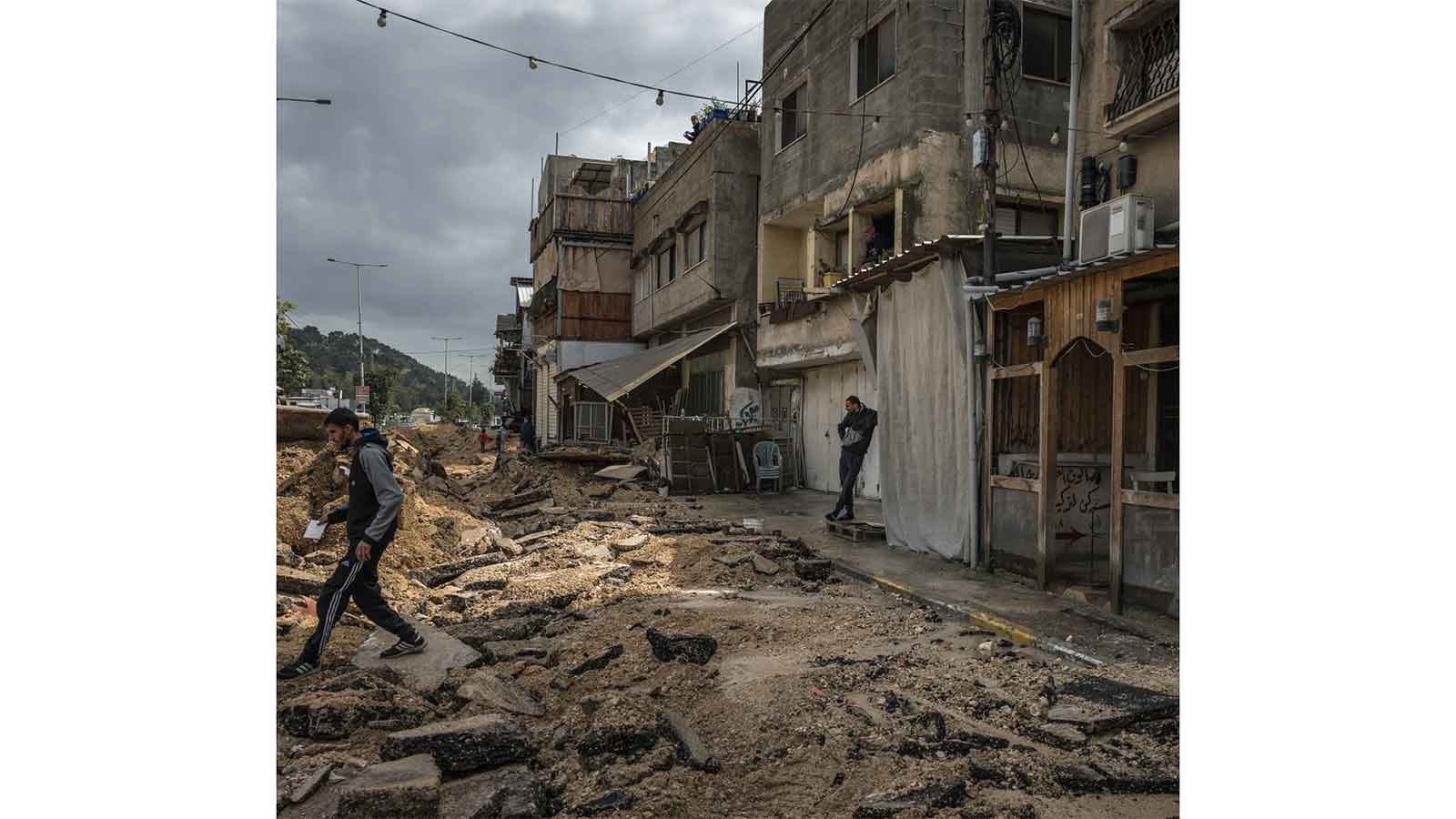
For Palestinian families living in the occupied West Bank, violence is increasingly arriving not as an isolated confrontation, but as a recurring threat to homes, farms, places of worship and the basic routines of civilian life.
The latest escalation has drawn renewed international concern after a wave of attacks across Palestinian communities in the wake of deadly clashes near Nablus, with Palestinian officials accusing Israeli settlers and military forces of unleashing a campaign of intimidation, displacement and collective punishment.
Ambassador of the State of Palestine to Zimbabwe, Dr Tamer Almassri, has condemned the escalation, saying the international community can no longer treat attacks on Palestinian civilians as isolated episodes detached from the broader question of the occupation.
“The Palestinian people are witnessing not simply individual acts of violence, but a pattern in which homes, livelihoods, religious sites and access to land are repeatedly placed at risk,” Ambassador Almassri said.
His comments came as reports from the West Bank painted a disturbing picture of a rapidly deteriorating security and humanitarian situation.
On July 24, four Palestinians and two Israeli soldiers were killed during an incident in Tal village near Nablus. Human Rights Watch said the deaths were followed by a wave of retaliatory settler attacks against nearby Palestinian communities.
By July 26, two Palestinian mosques one in Qusra, south of Nablus, and another in Kour, south of Tulkarem had been targeted in suspected arson attacks.
At Qusra’s Al-Rahma Mosque, attackers reportedly left Hebrew graffiti carrying messages of revenge, while the mosque in Kour was also targeted in the early hours. The attacks were condemned by the Israeli military, while Palestinian officials described them as part of a broader escalation.
For Palestinians, however, the significance of the attacks extends beyond the physical destruction.
A mosque is not merely a building. It is a place of worship, community gathering and social identity. When religious sites, homes and farms become targets, the violence reaches into the foundations of community life.
Ambassador Almassri said this was why the Palestinian leadership was urging governments and international institutions to move beyond expressions of concern and take concrete measures.
“The Palestinian people can no longer tolerate the continuation of a policy of impunity,” he said.
“We need the international community to translate its legal and moral commitments into practical measures that protect civilians, preserve Palestinian communities and ensure accountability for those responsible for attacks.”
A crisis measured in more than numbers
Behind the competing political narratives surrounding the West Bank lies a humanitarian crisis that can increasingly be measured in destroyed property, injuries, displacement and interrupted livelihoods.
According to the United Nations Office for the Coordination of Humanitarian Affairs, more than 1,330 settler attacks resulting in casualties or property damage had been documented across 250 Palestinian communities during the first part of 2026, an average of more than six such incidents a day.
By July 20, the number of Palestinians killed in incidents linked to settler attacks in 2026 had already reached 18, one more than the total recorded during the whole of 2025, according to OCHA.
The agency also reported that more than 2,300 Palestinians had been displaced in 2026 alone by the combined impact of settler violence, demolitions and related restrictions.
Since January 2023, more than 6,200 Palestinians, including more than 3,000 children, had been displaced in such circumstances, with 47 communities experiencing complete displacement, according to OCHA.
“These figures represent people who have had to leave homes, farms and communities that have sustained them for generations,” Ambassador Almassri said.
“Behind every statistic there is a family, a child, a farmer, a mother, an elderly person and a community trying to survive under conditions of profound insecurity.”
The humanitarian impact is particularly severe in rural and herding communities, where access to agricultural land and water can determine whether a family remains economically viable.
OCHA reported that attacks during the period damaged Palestinian homes, a mosque, water infrastructure, agricultural land and livelihood assets. In one incident in Tell village, a Palestinian family of five was displaced after masked settlers reportedly set fire to their home.
The pattern has also affected children.
The UN reported that among those injured in settler attacks earlier in July were children and women, while repeated attacks and restrictions have disrupted access to essential services and livelihoods.
When fear becomes a way of life
The Palestinian account of the crisis is not confined to the moments when violence erupts.
It includes the hours afterwards when families inspect burned vehicles, repair damaged homes, assess destroyed crops and decide whether it is safe to return to their fields.
It includes children growing up with the knowledge that the road to school, the family farm or a neighbouring village may be blocked.
And it includes farmers who must calculate whether cultivating their land is worth the risk of being assaulted.
UN agencies have warned that settler attacks are increasingly becoming a major source of Palestinian injuries in the West Bank.
In a July 22 assessment, the UN said settler attacks accounted for 55 percent of Palestinian injuries recorded in the West Bank during 2026. It reported that about 850 Palestinians had been injured in the context of settler attacks since the beginning of the year, including nearly 690 injured by Israeli settlers.
In the Hiwara community south of Yatta, the UN documented attacks in which Palestinian farmers were allegedly assaulted or sprayed with pepper spray while working on agricultural land.
Among those injured were children, women and an elderly man.
For Ambassador Almassri, such incidents demonstrate why the issue cannot be reduced to a series of isolated security incidents.
“What is happening is affecting the ability of Palestinian families to live normal lives,” he said.
“When a farmer is afraid to reach his land, when a family cannot sleep safely in its home, when a mosque is attacked and when roads and ambulances are obstructed, the consequences extend far beyond the immediate incident.”
The question of accountability
At the centre of the Palestinian diplomatic appeal is the issue of accountability.
Ambassador Almassri called on governments to issue unequivocal condemnations, support independent international investigations and hold those responsible for attacks against civilians accountable.
He also urged the international community to take measures against what he described as the wider system enabling settlement expansion and settler violence.
The call comes against a backdrop of an important international legal development.
In July 2024, the International Court of Justice, in an advisory opinion requested by the UN General Assembly, found that Israel’s continued presence in the Occupied Palestinian Territory was unlawful and said Israel was under an obligation to end that presence as rapidly as possible.
The Court also found that Israeli settlements in the West Bank and East Jerusalem, and the regime associated with them, had been established and were being maintained in violation of international law. It further concluded that Israel should cease new settlement activity and evacuate settlers from the occupied territory.
Importantly, the Court also addressed settler violence directly.
It found that Israel’s systematic failure to prevent or effectively punish attacks by settlers against Palestinians, together with excessive use of force against Palestinians, was inconsistent with its obligations under international law.
For Palestinians, the legal findings have therefore become part of a larger question: what happens when international law exists on paper but civilians continue to experience violence on the ground?
Ambassador Almassri said the answer must be stronger international action.
“International law cannot remain simply a collection of principles quoted in statements while Palestinian civilians continue to suffer,” he said.
“The real test of the international system is whether those principles are applied consistently and whether civilians can see their protection translated into reality.”
A West Bank under mounting pressure
The July escalation came amid broader concern from the United Nations over the trajectory of the West Bank.
On July 29, UN Human Rights Office spokesperson Ravina Shamdasani said violence by settlers and the widening annexation of Palestinian territory were worsening.
The UN said settlers and Israeli security forces had, in some cases, acted together in attacks on Palestinian communities, with families assaulted, property destroyed and mosques burned. It also warned that tighter movement restrictions were preventing Palestinians from reaching essential services.
The UN humanitarian office subsequently described July as, jointly with March, the deadliest month for Palestinians in incidents involving settlers since October 2023.
In one week alone, more than 40 settler attacks resulted in casualties or property damage, while at least 20 Palestinian families were displaced.
The figures illustrate a cycle that humanitarian agencies say is becoming increasingly difficult to break: attack, displacement, restricted movement, loss of livelihood and then further vulnerability to another attack.
The result is not merely physical insecurity.
It is the gradual erosion of the social and economic structures that enable communities to remain on their land.
Zimbabwe’s solidarity
In Harare, Ambassador Almassri also expressed appreciation to Zimbabwean journalists for continuing to report on the Palestinian question and for drawing attention to the risks faced by Palestinian journalists covering the conflict.
“On behalf of the Embassy of the State of Palestine, I want to thank Zimbabwean journalists for their interest in the Palestinian question and their efforts to tell the Palestinian story to the Zimbabwean public,” he said.
His message reflects a wider Palestinian appeal for the international media to keep documenting events in communities that may otherwise disappear from global attention.
For journalists, that responsibility presents a difficult challenge: reporting the violence without allowing statistics to obscure the people behind them.
The story of the West Bank is therefore also a story of ordinary civilians trying to preserve ordinary life.
A farmer returning to his field.
A child walking to school.
A family protecting its home.
A worshipper entering a mosque.
A community attempting to remain on its ancestral land.
And, increasingly, a people asking whether the international promises of protection and accountability will ever become tangible.
Ambassador Almassri said the Palestinian position remained clear: an end to the occupation, respect for international law and implementation of relevant international resolutions.
“The Palestinian people are not asking the world merely to sympathise with their suffering,” he said.
“They are asking for the protection of their rights, accountability for violations and the opportunity to live in freedom, security and dignity in their own homeland.”
As the West Bank enters another period of uncertainty, the growing concern among humanitarian and international institutions is that continued violence, settlement expansion and displacement risk making the prospect of a peaceful political settlement increasingly difficult.
For the families living through the crisis, however, the question is more immediate.
It is whether they will still have a home, a farm, a school, a mosque and a future when the next night of violence arrives.