Gibson Mhaka, Zimpapers Politics Hub
AS Zimbabwe joins the Southern African Development Community (SADC) in commemorating Anti-Sanctions Day today, the spotlight falls on whether the bold economic commitments made at the COMESA Summit in Harare can translate into tangible gains that strengthen the country’s campaign for the removal of sanctions.
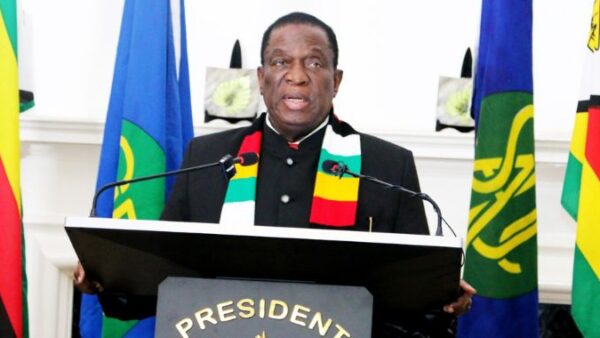
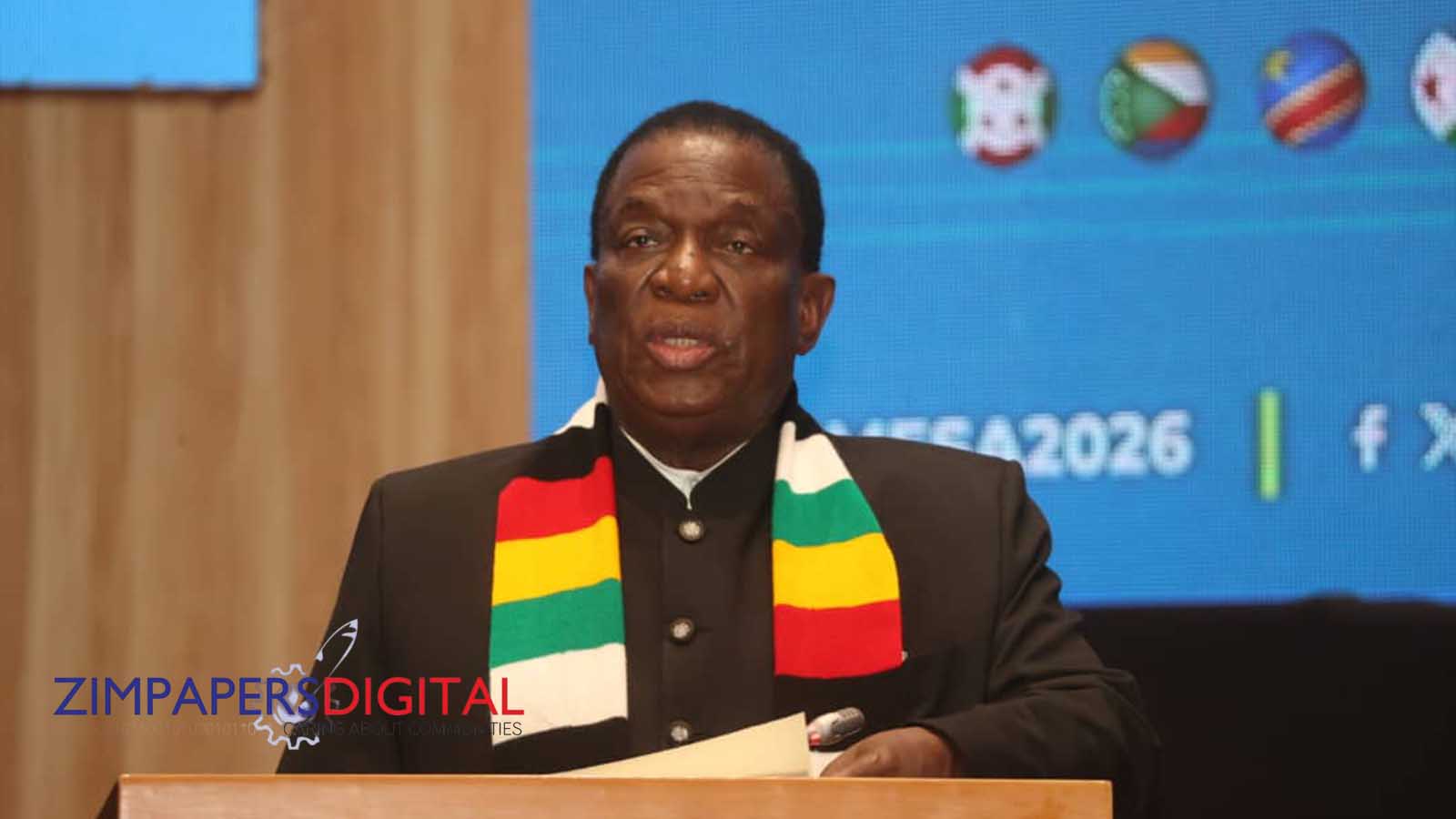
The timing is significant. Zimbabwe has just hosted the 25th Common Market for Eastern and Southern Africa (COMESA) Heads of State and Government Summit, with President Mnangagwa assuming the Chairmanship of the regional bloc from Kenya’s President William Ruto.
The one-year tenure presents Zimbabwe with an opportunity to advance regional trade, investment, industrialisation and economic integration while reinforcing its diplomatic campaign against sanctions.
However, the significance of this leadership will ultimately be measured not by declarations alone, but by the economic opportunities generated for businesses, workers and communities across the region.
President Mnangagwa set out this expectation when he challenged COMESA member states to strengthen strategic partnerships, remove barriers to trade and invest in value addition.
“I challenge this forum to hold frank and bold dialogue that will help scale up regional trade and investment, identify practical solutions and forge partnerships that allow businesses to produce, invest, trade and create jobs across our common market,” he said at the COMESA Business Forum in Harare.
The message carries particular weight as Zimbabwe renews calls for the unconditional removal of Western sanctions, which Government says have constrained investment, complicated access to international finance and undermined economic development.
From solidarity to economic action
SADC designated October 25 as Anti-Sanctions Day in 2019, following its 39th Summit in Dar es Salaam, Tanzania. The initiative was intended to mobilise regional solidarity and highlight the implications of sanctions for Zimbabwe’s economic development and regional integration.
The annual commemoration has since become an important platform for Zimbabwe and its regional partners to press for the removal of the measures.
Yet the campaign requires more than diplomatic declarations. It needs an economic strategy that strengthens domestic production, expands export markets and demonstrates the benefits of regional cooperation.
COMESA, comprising 21 member states, offers Zimbabwe access to a substantial regional market. Opportunities exist in agriculture, mining, manufacturing, pharmaceuticals, textiles and energy, among other sectors.
The challenge is to convert that potential into productive enterprises and commercially viable partnerships.
President Mnangagwa acknowledged the gap between potential and performance, observing that intra-COMESA trade and investment remained significantly low.
“This gap presents both a challenge, as well as an opportunity,” he said.
His argument is that member states must address obstacles preventing businesses from trading efficiently, including rules of origin, non-tariff barriers, lengthy customs procedures and the costs of doing business.
Removing such barriers would allow Zimbabwean producers to reach more consumers, attract investment and participate more effectively in regional supply chains.
Stronger trade would not automatically end sanctions, whose removal ultimately depends on decisions by the governments and institutions responsible for imposing them. However, it could strengthen Zimbabwe’s productive capacity, reduce economic vulnerabilities and reinforce the case for greater international engagement.
Value addition must anchor the strategy
One of the President’s most important calls was for COMESA countries to move away from excessive dependence on unprocessed commodity exports towards manufacturing and beneficiation.
“Private sectors are urged to move decisively from the export of commodities towards value addition, beneficiation and manufacturing,” he said.
This is central to Zimbabwe’s economic transformation.
The country possesses significant mineral and agricultural resources, but exporting raw commodities limits opportunities to develop supporting industries, create specialised employment and retain more value domestically.

Investment in mineral beneficiation, agro-processing, leather production, textiles, pharmaceuticals and battery materials could help change that pattern.
Zimbabwe’s decision to restrict exports of unprocessed lithium ore in December 2022 illustrates Government’s stated determination to encourage processing and retain greater value from mineral resources.
However, restrictions alone cannot create industries. Investors require reliable electricity, affordable financing, appropriate technology, skilled workers and predictable policies.
Regional partnerships can help mobilise these resources, establish cross-border supply chains and expand markets for finished products.
For Zimbabwe, the benefits would extend beyond export earnings to include employment creation, skills development and stronger industrial capacity.
Minister Ndlovu’s green industrialisation proposal
Industry and Commerce Minister Mangaliso Ndlovu added another important dimension to the economic agenda through his call for COMESA member states to turn regional commitments into practical implementation.
Addressing the COMESA Green Industries Connect forum in Harare, he emphasised that governments must move beyond policy declarations and ensure that agreed programmes generate investments, modernised production facilities and employment.
“Our immediate responsibility is to convert these commitments into implementation,” he said.
The statement captures a challenge facing regional integration: agreements can establish direction, but only execution delivers results.
Minister Ndlovu also proposed establishing a COMESA Circular Economy Fund to support cleaner production, energy-efficient equipment, recycling infrastructure and projects that transform waste into productive inputs.
The proposed facility could help businesses adopt modern technologies, reduce production costs and create new commercial opportunities in recycling and resource recovery.
For Zimbabwe, such investments could strengthen industrial competitiveness while supporting more sustainable use of resources.
Minister Ndlovu has also stressed the importance of private-sector participation, with governments providing clear policies, appropriate regulation and a conducive investment environment.
The proposal complements President Mnangagwa’s emphasis on value addition by encouraging industries to use resources more efficiently while developing new products and markets.
If properly financed and implemented, regional green industrialisation initiatives could generate employment, attract investment and strengthen productive links among COMESA economies.
Sanctions and regional integration
Zimbabwe’s campaign against sanctions is closely linked to its desire for greater participation in international trade and investment.
SADC has repeatedly called for their removal, arguing that the measures undermine Zimbabwe’s development and complicate regional economic integration.
However, regional institutions cannot independently repeal restrictions imposed by individual countries. Their removal requires sustained diplomatic engagement with the governments responsible.
The role of COMESA is therefore to strengthen economic cooperation while providing a platform for dialogue and collective advocacy.
Zimbabwe must also address domestic barriers to investment, improve infrastructure and ensure policy consistency. Such measures would strengthen investor confidence and help local industries compete in regional markets.
Economic resilience and diplomatic engagement should reinforce one another rather than be treated as competing approaches.
A Chairmanship measured by delivery
President Mnangagwa’s assumption of the COMESA Chairmanship gives Zimbabwe an opportunity to champion practical initiatives that expand trade, industrialisation and investment across the bloc.
The immediate task is to translate the summit’s commitments into funded projects, simplified trade procedures, stronger value chains and partnerships that benefit member states.
As the country marks Anti-Sanctions Day, the central message is that regional solidarity must be accompanied by measurable economic progress.
The removal of sanctions remains a diplomatic objective, but stronger industries, competitive exports and expanded regional markets would improve Zimbabwe’s capacity to withstand external pressures.
More importantly, Zimbabwe’s COMESA Chairmanship presents an important opportunity to translate the bold calls made in Harare into tangible economic gains through increased investment, industrial growth, job creation and improved livelihoods across the region.
For Zimbabwe, turning regional commitments into economic gains would strengthen both its development ambitions and its case for the removal of sanctions. The challenge now is to ensure that the spirit of solidarity translates into sustained action.