Online Reporter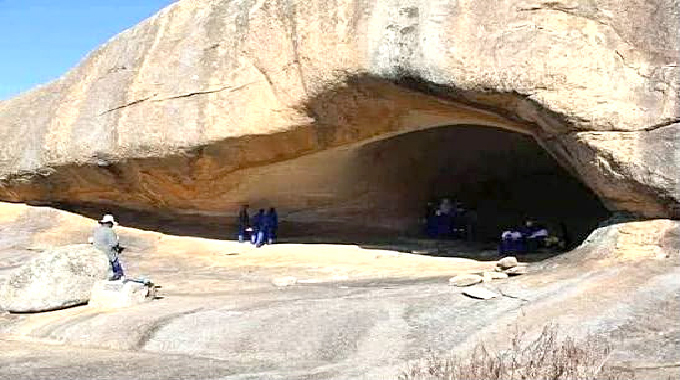
Bruce Ndlovu, Sunday Life Reporter
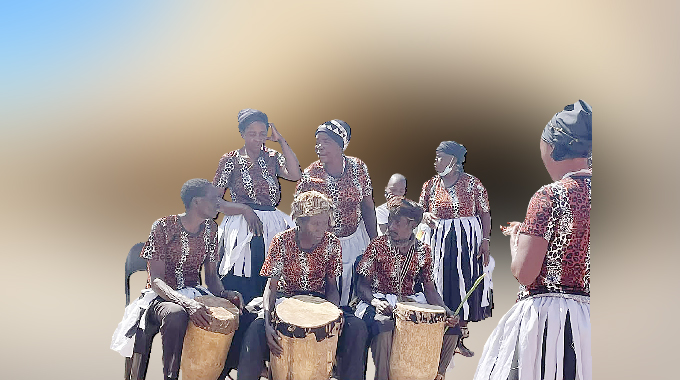
SITHANDISIWE Nyathi is a rain dancer.
Resident in a village near the sacred Njelele Shrine in Matobo District, Matabeleland South, she is part of a select group of people who have always danced when the rainy season approaches.
Every spring, when the last of winter’s winds are blowing away, MaMhlanga, as Nyathi is commonly known around the villages dotted around Njelele takes out her leg rattles, stretches out her muscles and prepares to dance the wosana.
This is a dance that is supposed to be showcased at only one particular time of the year. When the dry leaves start falling from trees and the rainy season beckons, the rhythms of the wosana start to seduce MaMhlanga and the other rain dancers in Matobo.
It is a dance that belongs to a particular season, one that has for generations been intertwined with the community’s understanding of the weather, the land and the unseen world believed to influence both.
However, despite her feet being at their nimble best, MaMhlanga still believes that this year will not bring a lot of rain.
In her village, where man and beast all draw water from the same sources, she has noticed that the birds have this year chosen to build their nests lower towards the ground.
This, she said, is a sign.
On the onset of seasons with bountiful rains, the birds usually build their nests high above the ground, to protect themselves from the deluge that is on the way.
When the birds come closer to the ground, it is a sign that a drought is on the way.
“Some people might ridicule our beliefs but these are signs that we have been observing for years and they have never been wrong. We don’t need a weather report to tell us what’s coming. The environment around us tells us what to expect and it never disappoints,” she told Sunday Life in an interview.
Like other villagers in the district of Matobo, MaMhlanga does not know of El Niño, let alone the predicted Super El Niño.
But she knows what a dry year looks like.
She knows the particular shade of brown the grass takes when the rains fail. She knows how quickly a village water source can turn from a bubbling lifeline into a muddy puddle. She knows the sound of cattle searching for grazing after the veld has been stripped bare.
She knows, too, the anxious glances exchanged by villagers when the clouds gather on the horizon but stubbornly refuse to open.
For MaMhlanga, the language of climate change is not spoken in degrees Celsius or Pacific Ocean temperatures.
It is spoken in birdsong, wilting crops, empty wells and the behaviour of cattle.
Scientists, meanwhile, are looking thousands of kilometres away to the Pacific Ocean.
They have said the 2026-27 El Niño, which forms when changes in wind patterns allow warmer water to spread across the central and eastern equatorial Pacific, has a historically unprecedented chance of developing into a “very strong” event, fuelling heat waves, flooding and stormier weather.
Informally described as a “super” or “Godzilla” El Niño, the United States National Oceanic and Atmospheric Administration (NOAA) confirmed last month that warming conditions were taking hold in the Pacific and that there was a 63 percent chance of sea surface temperatures exceeding 2°C above normal later this year.
“We have many months to go while this event continues to develop and that’s one of the reasons that we have increased confidence that this will be a record-setting event,” said Dr Zeke Hausfather, a climate scientist at Berkeley Earth, a US research group.
“It’s not beyond the realm of possibility to say this might be the strongest El Niño event in 500 or even 1 000 years,” Hausfather said, although it is impossible to say for sure that far back in time.
For villagers around Njelele, however, the numbers are distant.
The worry is immediate.
For generations, communities in Matabeleland have developed their own weather-reading systems.
The behaviour of insects, birds and wild animals is watched closely. The flowering of certain trees, the direction of winds and the appearance of particular clouds are interpreted as clues about what is coming.
Some of these observations may have perfectly natural explanations, while others remain rooted in cultural beliefs passed from grandparents to grandchildren.
But in a community where scientific weather forecasts may feel distant and abstract, such signs remain powerful.
This is particularly so around Njelele, a place whose spiritual significance has long made the relationship between people, nature and the ancestors difficult to separate.
Here, the weather is not simply something that happens. It can be interpreted as a conversation. When the rains come, people are grateful.
When they fail, questions are asked.
And increasingly, those questions are being directed at the erosion of old traditions.
MaMhlanga believes that modern life has disrupted some of the practices that once accompanied the beginning of the rainy season.
“We need to go back to the old ways of doing things. We know that there’s a drought coming but traditionally, are we prepared? Have we done the necessary ceremonies to please our ancestors?” she asked.
“Back in the day, at this time of the year, things would be being done differently. We would have slaughtered a beast, brewed beer and brought our people together to make sure that we do what is needed to please our elders. Right now, all those things are not happening and we have to question how that is affecting our seasons.” Her words reveal one of the more complicated realities surrounding climate change in rural Zimbabwe. The arrival of extreme weather does not erase old beliefs.
Instead, it can make them stronger.
When crops fail, people do not necessarily see only poor rainfall or changing weather patterns. They may also ask whether something has gone wrong within the community itself.
Ancestral anger, fading cultural practices, social immorality and the abandonment of traditional ceremonies are sometimes woven into explanations for drought.
To outsiders, these beliefs can appear strange in an age of satellites, meteorological stations and sophisticated climate models.
But to MaMhlanga, there is nothing contradictory about believing in both the physical and spiritual dimensions of weather.
The rains fall on the fields, but she believes the ancestors can determine whether the clouds gather in the first place.
This year, however, the scientific warnings are giving some of those traditional anxieties a new urgency.
In Zimbabwe, authorities are already preparing for what appears set to be a brutal farming season.
According to the Minister of Agriculture, Mechanisation and Water Resources Development, Dr Anxious Masuka, Government is reinforcing strategic grain reserves, promoting household grain retention and scaling up climate-smart agriculture built on soil health, moisture conservation and resilient production systems.
Irrigation expansion, innovative financing, contract farming, weather insurance and drought mitigation centres are being accelerated to provide farmers with production support, livestock protection and market linkages, he said.
Beyond the farm, he stated, Zimbabwe is building a connected rural defence system anchored on early warning and digital communication networks, ensuring farmers, households and communities receive timely information and practical solutions to withstand climate shocks and emerge as stronger, more resilient production zones.
For farmers, these measures could make the difference between survival and hunger.
“The signs are not encouraging,” said Reginald Ncube, a farmer in Kezi.
“All indications are that we will have a drought that is more severe than we are used to. However, we are already making preparations so that we are not caught sleeping. This is not the first drought we have faced.”