Palloma Pachiti-Mutemi
ZIMBABWE’S young people are growing up in a time of rapid and visible environmental change. Forests are thinning, rainfall is unpredictable, livestock grazing is increasingly sporadic, and wildlife is vanishing from places where it was once common. For many — especially in rural areas — the natural world feels like something slipping away, something they are powerless to protect.
But I believe the opposite is true. Our young people are not victims of environmental decline — they are the most powerful force we have to reverse it.
On May 22, we marked International Day for Biological Diversity, under the theme “Living in Harmony with Nature’’. We must recognise that harmony is not an abstract idea. It means giving people the tools to thrive alongside wildlife and ecosystems. It means making space for nature in our farms, our kitchens, and our classrooms.
For over 20 years, I’ve worked in conservation education at the Sebakwe Conservation Education Centre, which borders the Midlands Black Rhino Conservancy. When I began in 2003, the focus was largely on anti-poaching — catching those who killed rhinos, dehorning animals to deter criminals, and erecting fences. But despite these efforts, the threats to nature persisted. We realised that enforcement alone cannot protect biodiversity. What was needed was a change in mindset.
That change, I’ve learned, begins with education.
Over the years, we’ve welcomed thousands of students, teachers, and community members to the centre — some for a few hours, others for days. We teach not only about rhinos and other wildlife, but also about soil conservation, tree planting, clean water, and sanitation. We help people see the connections between nature and their own well-being — and, more importantly, their power to make a difference.
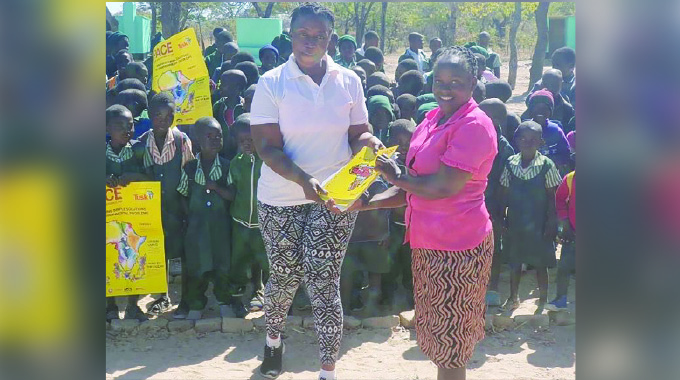
Using books, DVDs, fact sheets, and educator guides provided by the UK-based Pan African Conservation Education (Pace) programme, with funding from international NGO Tusk, we cover everything from water use to forest conservation to coexisting with wildlife. Our approach aligns with Zimbabwe’s school curriculum.
Students love it because it speaks directly to their lives. Teachers love it because it includes activities that are easy to implement in the classroom. They learn how to bring conservation into everyday subjects — Biology, Geography, even Mathematics and Art. One Maths teacher was amazed to discover they could use cheetah gestation periods and pangolin facts as teaching tools. It’s a new way of thinking about education — one that links learning directly to lived experience.
What matters most, however, is the real-world impact. We’ve seen communities take what they’ve learned and run with it. In one programme, we taught 20 women how to build low-smoke, fuel-efficient stoves using local materials. They not only built stoves for their own homes — they taught their neighbours and daughters-in-law.
Within a year, 46 households had adopted the new stoves. Today, the practice has spread to four villages. It has improved health, reduced firewood use, and saved time for women who once walked hours to collect wood.
We’ve seen similar success with conservation agriculture. Long before it became national policy, we were teaching minimum tillage techniques — digging planting basins, using mulch, reducing moisture loss. These methods have helped farmers increase yields even with late or erratic rains. We’ve also supported schools in making organic compost like “chicken tea” to fertilise vegetables, and helped communities establish Moringa nurseries — both as a nutritional supplement and a potential income source.
These are not big, expensive interventions. They are simple, practical solutions rooted in the reality of people’s lives. And they work.
What is most powerful to me is the shift in attitude. I remember one older woman telling me, “My daughter, I don’t even know what a rhino horn looks like — but I’ve heard you can make money from it.” Her words were not malicious — they were about survival. But through education, we can help people see that protecting nature can also support their livelihoods. We can move away from dependency on external aid, and towards self-reliance, creativity, and pride.
This shift is especially urgent for young people. Too often, they feel disconnected from the land. They see wildlife as a nuisance, trees as firewood, or parks as someone else’s responsibility. They don’t see themselves as stewards of the environment. They don’t see how the choices they make — what they plant, what they burn, what they protect — shape the future.
That is why education matters so much. It turns passive observers into active participants. It shows that conservation is not something done by officials in uniforms, but by ordinary people, every day. Whether it’s a student planting trees at home, a school recycling water, or a family adopting a new farming technique, each small action contributes to a more sustainable Zimbabwe.
Zimbabwe’s future depends on its young people. Let us not underestimate them. With the right support — especially through conservation education — we can equip them to protect the environment not just as a duty, but as a way of life and a pathway to prosperity.
Pachiti-Mutemi is Director of the Sebakwe Conservation and Education Centre.