Online Reporter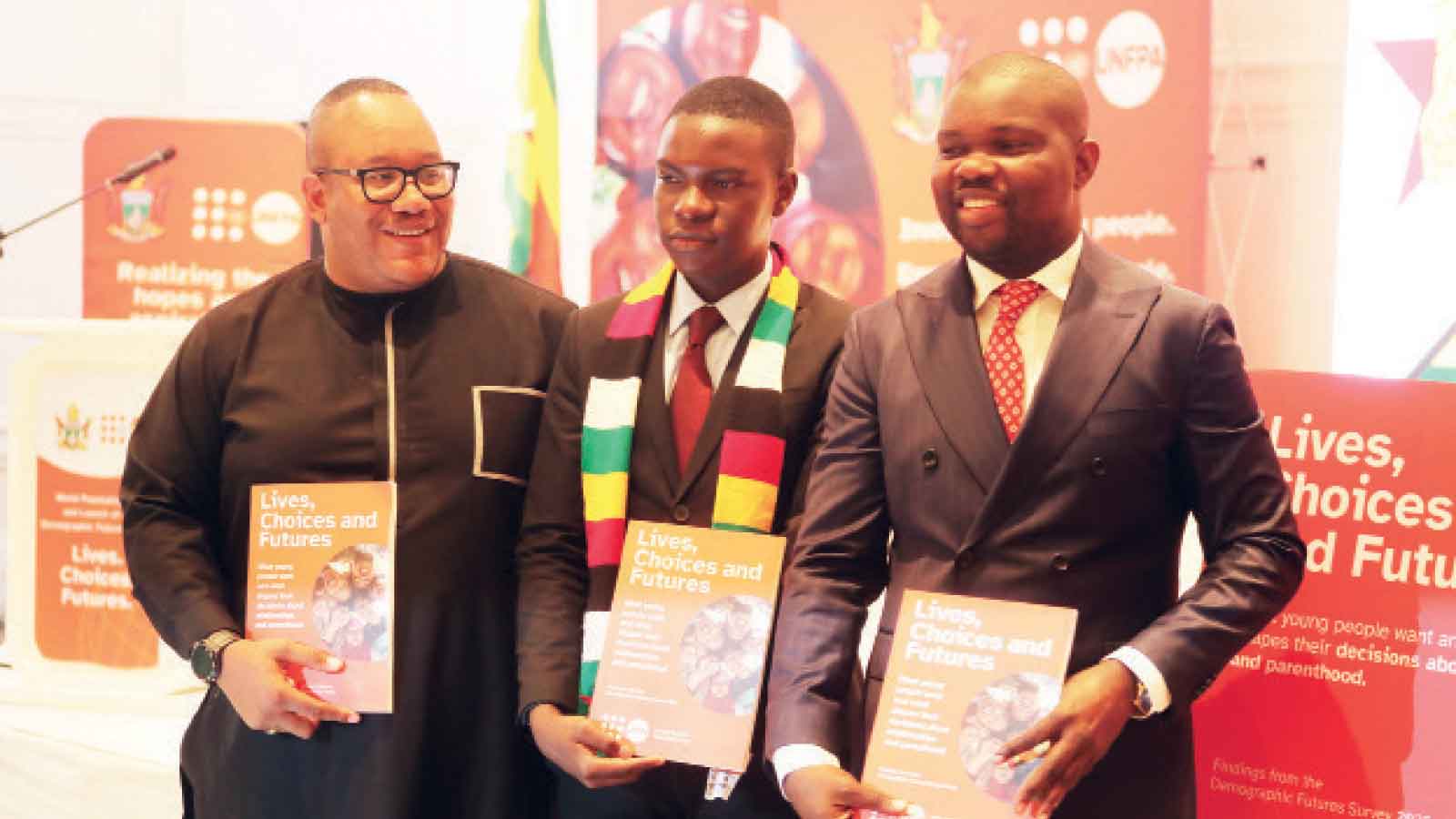
Rumbidzayi Zinyuke
Senior Health Reporter
Zimbabwe’s youthful population should be regarded as the country’s greatest asset Youth Empowerment, Development and Vocational Training Minister Tinoda Machakaire said yesterday.
Speaking at the launch of the 2026 Demographic Futures Survey during World Population Day commemorations in Harare, Minister Machakaire said:
“Today, Zimbabwe joins the global community to commemorate World Population Day 2026. We meet at a unique intersection of history. The global conversation shifts from merely counting numbers to making every individual count. For Zimbabwe, population metrics are not sterile figures on a balance sheet. Our population of over 17,2 million people carries a distinct, powerful signature: a median age of just 18,3 years. Over 60 percent of our citizens are young people. This is our demographic dividend,” he said.
The Minister said Government remained committed to investing in young people through the recently approved National Youth Policy, which promotes economic empowerment, skills development, innovation, health and participation in national development.
“Our youthful population is not a challenge to be managed; it is our greatest asset to be developed. We want young people to move from job seekers to job creators, from consumers of technology to innovators, and from beneficiaries of development to leaders of development,” he said.
Minister Machakaire said Government was expanding vocational training centres, strengthening youth empowerment programmes and tackling drug and substance abuse while improving access to quality reproductive health information and services.
The survey said young Zimbabweans remain optimistic about marriage and parenthood. It found that while most young Zimbabweans still desire to marry and have children, many cite challenges such as financial insecurity.
The survey, conducted among more than 108 000 young adults aged 18 to 39 across 73 countries, was launched jointly by the Government of Zimbabwe and UNFPA under the theme: “Realising the hopes and aspirations of young people – today and for the future.”
Presenting the findings, UNFPA Zimbabwe representative Ms Miranda Tabifor said the report provided unprecedented insight into how young people view their future and the factors influencing decisions on marriage and parenthood.
“In Zimbabwe, as elsewhere, the path to a resilient and prosperous future lies in our ability to listen to young people and create the conditions where they can thrive.
“The Demographic Futures Survey confirms that young people value partnership and parenthood, but their ability to realise these aspirations is hampered by systemic barriers. We must move beyond simply managing demographic shifts to actively investing in the capabilities, health and rights of our youth,” she said.
The survey indicated that for the majority of young adults, financial security, stable employment, and emotional readiness are the top preconditions for becoming parents. It found that while 68 percent of respondents still regard marriage as an ideal and 80 percent desire to have children, economic realities are delaying those aspirations.
According to the report, economic and housing constraints emerged as the biggest obstacle to parenthood, followed by a lack of a suitable partner and health and reproductive concerns.
The report further revealed that financial security was the most important condition for parenthood, with 88 percent of respondents citing it as essential, followed by stable employment (87 percent) and emotional readiness (85 percent).
Ms Tabifor said the findings should guide governments, policymakers, employers and development partners in designing policies that respond to the realities facing young people.
Zimbabwe’s demographic profile reflects significant inequalities in reproductive outcomes. Although the country’s total fertility rate stands at 3,9 children per woman, urban women have an average of 3,1 children, compared to 4,6 among rural women. Women with higher education average 2,6 children, while those with only primary education average 5,1, highlighting the influence of education, opportunity and choice on family size.
United Nations Resident Coordinator Ms Rosemary Kalapurakal said Zimbabwe stood at a defining demographic moment and urged policymakers to use the survey findings to shape investments in young people.
“When we talk about numbers and population, we are actually talking about people. We are talking about their dreams, opportunities, choices and indeed the future of this nation. If we are serious about realising the hopes and aspirations of young people, we must first listen to them, understand their concerns and allow that evidence to shape the decisions we make.”