Online Reporter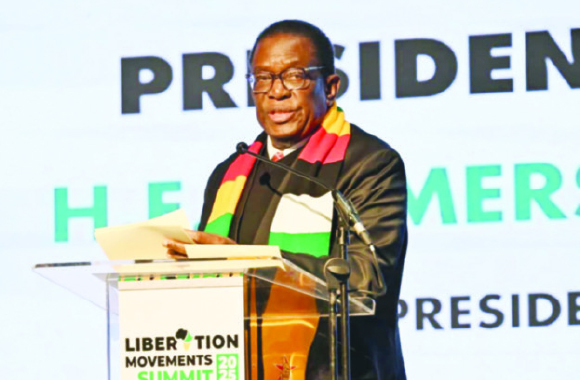
Nduduzo Tshuma in JOHANNESBURG, South Africa
ZANU PF has hailed the just-ended Liberation Movements Summit as a high-level gathering that not only reaffirmed historical bonds of solidarity among liberation movements, but also charted a bold and forward-looking path focused on youth empowerment, economic integration and prosperity for the African continent.
The three-day indaba, which started on Friday and ended on Sunday with the Summit of Heads of State and Leaders of Liberation Movements, ran under the theme “Defending the Liberation Gains, Advancing Integrated Socio-Economic Development, Strengthening Solidarity for a Better Africa.”
It brought together six Southern African liberation movements, the ANC of South Africa (host and outgoing chair), Zanu PF (Zimbabwe), MPLA (Angola), SWAPO (Namibia), Frelimo (Mozambique) and CCM of Tanzania for strategic deliberations to confront growing threats to the parties’ continued relevance and survival amid shifting regional and global dynamics.
Zanu PF secretary-general Dr Obert Mpofu and heads of respective party leagues arrived here last Friday for deliberations with sister parties on various issues affecting the movements culminating in Sunday’s Summit of Heads of State and Leaders of Liberation Movements, the final and most crucial phase of the three-day indaba.
Speaking at the close of the summit on Sunday, Zanu PF secretary for information and publicity Cde Chris Mutsvangwa said the attendance of the regional leaders was a powerful declaration of revolutionary solidarity.
Addressing the Leaders’ Summit, President Mnangagwa, who is also Zanu PF First Secretary, called on Southern Africa’s Liberation Movements to remain resolute in defending the gains of independence and to boldly chart new paths of people-centred development in the face of growing threats from counter-revolutionary forces.
President Mnangagwa rallied liberation parties to remain true to their founding principles, emphasising that the future of African prosperity rests with revolutionary movements that are rooted in the will of the people.
His counterparts, Presidents Cyril Ramaphosa (South Africa), Netumbo Nandi-Ndaitwah (Namibia), Daniel Chapo (Mozambique), João Lourenço (Angola, represented by his deputy, Cde Mara Quiosa) and Samia Suluhu Hassan (represented by former Prime Minister Cde Mizengo Pinda) all echoed President Mnangagwa’s call for unity and solidarity among liberation movements in the face of growth threats to the region.
They also agreed on the need for deeper intra-African trade and collaboration among liberation movements to support regional integration.
Sister movements from Africa and beyond spoke at the Summit, where they declared their unwavering support
In particular, sister parties from China and Russia expressed their countries’ commitment to support the region’s economic agenda to free economies from neo-colonial control and manipulation.
Cde Mutsvangwa said the gathering rekindled memories of solidarity from the liberation era, when countries like Zambia, Tanzania, Mozambique and Angola hosted and supported Southern African liberation movements during their struggles against colonialism, apartheid and minority rule.
“So it was an affirmation of our past links. We are the only region in Africa with an economic bloc like SADC, which is currently being chaired by President Mnangagwa. We are a region which goes beyond neighbourhood. We acquired a political soul as we fought for independence. We are unique among any economic blocs in the world,” said Cde Mutsvangwa.
He said the summit was remarkable because of its future-oriented character, with leaders turning their attention to economic integration and the transformative potential of the African Continental Free Trade Area (AfCFTA).
“The more exciting thing about this conference was the forward-looking nature. People were not just taking stock of the past, but we were charting a future much more focused on economic integration and the prospects of what the Africa Free Continental Trade union is going to offer to the youthful dividend of the African continent,” he said.
Cde Mutsvangwa said Africa was now better positioned to assert itself, leveraging new friendships and diversified sources of investment beyond traditional Western powers.
“We are facing the headwinds of the West, which has always tried to dominate Africa, but there’s a new ray of hope now. The world of capital has become flatter. We now have China as a second economic powerhouse of the world, with India becoming number three very soon. All these are friends to Southern Africa,” he said.
He emphasised the need for large-scale foreign direct investment to drive industrialisation, create jobs and uplift young Africans, linking this to the ideals of past generations who fought for freedom and prosperity.
“Once we urbanise, modernise, and create industries, young people will have jobs.
“Then they can identify with the aspirations of the youthful generation of the 60s and 70s who fought for independence because they wanted prosperity. The only way we can pay homage to them is to deliver prosperity,” said Cde Mutsvangwa.
He described the summit as one of hope and vision with a futuristic outlook rather than focusing on the past.