Gibson Mhaka and Sikhumbuzo Moyo Zimpapers Reporters
ZANU-PF is working to correct 67 717 membership database errors in Bulawayo and Matabeleland North provinces as the ruling party intensifies efforts to digitise and improve the accuracy of its membership records.
The clean-up exercise has identified 24 022 records requiring correction in Bulawayo and another 43 695 in Matabeleland North, with party officials attributing the verification failures mainly to incorrect national identity numbers and duplicate entries in different cells.
The exercise is part of the party’s nationwide Membership Data Digitisation Programme, which is aimed at establishing a clean, accurate and credible database to strengthen its organisational structures.
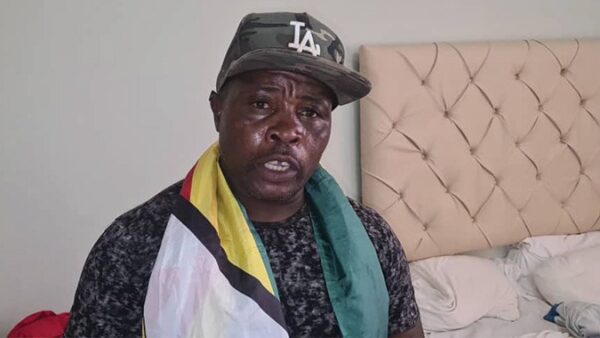
Addressing an extraordinary provincial coordinating committee (PCC) meeting at Davies Hall, the party’s provincial headquarters in Bulawayo on Saturday, Zanu-PF Politburo member Cde
Headman Moyo urged party structures to take ownership of the clean-up process.
Cde Moyo, who is also Deputy Minister of Veterans of the Liberation Struggle Affairs, said technical challenges encountered during the digitisation exercise had resulted in some membership records being rejected by the system.
“One of the main reasons for verification failure is the issue of incorrect National ID Numbers entered during data capture and duplicate records where the same member appears in more than one cell resulting in system rejection,” he said.
“These errors are not an indictment on anyone, they are human errors that are bound to happen in any mass exercise. Our task is to ensure these errors are corrected. As Bulawayo Province, the total number of errors that need correction stands at 24 022.”
Cde Moyo directed District Coordinating Committee (DCC) chairpersons to draw up strict one-week operational schedules, covering six party district centres per day within their respective constituencies.
The exercise will follow a district-by-district and cell-by-cell approach, with party leadership expected to ensure that membership registers and relevant officials are available before data-cleaning teams begin their work.
Cde Moyo said cell chairpersons would first present raw membership registers to district chairpersons, after which recruited data cleaners would verify and update the information in the system before submitting completion reports to provincial and national structures.
He challenged PCC members to actively supervise the exercise instead of leaving the responsibility to the Commissariat Department and information and communication technology specialists.
“To the PCC, I say own the process. You are the principals in this province. Visit the data cleaning centres and check attendance registers,” said Cde Moyo.
The scale of the exercise is also evident in Matabeleland North, where 43 695 membership records have been flagged for correction.
Addressing the party’s PCC meeting at the provincial headquarters in Lupane, Politburo member Cde Elifasi Mashaba said the province was facing similar challenges involving incorrect national identity numbers and duplicate records.
“As Matabeleland North Province, the total number of errors that need correction stands at 43 695.
One of the main reasons for verification failure is the issue of incorrect national identity numbers entered during data capture and duplicate records where the same members appear in more than one cell, resulting in system rejection,” he said.
Cde Mashaba said the errors should be treated as challenges to be resolved rather than grounds for blaming individuals.
He urged DCC chairpersons to mobilise party district chairpersons, political commissars, secretaries across the party’s wings, branch chairpersons and cell chairpersons to ensure their participation.
Cde Mashaba said the availability of cell chairpersons and membership records was important as the verification process would ultimately be conducted at cell level.
“The district leadership must therefore ensure that cell chairpersons are available with the relevant membership records and supporting information. We must avoid situations where data-cleaning teams arrive at a designated centre only to discover that the relevant leadership or membership records are unavailable,” he said.